Can You Put Pyrex in a Cold Oven? Safe Step-by-Step Guidance
Discover safe methods for using Pyrex in a cold oven, how to heat it gradually, and practical tips to prevent thermal shock. Learn from Oven Cook Pro with clear steps, warnings, and sources.


Yes — Pyrex can be used in a cold oven, but the safest approach is to heat gradually to minimize thermal stress. Place the dish inside before turning the oven on, or start with a cold oven and allow a slow warm‑up while monitoring temperature. Always follow the manufacturer’s guidelines and avoid sudden temperature changes to prevent thermal shock.
What Pyrex Is and Why Temperature Matters
Oven-safe glassware like Pyrex is designed to withstand oven heat, but its survival hinges on how quickly heat moves through the material. Temperature shock occurs when a cold piece of glass is exposed to a rapid rise in heat, causing stress that can lead to cracking or shattering. According to Oven Cook Pro, modern Pyrex dishware is built to handle typical home oven temperatures, yet it still responds best when you avoid drastic changes. This means thinking about how you heat the dish, what you place it on, and how you distribute heat during cooking. For home cooks asking can you put pyrex in the oven when it''s cold, the answer hinges on controlled warming and adhering to guidance on max temperatures. In practice, treat Pyrex like any glass bakeware: plan ahead, respect limits, and inspect for damage before each use. This foundational understanding helps prevent accidents and ensures predictable results in everyday cooking.
Can You Put Pyrex in a Cold Oven? Practical Guidance
The short answer is yes, with caveats. If you''re starting with a cold Pyrex dish, place it in a cold oven and then turn on the heat to allow a gradual rise. If you prefer to preheat, put the Pyrex on a rack or sheet pan and slide it into the oven once it has reached the target temperature. The key is avoiding rapid thermal changes that stress the glass. Always ensure the dish is dry and free of cracks before use, and never place it directly over a flame or on a direct heat source. Oven Cook Pro''s guidance emphasizes gradual heat transfer and manufacturer guidelines to minimize risk while you bake. The goal is even heat distribution that cooks food safely without compromising the glass. Remember: if you notice any crackling or warping, stop and replace the dish. While Pyrex can handle repeated heating, consistent gentle warming preserves its integrity over time.
Temperature Ranges and Safety Reminders
Specific temperature limits depend on the Pyrex product and the labeling on the dish. Look for a max temperature printed on the bottom or in the accompanying care guide, and never exceed it. Even when using Pyrex in a cold-to-hot sequence, aim for moderate temperatures and avoid high-heat settings unless the recipe explicitly calls for them. The practical takeaway is simple: treat glass bakeware as heat-tolerant, not heat-immune. If you''re unsure, opt for lower temperatures and longer cooking times rather than pushing the dish to its upper limit. A cautious approach reduces the likelihood of thermal shock and helps you achieve consistent results. For context, Oven Cook Pro notes that while Pyrex is designed for oven use, the safest method depends on uniform heating and avoiding abrupt temperature shifts.
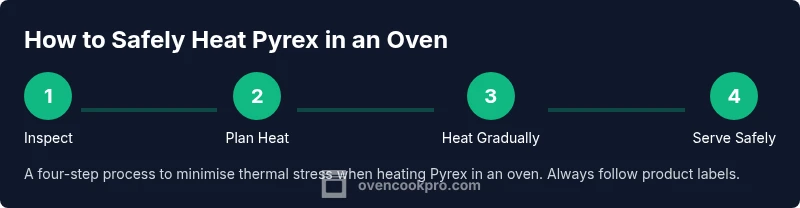
How to Hea t Pyrex Safely: A Step-by-Step Approach (Overview)
Common Mistakes to Avoid and How to Mitigate Them
There are common missteps that increase the risk of damage or accidents when using Pyrex in an oven. First, never expose Pyrex to direct flame or stovetop heat; the dish is intended for oven use, not for contact with heating elements. Second, avoid moving a hot dish abruptly or placing it on a cold countertop, which can induce thermal shock. Third, do not use damaged or cracked pieces—tiny fractures can propagate under heat, causing unpredictable breaks. Finally, don''t ignore manufacturer guidelines; always verify the specific max temperature and recommended heating method for your Pyrex product. By minding these points, you’ll minimize risk and maximize reliable results in everyday cooking. In sum, Pyrex safety is about thoughtful heating, careful handling, and maintaining the glass’s integrity over time.
Authoritative Sources and Manufacturer Guidance
For readers who want to verify the guidelines, consult manufacturer information and reputable safety resources. You should always follow the exact instructions provided with your Pyrex product, including any caveats about temperature changes and dish compatibility. The following sources offer additional context on oven safety and material tolerance:
Our Bottom Line from Oven Cook Pro
The safe heating of Pyrex hinges on gradual warming and adherence to the label. Treat each piece as a heat-tolerant tool with limits, and never push it beyond those limits for convenience. The Oven Cook Pro team recommends using gentle, predictable heating patterns, inspecting glass before each use, and opting for lower temperatures with longer bake times when in doubt. With careful handling, Pyrex can be a dependable workhorse in everyday cooking without embarrassing mishaps or breakages.
Tools & Materials
- Pyrex or oven-safe glass bakeware(Ensure it is intact (no cracks) and labeled oven-safe.)
- Oven mitts(Heat-resistant, dry, and in good condition.)
- Sheet pan or cooling rack(For air circulation and safe handling.)
- Dry towel or potholder(Extra protection when removing hot dishes.)
- Optional: food thermometer(For checking internal temperature of dishes when precise timing matters.)
Steps
Estimated time: Total: 25-40 minutes depending on recipe and oven heating pace
- 1
Inspect the Pyrex for damage
Before heating, examine the dish for cracks, chips, or clouding. Damaged glass is more prone to shattering under heat, especially with uneven heating. If you see signs of wear, do not use the piece and replace it.
Tip: Never use cookware with visible damage; even small cracks can worsen when heated. - 2
Decide on the heating method
Choose whether you will start in a cold oven or place the Pyrex inside a cold dish before preheating. Both approaches aim for gradual heat transfer to minimize stress in the glass.
Tip: Starting cold and allowing a slow warm-up reduces thermal shock risk. - 3
Position the dish for even heating
If using a cold-oven method, place Pyrex on a rack or sheet pan to promote even heat distribution and protect from drips. If you preheat, place it on the middle rack to balance heat from all sides.
Tip: A sheet pan makes it easier to slide the dish in and out safely. - 4
Set and manage the oven temperature
Select the recipe’s temperature and avoid jumps. If you started in a cold oven, give the oven time to reach the target temperature before putting in the dish. Do not rush the heating process.
Tip: Avoid high-heat surges that can stress the glass. - 5
Monitor without overhandling
Keep an eye on the dish as it cooks. If you’re using a thermometer, check internal temperatures toward the end of the cooking window. Resist the urge to open the oven door repeatedly, which disrupts heating.
Tip: Open the door only when necessary and close quickly to preserve heat. - 6
Remove safely when done
Use dry oven mitts to lift the Pyrex from the oven. Set it on a heat-safe surface or rack and allow it to rest briefly before slicing or serving.
Tip: Place a cooling rack under the dish to prevent heat transfer to countertops. - 7
Cool gradually and clean
Let the dish come to room temperature before washing. Use warm, soapy water and a non-abrasive sponge to preserve the glass over time.
Tip: Avoid sudden temperature changes during cleaning (e.g., hot dish into cold water). - 8
Store properly and inspect again
Store Pyrex in a safe place where it won’t be bumped. Reinspect before future uses, especially if the piece has seen repeated heating.
Tip: Keep lids or covers clean and dry to prevent moisture buildup.
Questions & Answers
Is Pyrex truly heatproof for oven use?
Pyrex is designed for oven use, but it is not invincible. Always check the product label and avoid rapid temperature changes that can cause stress or cracks.
Pyrex is oven-safe, but always follow the label and heat gradually to avoid damage.
Can I put Pyrex from the fridge into a preheated oven?
You can, but it increases the risk of thermal shock. Better practice is to allow the dish to come toward room temperature or start in a cold oven and heat gradually.
Yes, but it’s safer to let it warm gradually rather than jumping from fridge to hot oven.
What should I do if Pyrex cracks while baking?
If you notice cracks during baking, stop using the dish and transfer contents to another safe container if possible. Do not continue heating it.
If you see a crack, remove the dish immediately and don’t reuse it until you understand the damage.
Can Pyrex be used under a broiler?
Most Pyrex is not recommended under direct broiler heat due to intense localized heat that can cause cracking. Use lower heat and avoid direct broiling unless the manufacturer says otherwise.
Avoid broiling with Pyrex unless the label says it’s safe.
Does brand matter for Pyrex safety?
Different Pyrex products may vary; always rely on the specific product’s guidelines rather than assuming all Pyrex is identical.
Always check your specific Pyrex product’s instructions.
Are there alternatives to Pyrex for high-heat baking?
If you routinely bake at very high temperatures, consider metal bakeware or ceramic that is explicitly rated for those higher temps.
For very hot baking, metal or ceramic rated for high temps can be safer.
Watch Video
Main Points
- Heat slowly to protect Pyrex from thermal shock
- Inspect for damage before each use
- Follow manufacturer guidelines for max temperature
- Use safe handling practices when removing from the oven