How to Know If a Bowl Is Oven Safe: A Home Guide 2026
Learn to determine whether bowls are oven safe with practical checks on material, markings, glaze, and testing. A complete, easy-to-follow guide from Oven Cook Pro for safe kitchen use.


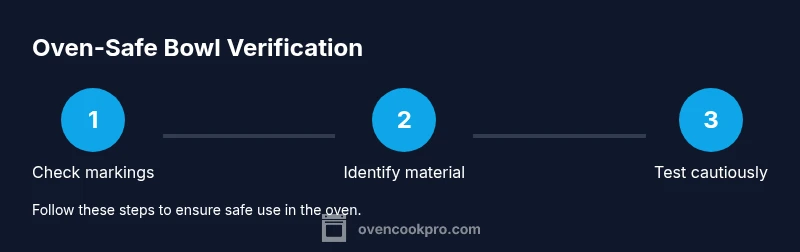
To know if a bowl is oven safe, check material type (ceramic, glass, stoneware, silicone), look for oven-safe markings, review manufacturer guidance, consider glaze and finish, and perform a cautious heat test. Always start with low temperatures and shorter times, and never use damaged bowls. If in doubt, contact the maker. This quick check can save time and prevent kitchen mishaps.
Why knowing if a bowl is oven safe matters
For home cooks, understanding how to know if a bowl is oven safe is essential. Heat in the oven can cause glass or ceramic bowls to crack, glaze to craze, or finishes to deteriorate, leading to leaks, odors, or dangerous spills. The question isn't just about 'will it melt' but about how the bowl handles sudden temperature changes, prolonged exposure, and accessories like lids or metal rims. According to Oven Cook Pro, markings, material, and manufacturer guidance are the most reliable indicators. This article dives into those signals, explains how to read them, and offers a safe, step-by-step approach so you can cook with confidence rather than guesswork.
By understanding these principles, you’ll reduce waste, avoid safety hazards, and extend the life of your bowls. The goal is practical, actionable advice you can apply in a typical home kitchen today, with a focus on safety and longevity.
Read the markings and labels first
The simplest way to confirm oven safety is to start with the bowl itself. Look for markings on the bottom or sides—often a symbol like an oven or a temperature range, a brand name, or a “oven-safe” label. Some bowls also include a temperature limit (for example, up to 450°F/230°C). If the label is unclear or faded, check the manufacturer’s website or packaging for definitive guidelines. Many reputable brands clearly state whether the item is oven-safe, and if any limits apply to preheating, broiling, or toasting at high temperatures. When in doubt, prioritizing the brand’s official guidance reduces ambiguity and improves safety. This initial check should be quick, but it sets the foundation for all subsequent steps in the test. If your bowl lacks any markings, treat it as non-oven-safe until proven otherwise.
Material matters: ceramic, glass, stoneware, silicone
Bowl materials influence heat tolerance and thermal shock resistance. Ceramic and porcelain bowls can be oven-safe if the glaze is rated for oven use and the clay body is properly fired. Glass bowls vary widely: tempered glass is often oven-safe, but some decorative glass may crack under heat. Stoneware tends to be robust but still has temperature limits. Food-grade silicone bowls are typically designed for oven use, often at higher temperatures. Note that some materials perform well in low-heat warming but are not suited for baking or broiling. When selecting, compare the material’s documented oven range and avoid bowls that combine dissimilar materials without clear guidance. Remember, a glass bowl can crack from thermal shock if placed in a hot oven too quickly.
Tools & Materials
- Oven-safe bowls (ceramic, glass, or silicone)(Choose bowls with explicit oven-safe labeling or manufacturer guidance)
- Manufacturer guidelines or labeling(Scan for temperature limits and usage notes)
- Oven mitts or heat-resistant gloves(To handle hot bowls safely)
- Timer or clock(Helps control testing duration)
- Cooling rack or heat-resistant surface(Protects surfaces and bowls when cooling)
- Soft cloth or towel for cleanup(Optional after testing)
Steps
Estimated time: 20-30 minutes
- 1
Inspect for visible cues
Begin with a careful visual check. Look for cracks, chips, glaze defects, or any signs of previous heating. If you see damage, do not test or heat the bowl. This step helps identify obvious safety risks before you apply heat.
Tip: A damaged bowl is unsafe to test and can fail during use. - 2
Check official markings or guidance
Turn the bowl over and read any symbols or text. Cross-check with the manufacturer’s official guidance for oven use. If markings disagree with the product label, trust the label or contact support. This step reduces guesswork and aligns with trusted sources.
Tip: If in doubt, replace with a certified oven-safe option. - 3
Identify material and compatibility
Determine whether the bowl is ceramic, glass, stoneware, or silicone and confirm its compatibility with oven temperatures. Different materials tolerate different heat profiles; misidentification can lead to cracks or glaze damage.
Tip: Ceramics may be stoneware or porcelain; glass may be tempered. - 4
Prepare to test with caution
Set up a safe testing environment: preheat the oven to a modest temperature (e.g., 350°F/175°C) before placing the bowl inside. Use a timer and keep the bowl away from racks that could cause impact damage.
Tip: Always wear oven mitts and avoid metal rims unless specified safe. - 5
Run a controlled heat test
Place the bowl in the oven for a short duration (about 10–15 minutes) and observe for cracks, crazing, or odor. Remove with mitts if needed and let it cool completely before inspecting closely.
Tip: If you see any cracking or sweating glaze, remove and discard. - 6
Evaluate results and decide
If the bowl remains intact and shows no glaze or structural damage, it may be oven-safe within tested conditions. If uncertain or if any issue appears, do not use in the oven and seek a tested, labeled alternative.
Tip: Document the test and rely on manufacturer guidance for final decision.
Questions & Answers
Is a microwave-safe bowl always oven-safe?
No. Microwave-safe labeling does not guarantee oven safety; heating methods and glaze tolerances differ. Always check oven-specific guidelines.
Microwave-safe does not always mean oven-safe.
What should I do if a bowl cracks in the oven?
Power off the oven and remove the bowl with oven mitts. Let it cool completely, then assess replacement. Do not reuse cracked bowls.
If it cracks, stop using it and replace it.
Are glass bowls more likely to be oven safe than ceramic?
Both can be oven-safe if properly labeled for oven use. Always verify with the manufacturer’s guidance rather than assumptions.
Glass can be oven-safe if labeled, but verify.
Can bowls with metal rims be oven safe?
Generally not; metal rims can heat unevenly or cause damage. Use rims only when the manufacturer specifies oven safety.
Bowls with metal rims are usually not oven-safe.
How can I tell if glaze is oven-safe?
Look for markings or documentation stating the glaze is lead-free and oven-rated. If unclear, don’t risk heating the bowl.
A glaze labeled for oven use is safer.
What about stoneware and pottery used in ovens?
Stoneware is oven-safe if labeled and properly fired. Unknown pottery is risky; avoid using unmarked pieces in heat.
Stoneware can be oven-safe if labeled, but check first.
Watch Video
Main Points
- Inspect markings and material before heating.
- Rely on manufacturer guidance for limits.
- Test cautiously at low temps only.
- Protect bowls from thermal shock during use.
- Review care steps to extend life.