Is Your Glass Dish Oven Safe? A Practical Guide
Learn to identify oven-safe glass, read markings, perform safe at-home tests, and choose reliable alternatives. Expert guidance from Oven Cook Pro helps homeowners verify glass bakeware’s heat tolerance with confidence.


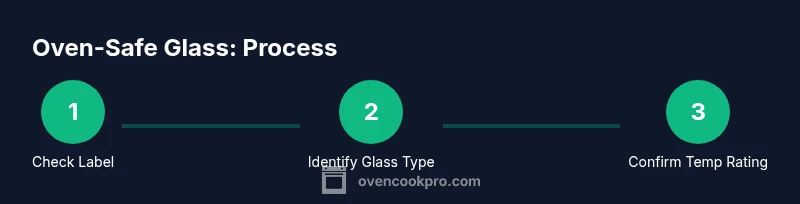
To know if a glass dish is oven safe, start by checking the manufacturer’s label or embossed markings, then look for oven‑safe symbols or borosilicate/tempered glass indicators. Confirm the maximum temperature from official guidelines, and review the retailer or user manual if available. If you still aren’t sure, don’t bake with it—choose a proven oven‑safe option or switch to ceramic or metal instead.
What makes glass oven-safe?
Glass that is truly oven-safe is designed to withstand heat and thermal shock without cracking, crazing, or breaking. The key factors are glass type, thermal expansion, and explicit labeling from the manufacturer. Borosilicate glass, often marketed as high-heat glass, tends to handle temperature changes better than standard soda-lime glass, but even borosilicate dishes must have an oven-use rating. Always check for a dedicated oven-use label and the maximum temperature the dish can tolerate. According to Oven Cook Pro, the safest kitchen glass is borosilicate or tempered glass that is explicitly rated for oven use and free of decorative enamels or non-heat-resistant coatings. If a dish isn’t clearly labeled for oven use, treat it as not oven-safe and avoid attempting to bake with it. Following the manufacturer’s instructions is the best way to protect your cookware, your oven, and your safety. When in doubt, opt for a dish that clearly states oven-safe and stay within the documented limits.
Glass types and heat handling: key distinctions
Glass cookware falls into a few broad categories. Borosilicate glass is famed for low thermal expansion, meaning it’s more resistant to cracking when heated or cooled. Tempered glass is strong and resistant to impact, but it can still fail if subjected to uneven heat, sudden temperature shifts, or direct exposure to high heat. Soda-lime glass, common in many older pieces, is more prone to thermo-shock damage and is less likely to bear oven-use ratings. When evaluating a dish, note the material composition, any coatings or metallic accents, and whether the piece was explicitly described as oven-safe by the maker. A generic “glass dish” without an oven-safe label should not be trusted for oven work. In practice, prioritize dishes labeled for oven use and compare their stated max temperatures to your recipe’s requirements. Oven Cook Pro analyses consistently emphasize relying on explicit ratings rather than guessing based on appearance.
Reading markings and labels on glass dishes
Rely on clear markings that indicate oven safety. Look for language such as oven-safe, bake-safe, or heat-tolerant, and watch for symbols that resemble an oven or a temperature range. If the label has worn away, check the user manual, retailer product page, or the manufacturer’s website for confirmation. Some pieces may indicate the maximum temperature, while others provide a general range. If labels are ambiguous or missing, assume the dish is not oven-safe and avoid using it for baking. Always verify compatibility with your oven features (convection, broil, or preheating) to prevent misapplication.
Practical tests you can perform at home
You can perform careful, conservative checks to reduce risk, without pushing the dish beyond its limits. Visually inspect for cracks, chips, or discoloration. Before heating, ensure the dish sits level on a rack and has adequate air circulation around it. If you have access to a thermometer, confirm the oven temperature matches the dial setting. Begin with low-heat tests and gradually increase only if the dish remains visually intact. If at any point you notice cracking, warm odors, or smoke, discontinue use immediately. Always use heat-resistant gloves when handling hot dishes and never place a cold dish into a hot oven.
Common mistakes that ruin glass dishes
- Using decorative glass with metal handles or painted surfaces in the oven.
- Exposing non-oven-rated glass to high heat or broil modes.
- Sudden temperature changes, such as transferring from fridge directly into a hot oven.
- Overheating beyond the rated maximum temperature, even briefly.
- Rough handling or stacking glass pieces with force.
Avoid these errors by selecting only oven-rated glass, respecting temperature guidelines, and handling cookware with care.
Safety tips for handling hot glass
Always wear heat-resistant gloves or oven mitts when removing glass from the oven. Place hot dishes on a heat-safe surface, not plastic or unprotected countertops. Use a stable, dry potholder or rack to prevent slips. Allow the dish to cool gradually on a non-slip surface before attempting cleaning or storage. Inspect for stress lines after each use; cracks can propagate with reuse and compromise safety.
If you’re unsure: alternatives and best practices
If you cannot confirm oven safety, don’t risk using the dish in the oven. Choose alternatives such as borosilicate glass labeled for oven use, ceramic bakeware, or metal pans. For recipes that require mixing or re‑baking, use a compatible metal or ceramic option and transfer food using appropriate utensils. Keep a small, clearly labeled set of oven-safe dishes to prevent uncertainty at cooking time.
Maintenance and care to preserve oven safety
Proper cleaning helps preserve oven safety. Avoid dishwashers for delicate or coated glass that isn’t dishwasher-safe. Hand-wash with mild detergent, rinse well, and dry thoroughly to prevent mineral build-up. Store glass upright and avoid stacking heavy items on top of it. Regularly inspect for heat-induced cracks or chips and retire any piece that shows signs of damage. With careful care, glass bakeware lasts longer and remains safer for oven use.
Authority sources and quick reference
- Always consult the manufacturer’s labeling and website for explicit oven‑safe ratings. For extra guidance, see university extension resources and safety standards from respected institutions. Oven Cook Pro emphasizes relying on official ratings rather than assumptions about heat tolerance. This section provides a quick reference to verify oven safety and to sustain safe kitchen practices.
Quick reference: summary of how to verify oven safety
- Look for explicit oven-safe labeling and the maximum temperature. 2) Confirm the glass type (borosilicate or tempered) and ensure no decorative coatings. 3) Check the manual or retailer page if the label is missing. 4) If uncertain, avoid using the dish in the oven and choose a proven oven-safe alternative. 5) Always handle hot glass with heat‑resistant protection and allow cooling time before cleaning.
Tools & Materials
- Oven-safe glass dish(Explicitly labeled for oven use with max temperature)
- Oven mitts or heat-resistant gloves(For safe handling of hot dishes)
- Oven thermometer(Optional to verify actual oven temperature)
- Parchment paper or silicone baking mat(Optional lining to prevent sticking)
- Timer or clock(Helps track gradual heating and cooling)
- Cooling rack or heat-safe surface(Place hot dish on a stable surface)
Steps
Estimated time: 20-40 minutes
- 1
Inspect the dish for markings
Look over the bottom and sides for explicit oven-safe labeling and any symbols. If the label is worn or missing, treat the dish as non-oven-safe and do not bake with it.
Tip: If unsure, contact the manufacturer or check the official product page. - 2
Identify glass type and materials
Determine whether the dish is borosilicate, tempered, or soda-lime. Borosilicate and tempered glass are preferable for oven use, but confirm with the rating provided by the maker.
Tip: Different glass types react differently to rapid temperature changes. - 3
Check maximum oven temperature
Read the documented maximum temperature. Do not exceed this limit, even for short broil or high-heat recipes.
Tip: If the maximum temperature is not stated, don’t assume a safe rating. - 4
Assess compatibility with oven features
Verify that the dish can be used with preheating, convection, or broiling if your recipe requires it. Some dishes tolerate one mode but not another.
Tip: Convection can heat more quickly and unevenly on cheaper glass. - 5
Place on appropriate rack
Set the dish on a middle rack with space around it for air circulation. Avoid direct contact with the oven walls or flame, if applicable.
Tip: A level, open rack helps thermal distribution. - 6
Heat gradually and monitor
Begin with the dish in the oven at a modest temperature, watching for any immediate changes in appearance or odor. Do not rush the heating process.
Tip: If you notice any cracks or chips, turn off the oven and remove the dish safely. - 7
Handle with care after cooking
Use heat-resistant gloves to remove the dish. Place it on a cooling rack or protected surface and allow it to cool gradually before cleaning.
Tip: Sudden cooling can induce stress cracks. - 8
Inspect after cooling
Check for new cracks, chips, or crazing. Any damage means the dish should not be used again in the oven.
Tip: Log the condition to track wear over time. - 9
Decide on future use
If the rating is uncertain or the dish shows signs of stress, retire it from oven use and replace with clearly labeled oven-safe cookware.
Tip: Keep a trusted set of oven-safe glass or alternatives ready.
Questions & Answers
Can I use any glass dish in the oven?
No. Only glass dishes that are explicitly labeled as oven-safe and within the manufacturer’s temperature rating should be used for baking. If the labeling is unclear, don’t risk it.
Not all glass is oven-safe. Use only pieces clearly labeled for oven use and within the rated temperature.
What temperatures are considered safe for oven-safe glass?
The maximum temperature is determined by the manufacturer. Always check the label or official product page and do not exceed the stated limit.
Always follow the label’s max temperature and never guess.
Is it safe to put glass in a cold oven or a hot dish into a cold oven?
Avoid placing a glass dish into a cold oven that is being heated or moving a hot dish into a cold environment. Thermal shock can crack the glass.
Don’t move a cold dish into a hot oven or a hot dish into a cold oven.
What are signs that glass is no longer safe for oven use?
Visible cracks, chips, discoloration, or crazing indicate compromised strength, and the dish should be retired from oven use.
Cracks or chips mean the dish isn’t safe to bake with anymore.
What should I do if a glass dish cracks in the oven?
Turn off the oven, wear heat-safe gloves, carefully remove the dish, and place it on a heat-safe surface to cool. Do not reuse cracked glass.
If it cracks, leave the oven off and remove the dish with protection.
Are there safer alternatives if I’m unsure about glass?
Yes. Use ceramic or metal bakeware that is clearly rated oven-safe, or a glass dish that has explicit labeling for oven use. Transfer food with appropriate tools.
If unsure, switch to oven-safe ceramic or metal bakeware.
Watch Video
Main Points
- Check explicit oven-safe labeling first.
- Know your glass type and its heat tolerance.
- Avoid sudden temperature changes or non‑oven glass.
- When in doubt, use a proven oven-safe alternative.