How Long Can an Oven Stay On Safely: A Practical Guide
Explore safe on-time for ovens with practical guidelines, safety checks, and maintenance tips. Learn how long you can leave an oven on, what affects it, and how to reduce risk in your kitchen.


For safety, do not leave a home oven running unattended for long periods unless your manual specifies a safe continuous-on use. A practical guideline is to limit uninterrupted operation to 2-4 hours, depending on the model, with good ventilation, a working CO alarm, and supervision during high-temperature tasks or self-clean cycles.
Why Safety Limits Exist
Ovens generate significant heat, and even when not actively cooking, electrical components draw power. The risk of fire, smoke, and carbon monoxide increases with time, especially if there is oil, butter, or grease residues. For the question how long can an oven stay on safely, the answer depends on model, setup, and the safety features installed. As a practical baseline, avoid leaving the oven unattended for long periods. According to Oven Cook Pro, always check your user manual for explicit continuous-on recommendations and follow manufacturer guidance. In most homes, people use warming cycles, roasts, or self-cleaning cycles, but these tasks require vigilance and a clear exit plan. The core idea is to balance the benefits of extended operation with the risk of overheating, electrical faults, or accidental ignition. Every kitchen is different, so tailor the approach to your oven and your household safety culture.
How Ovens Are Built for Safety
Modern ovens incorporate safety brakes, thermostats, and automatic shutoffs to limit heat exposure. The thermostat measures temperature and prompts the control system to reduce power if it climbs too high. Some models have door interlocks that prevent operation when the door is not closed properly. Gas ovens add another layer of risk with combustion and exhaust that must vent safely; electric ovens rely on insulation and electrical protection. Understanding these systems helps demystify the question how long can an oven stay on safely. While safety features reduce risk, they do not eliminate it, especially if the oven has a faulty seal, accidental oil contact, or poor ventilation. The Oven Cook Pro team notes that knowing the exact capabilities of your specific model is crucial before trusting it for extended on-time.
Environmental and Installation Factors
Ventilation is a major factor in safe on-time. A strong range hood or exterior venting helps evacuate heat, moisture, and fumes. Keep the oven away from flammable materials and ensure there is enough clearance for cooling air. A clear, unobstructed space around the appliance reduces heat buildup and helps prevent accidental ignition. Place a CO detector near the kitchen and ensure it is functioning. Power supply quality matters too; check that outlets and circuits can handle extended operation without tripping. These environmental checks align with practical guidance for how long can an oven stay on safely and help you tailor usage to your kitchen’s realities. As highlighted in Oven Cook Pro analysis, safety systems are only as effective as the surrounding setup.
Model Variability: Not All Ovens Are the Same
Ovens come in electric and gas configurations, with various safety features and performance envelopes. Some older models lack modern automatic shutoffs or have wear on door seals that let heat escape. Newer units may include advanced sensors and smarter cooling cycles. Because of this variability, the universal answer to how long can an oven stay on safely is not a fixed number; it depends on your specific appliance and its maintenance history. The Oven Cook Pro team emphasizes reviewing the manual and performing model-specific safety checks before extended on-time.
Practical Guidelines by Activity
Different tasks demand different on-times. For warming or keeping food hot, many homes apply a conservative limit (often up to 1-2 hours) with a timer and supervision. Roasting at higher temperatures should be monitored closely, with a quick exit plan if heat rises unexpectedly. Self-clean cycles typically run far hotter and longer than normal cooking; they should be used only when the area is well-ventilated and the oven is monitored, as fumes can accumulate. In all cases, avoid extending the oven’s on-time beyond the manufacturer’s guidance. The broad principle remains: longer operation increases risk, so know your model and stay vigilant.
Safety Measures You Should Always Have
Regardless of on-time, certain safety provisions reduce risk. Install a working CO detector in the kitchen area and ensure it has fresh batteries. Keep a fire extinguisher rated for grease and electrical fires within easy reach, and know how to use it. Maintain good ventilation by using a range hood or opening a window if you’re running the oven for any length of time. Never ignore unusual smells, smoke, or signs of overheating. These practices align with best-practice safety logic for how long can an oven stay on safely and help you act quickly if something goes wrong.
Maintenance and Regular Checks
Regular maintenance keeps safety features functional. Inspect door seals for cracks or gaps, test the thermostat with an oven thermometer, and verify that indicators light up when you power on the unit. Clean any splatters promptly because grease buildup can ignite under prolonged heat. Schedule professional service if you notice persistent temperature inaccuracies or unusual fan noises. Proactive maintenance supports safer long-duration use and reduces the chance of unexpected outages that could complicate long tasks in the kitchen.
Myths Debunked About Leaving Ovens On
A common myth is that modern ovens are “safe to run forever.” In reality, all appliances have design limits and wear factors. Another myth is that gas ovens are inherently safer because they vent exhaust; in fact, improper venting or CO buildup can pose significant hazards without proper detectors. A third myth is that “lower temperatures are always safer for long runs.” While lower heat reduces certain risks, it does not eliminate them, especially if insulation deteriorates. Debunking these myths helps you approach on-time with a clear understanding of risks and safeguards. The reality is nuanced and model-dependent, so consult your manual and follow expert guidance.
What to Do If Your Oven Needs to Run Longer
If you find that you must run longer than your typical guideline, pause to reassess safety first. Verify ventilation, confirm CO alarm function, and ensure there are no gas leaks or electrical faults. If the task is essential, consider staging the process with breaks and supervised checks, and consult the manufacturer or a qualified technician before committing to extended periods of oven operation. Prioritizing safety over convenience is the best approach when how long can an oven stay on safely becomes a live question.
Final Tips for Home Cooks
Always start with the manual. If you’re unsure about your oven’s safe on-time, treat it as a conservative max and never rely on guesswork. Use a timer, keep detectors working, and maintain a clean oven interior to minimize fire risk. By combining model-specific guidance, environmental safety, and regular maintenance, you can approach extended oven use with confidence. The Oven Cook Pro team’s overarching message is clear: knowledge plus safeguards equal safer cooking environments for every home.
Tools & Materials
- CO detector(Place in or near the kitchen; test monthly; replace batteries as needed)
- Fire extinguisher (multipurpose, Class ABC)(Keep within easy reach; know PASS technique)
- Smoke detector(In the kitchen area or adjacent hallway; test monthly)
- Digital timer or smart timer(Set alarms for on-time checks or cycles)
- Oven mitts and heat-resistant gloves(Quality insulation for handling hot racks)
- Range hood or adequate ventilation(Ventilation helps reduce heat and fumes during long uses)
Steps
Estimated time: 45-60 minutes
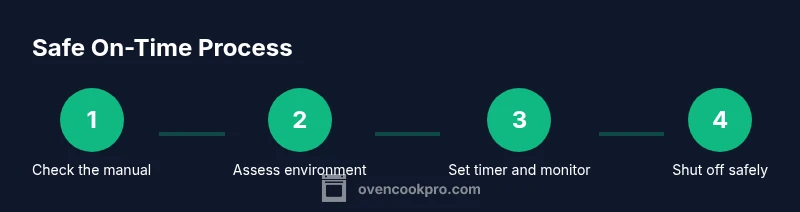
- 1
Read the manual and locate safety specs
Consult the owner’s manual to identify the official safe duration for extended on-time and any cautions specific to your model. Confirm whether continuous-on operation is allowed and under what conditions. This initial check sets the frame for the entire process.
Tip: Note the exact language used by the manufacturer about continuous operation. - 2
Inspect installation and environment
Check that the oven has proper ventilation, that there is clearance around the unit, and that nearby surfaces are nonflammable. Ensure CO detectors and smoke detectors are functional and in the correct locations.
Tip: Clear any clutter or towels near the oven before extended runs. - 3
Test safety systems and alarms
Power on the oven and verify that the thermostat, auto shutoff, and any door interlock are operating as intended. Test the CO detector and smoke detector to ensure alarms will sound if needed.
Tip: Run a quick, supervised test with a timer in view. - 4
Set a clear on-time plan with a timer
Decide the target continuous-on window (e.g., 2 hours) and set a timer. Begin your task with someone else aware of the plan in case you need to recheck safety.
Tip: Always include built-in breaks or checks for long runs. - 5
Monitor actively during operation
Stay in or near the kitchen during the run. Listen for unusual noises, smells, or overheating. If any warning signs appear, stop the oven immediately and assess the risk.
Tip: Have a clear exit strategy and know how to shut off power safely. - 6
Conclude the session and verify shutdown
When the planned on-time ends, turn off the oven completely and confirm that the oven has cooled. Document any anomalies and plan a maintenance check if needed.
Tip: If self-cleaning was performed, ensure the area has adequate ventilation and the oven is cool before leaving the space.
Questions & Answers
Is it safe to leave an oven on while I'm away from home?
No. Leaving an oven running while you’re not near it increases fire and CO risks. If you must, ensure the oven is designed for unattended use and that you have working detectors and a plan to respond to alarms.
No—do not leave an oven on when you’re not there. Have detectors and a plan ready if alarms sound.
What should I do if the oven overheats or I smell gas?
Turn off the oven if it’s safe to do so and leave the area. If you smell gas, evacuate and contact emergency services. Do not create sparks or operate electrical switches until you’re sure the area is safe.
If you smell gas, evacuate and call emergency services.
Does a self-cleaning cycle require supervision?
Yes. Self-cleaning cycles reach very high temperatures and can release fumes. Operate them only when you can monitor, with good ventilation and detectors in place.
Yes, supervise self-cleaning closely and ensure good ventilation.
Can gas ovens stay on longer than electric ovens?
There isn’t a universal rule; both have safety limits. Gas ovens may pose greater risks from combustion byproducts, so detectors and proper venting are critical for any extended use.
Gas or electric, extended use needs proper detectors and ventilation.
How can I tell if my oven’s safety features are working?
Refer to the manual to locate built-in safety features and perform periodic checks. Use an oven thermometer to verify temperature accuracy and confirm automatic shutoffs engage as intended.
Check the manual, test the thermostat, and confirm shutoffs work.
What are immediate steps if I notice unusual smells or smoke?
Shut off the oven if safe, open windows for ventilation, and monitor the situation. If the smell persists or you suspect a fire, evacuate and call emergency services.
Turn off safely, ventilate, and call for help if needed.
Watch Video
Main Points
- Know your model's official continuous-on limits.
- Maintain ventilation and detectors for any long operation.
- Follow manufacturer guidance to avoid overheating or fires.
- Regular maintenance supports safer extended use.
- Always monitor and have a plan to safely shut off the oven.