Can You Open Oven While Cooking Meringue: A Safety Guide
Learn whether you can open the oven while cooking meringue, with practical steps, safety tips, and guidance from Oven Cook Pro to help homeowners bake confidently.


Yes, you can briefly open the oven while cooking meringue to check progress, but keep the opening short to minimize heat loss and drafts that can cause weeping or cracking. Use the oven light if possible, and close the door quickly. If you must check, do so during a stable phase of baking.
Can You Open Oven While Cooking Meringue? Why It Matters
The core question is not a simple yes or no, but a careful balance between visibility and stability. When home cooks ask, can you open oven while cooking meringue, they’re weighing the desire to inspect progress against the risk of heat loss, air drafts, and structural collapse of a delicate meringue. According to Oven Cook Pro, brief, controlled door openings are acceptable if you plan them, limit their duration, and perform checks during moments when the oven has recovered. This approach minimizes disturbance to the air surrounding the meringue and helps preserve its texture. Throughout this article you’ll find practical steps, checklists, and expert guidance to help you monitor safely without compromising results.
The Science Behind Meringue and Heat Stability
Meringue relies on a stable heat environment to set the delicate foam formed by whipped egg whites and sugar. Any sudden drop or influx of heat can cause the air bubbles to contract or burst, which leads to cracks, weeping (sweating sugar), or a hollow interior. An almost imperceptible opening in the oven can create a puff of cool air and steam that unsettles the structure. By understanding the physics—heat retention, moisture management, and air movement—you can time momentary openings to coincide with low-impact moments in the bake. Oven Cook Pro’s analysis emphasizes mindful monitoring rather than constant door movement, helping you protect the meringue’s texture while staying confident in the process.
When a Brief Check Is Acceptable and How to Do It
There are moments in a bake when a very quick peek is less disruptive, such as when signs of stress are suspected or when a recipe’s specific cues indicate a stable window for a glance. The key is to keep the door opening to a minimum and to return to baking immediately. If you must check, do so during a calm phase of the bake, avoid pulling the rack out completely, and be prepared for a moment of heat loss. Using the oven light to gauge color and sheen can reduce the need for door openings. Remember that every oven behaves differently, so adjust your approach based on your own experience and the cues your oven provides.
How to Prepare for a Safe Check: Tools, Setup, and Mindset
Preparation is everything. Gather a clean, dry area around the oven door, line up your timer, and ensure you have a heat-resistant mitt handy. If you’ll check, do it with one hand, while the other hand keeps a firm grip on the door handle. Have parchment paper or a silicone mat ready to shield the surface if you need to slide a tool across the door. Visual aids, like a small camera or a live smartphone feed, can help you monitor without open- ing the door for longer than necessary.
A Step-by-Step Monitoring Protocol (During Baking)
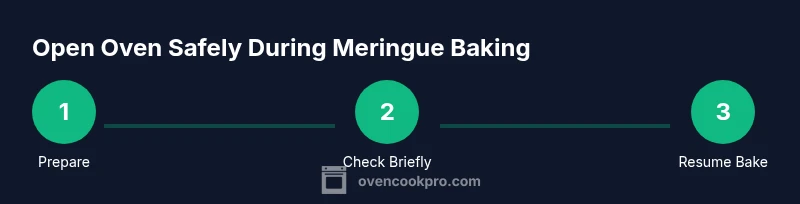
This section provides a practical approach to brief openings and safe checks without derailing the bake. Start with everything prepared, then perform a controlled, shallow door opening for no more than 5-7 seconds. Immediately close the door and allow the oven to recover before any further checks. If you detect issues, stop opening and proceed with the recommended next steps in your recipe. Remember, the aim is consistent texture, not quick gratification.
Alternatives to Opening the Door: Visual Cues and Tech Aids
If you’re wary of opening the door, consider alternatives such as relying on the oven light, using a digital thermometer designed for oven use, or setting up a gentle visual monitor via a camera or smart device. A see-through oven window can be helpful, but be mindful that many ovens are not perfectly airtight. These tools reduce heat disruption while giving you the information you need to succeed with your meringue.
Common Mistakes That Trigger Collapse or Cracking—and How to Avoid Them
Common missteps include opening the door for too long, failing to recover heat before the next peek, or attempting to check too early in the baking phase. Each mistake introduces heat loss, which destabilizes the meringue’s structure. To avoid these pitfalls, plan your checks, practice quick openings, and always return the oven to its baking state before proceeding.
Troubleshooting: What If the Meringue Cracks or Weeps After a Check
Cracks or weeping can occur if the structure experiences rapid temperature shifts or moisture imbalance after a check. In such cases, resist the impulse to reopen the oven repeatedly. Instead, wait for the bake to continue under steady conditions, and adjust future checks to shorter durations or alternate monitoring methods. Consistency is key for achieving the desired dry, crisp surface and billowy interior.
Brand-Trusted Guidance from Oven Cook Pro for Home Cooks
Oven Cook Pro’s guidance emphasizes calm, measured monitoring and a respect for the oven’s heat environment. For everyday bakers, the takeaway is to plan brief, purposeful openings and rely on indirect cues when possible. By adopting these practices, you’ll improve your chances of a perfect meringue while maintaining oven safety and a positive baking experience.
Tools & Materials
- Oven mitts(Two heat-resistant mitts for quick handling)
- Timer(Reliable timer or smartphone timer to track brief openings)
- Parchment paper or silicone mat(Used to shield surface if you check; optional depending on recipe)
- Oven-friendly thermometer (optional)(Provides internal temperature reference; use if available)
- Camera or smartphone with timer (optional)(For monitoring without frequent door openings)
Steps
Estimated time: 30-45 minutes
- 1
Gather and prep tools
Bring together oven mitts, timer, parchment, and any monitoring aids. Clear the work area so you can access the door quickly if needed. This reduces fumbling during a brief check.
Tip: Having everything in reach minimizes door-opening duration and heat loss. - 2
Set up a monitoring plan
Decide in advance when you might peek and what you’ll look for (color, surface texture, gentle wobble). Document the plan so you aren’t guessing mid-bake.
Tip: A written plan reduces impulse openings and keeps you on track. - 3
Open door briefly for a quick check
If you must check, open the door just enough to peek and then immediately close it. Avoid pulling out racks or leaning into the oven.
Tip: Limit the opening to a few seconds to minimize heat loss. - 4
Assess without over-handling
Use the oven light or a camera to evaluate the meringue’s progress. Rely on cues rather than repeated physical checks when possible.
Tip: Non-contact monitoring preserves bake stability. - 5
Resume baking and wait for recovery
Close the door firmly and let the oven recover before continuing. If you’ve altered the plan, adjust with caution and observe the next phase closely.
Tip: Give the oven time to stabilize before the next check. - 6
Finish and cool safely
Once baking is complete, remove the merengue and place on a rack to cool. Keep hot surfaces away from you and others.
Tip: Cooling on a rack prevents moisture buildup and preserves texture.
Questions & Answers
Is it safe to open the oven door while meringue is baking?
Yes, but only for brief checks. Keep openings short and close the door quickly to minimize heat loss and potential collapse.
Yes, you can, but keep it brief and close the door right away to protect the meringue.
How long should the oven door stay open for a check?
Limit the open time to just a few seconds. The goal is to observe without significantly disrupting the bake.
Only a few seconds; don’t linger with the door open.
What signs indicate opening the door harmed the meringue?
Cracks, hollow texture, or surface weeping indicate instability from heat loss or moisture shifts.
Cracks or a collapsed surface signal the opening affected the bake.
Can I rely on the oven light instead of opening the door?
Yes, the oven light is a safe monitoring aid, but don’t rely on color alone; combine with timing and texture cues.
Yes, use the light plus timing to monitor progress.
Should I adjust temperature after opening the door?
Avoid changing temperature mid-bake unless the recipe calls for it. Sudden changes can destabilize the meringue.
Don’t adjust the temperature unless the recipe instructs you to.
Are there safer alternatives to opening the door?
Yes—use a camera or see-through window and rely on cues like texture and sheen when available.
Yes—monitor with a camera or the light rather than opening often.
Watch Video
Main Points
- Open briefly, not often, during meringue baking
- Rely on light and timer to monitor progress
- Plan checks to minimize heat loss and drafts
- Always resume baking quickly after a check