Pork Steak in the Oven: Juicy, Easy Recipe
Learn Oven Cook Pro's reliable pork steak in the oven recipe with step-by-step guidance, seasoning ideas, doneness tips, and sides for juicy results.


From Oven Cook Pro: This pork steak in the oven recipe delivers juicy, evenly cooked meat with a golden crust using a simple dry rub and brief bake. Preheat to 400°F, pat steaks dry, season generously, and bake until 145°F internal temperature, then rest before serving for maximum juiciness. Timing varies with thickness.
What is pork steak and why oven-cooking works
Pork steak, often cut from the shoulder or loin, is a versatile, affordable cut that benefits from slow, even heat to stay juicy. Oven cooking excels here because it surrounds the meat with consistent warmth, letting connective tissue melt gradually without drying out the surface. According to Oven Cook Pro, the best results come from a simple balance of heat, moisture, and time: a quick dry rub to start crust formation, followed by a controlled bake and a rest that redistributes juices. When you choose boneless or bone-in pork steaks, the bone-in variety can add flavor, while boneless cuts cook a bit more evenly and quickly. Thickness matters: a 1-inch steak will need a shorter bake than a 1.5-inch cut, so plan your timing around thickness rather than relying on a single fixed minute count. For best results, pat the surface dry and leave seasonings to penetrate for at least 10–15 minutes, which helps create a flavorful crust. You can adjust salt levels based on your pork’s natural fat; leaner cuts benefit from a bit more salt to enhance aroma and savoriness. Finally, rest is essential: even a modest 5–7 minute rest after baking lets juices redistribute, keeping slices succulent rather than watery.
Flavor foundations: rubs, marinades, and sauces
A robust flavor starts with a good rub. A simple mixture of kosher salt, black pepper, garlic, onion powder, and a pinch of smoked paprika creates depth without overpowering pork. If you prefer herbs, add finely chopped rosemary and thyme for an aromatic finish; lemon zest adds brightness without acidity that would dry the meat. For a moister finish, you can marinate briefly: a 30–60 minute bath in olive oil, garlic, a splash of soy sauce (or Worcestershire), and a touch of honey or brown sugar will help caramelization. Some cooks like a glaze—honey, mustard, and cider vinegar create a glossy crust in the last 5–7 minutes of roasting. If you’re short on time, a quick rub with salt, pepper, and olive oil still delivers a tasty result. The key is balance: enough salt to enhance savoriness, enough fat to carry the flavor, and enough time for the surface to crust. Once you begin roasting, the oven’s dry heat seals and browns quickly, and the aroma will guide you toward doneness. Remember to wash knives and cutting boards between raw pork and ready-to-serve herbs or sides to minimize cross-contamination.
Preparation steps: trimming, drying, and bringing to temperature
Start by trimming any silver skin or excess obvious fat, but avoid removing all fat—the marbling helps flavor. Pat the steaks dry with paper towels; moisture on the surface can steam instead of sear and brown, reducing crust formation. If you’re using a rub, apply evenly on all sides and press it gently into the meat. Let seasoned steaks sit at room temperature for 10–15 minutes; this helps them cook more evenly when they hit the hot oven. Preheat the oven to 400°F (204°C) and position a sheet pan or baking tray with a wire rack if you have one; a rack lifts the meat for more uniform heat circulation. If you prefer searing, heat a heavy skillet with a bit of oil on high heat until shimmering, then sear each side for 1–2 minutes to develop a crust before transferring to the oven. Line pans with aluminum foil for easy cleanup, especially if you’re using a glaze. Finally, have a meat thermometer ready; target 145°F (63°C) internal temperature followed by a 5–7 minute rest. These preparation steps minimize uneven cooking and help you achieve a reliable crust.
Cooking strategies: oven-only, sear-first options
There are two common paths to oven-roasted pork steak. The first is oven-only: after preheating, place the seasoned steaks directly on a lined sheet pan and bake until the internal temp reaches 145°F, typically about 12–18 minutes for a 1-inch thickness, depending on your oven and cut. The second approach is sear-first: a quick 1–2 minute kiss on each side in a hot skillet creates a deep brown crust that adds flavor and texture; finish in the oven to reach doneness. If you sear, monitor the oven time closely, as crusty surfaces can create heat on the exterior that accelerates internal cooking. For thicker steaks (1.25–1.5 inches), plan for the higher end of the time range or finish with a brief tented rest to avoid over-browning. Use a thermometer to verify: remove when the internal hits 145°F and let it rest. For even more flavor, baste with pan juices or a brush of glaze during the last 3–5 minutes of cooking. The key is consistent heat and not overcooking; the goal is a crusty exterior with a juicy center.
Doneness targets and resting for juiciness
The official target for pork is 145°F (63°C), followed by at least 3 minutes of rest. Resting allows the juices to redistribute rather than pool in the surface area when cut, which preserves moisture and tenderness. If you cook to 140–142°F and leave the meat to rest, the carryover heat will bring it to 145°F. When you rest, cover loosely with foil to maintain warmth without steaming the crust. Slice against the grain to maximize tenderness and present clean portions. If a more well-done interior is desired, aim for 150–155°F and longer rest, but be mindful that you risk drying the meat. Keep in mind that bone-in steaks may cook more slowly due to the bone, so rely on a thermometer rather than time alone. With properly rested pork steak, you’ll notice that the juices stay within each slice rather than spilling out on the plate. Pair with simple greens or a starch to balance the richness of the meat.
Troubleshooting and common mistakes
Common problems include underseasoning, undercooking, or drying out the meat. If your crust is pale, increase the heat for a few minutes or give the steaks a quick sear to re-brown the exterior. If the center seems underdone, continue roasting in small 2–3 minute increments rather than increasing the oven temperature; this helps avoid a burned crust. Overly salty pork can happen if you use too much rub or brine; use a light touch and tastefully adjust next time. If a glaze pools and becomes sticky or burns, brush on glaze in the last few minutes to prevent scorching. A too-thick cap of fat can create a greasy finish; trim excess but preserve some fat to help with juiciness. Finally, avoid letting the meat rest in a warm oven or on a hot plate; lingering heat plus residual steam can overcook the outer layer and toughen the center. With careful prep, you can recover from minor missteps and still serve a tasty, juicy pork steak.
Serving ideas and pantry-friendly sides
A roasted pork steak pairs well with simple sides that highlight the richness of the meat. Try roasted potatoes or sweet potatoes, green beans or sautéed asparagus, and a crisp apple salad to add acidity. A bright herb chimichurri or garlic-lemon butter can lift the flavors without overpowering the meat. For a faster weeknight version, serve with mashed potatoes or a quick pilaf, and a steamed veggie for balance. If you’ve used a glaze, drizzle the last-minute sauce over slices for an extra shine. Finally, consider making a batch of pan jus from the resting juices to spoon over the meat for added moisture and flavor. With practical planning and attention to internal temperature, your pork steak in the oven will become a reliable weeknight hero that holds up well to a range of sides and toppings.
Tools & Materials
- Pork steaks (boneless or bone-in)(2–4 steaks, 1–1.5 inches thick recommended)
- Kosher salt or sea salt(Season generously)
- Freshly ground black pepper(For even seasoning)
- Olive oil (or neutral oil)(Coats surface for browning)
- Garlic cloves(Minced or pressed)
- Dried herbs (rosemary, thyme)(Aromatic finish)
- Smoked paprika(Optional for depth)
- Sheet pan or baking tray(Lined for easy cleanup)
- Wire rack (optional)(Elevates meat for even heat)
- Aluminum foil(For easy cleanup and tenting)
- Meat thermometer(Target 145°F (63°C))
- Skillet for searing (cast iron preferred)(If you choose sear-first method)
Steps
Estimated time: 25-40 minutes
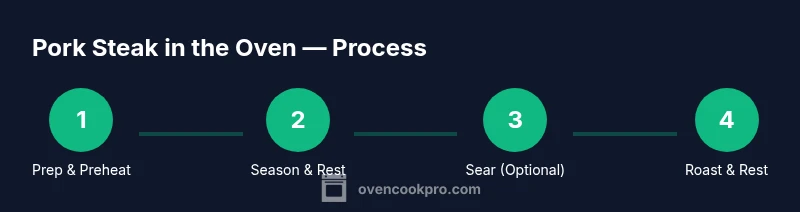
- 1
Preheat and prep
Preheat the oven to 400°F (204°C). Pat the pork steaks dry, trim excess fat, and set on a clean surface. Apply a light coat of oil and arrange a simple rub evenly on all sides.
Tip: Dry surfaces promote browning and crust formation. - 2
Season and rest
Season generously with salt, pepper, and your chosen rub. Let the steaks rest at room temperature for 10–15 minutes to even out temperature and enhance flavor penetration.
Tip: Even seasoning matters for consistent doneness. - 3
Sear (optional)
If you prefer a crusty exterior, sear each side in a hot skillet with a small amount of oil for 1–2 minutes until browned, then transfer to the oven to finish.
Tip: A hot pan is key to a deep crust; avoid overcrowding the pan. - 4
Roast to doneness
Place the steaks on the lined sheet pan (or on a rack) and roast until the internal temperature reaches 145°F (63°C). Expect about 12–18 minutes for 1-inch thickness; adjust for thicker cuts.
Tip: Use a thermometer rather than relying on time alone. - 5
Rest and serve
Remove from oven and tent loosely with foil for 5–7 minutes. Slice against the grain and serve with your chosen sides.
Tip: Resting preserves juiciness; slicing against the grain improves tenderness.
Questions & Answers
What cut qualifies as a pork steak?
Pork steak usually refers to a thick cut from the shoulder (Boston butt) or loin, either bone-in or boneless. Both work in the oven, with bone-in offering more flavor and moisture.
Pork steak typically comes from the shoulder or loin and can be bone-in or boneless. Either works in the oven, with bone-in for flavor and moisture.
What internal temperature should pork steak reach?
Cook to 145°F (63°C) and rest for at least 3 minutes. Resting lets juices redistribute, keeping slices tender and juicy.
Aim for 145 degrees and rest for at least three minutes to keep it juicy.
Is searing before baking necessary?
Searing is optional. It creates a crust and richer color, but oven-only roasting also yields a good crust with proper heat and timing.
Searing isn’t required, but it does give a nicer crust if you want that.
Can I cook frozen pork steak in the oven?
It's best to thaw pork steak before cooking for even doneness. Cooking from frozen can lead to uneven heating and longer times.
It's better to thaw first for even cooking and reliable results.
What sides pair well with oven pork steak?
Consider roasted potatoes, green vegetables, and a bright apple or citrus salad to balance richness. A simple pan jus also adds moisture and depth.
Roasted potatoes, greens, and a light salad pair nicely with pork steak.
How should I store leftovers?
Cool promptly, refrigerate in airtight containers within two hours, and use within 3–4 days. Reheat gently to avoid drying.
Cool quickly and refrigerate; reheat gently to retain moisture.
Watch Video
Main Points
- Preheat thoroughly and pat steaks dry for crust.
- Season evenly and respect thickness for timing.
- Use a thermometer to hit 145°F and rest before slicing.
- Searing is optional but enhances crust and flavor.