Self Cleaning Oven: Safe Steps for a Spotless Kitchen
Learn to safely use your self cleaning oven with expert guidance from Oven Cook Pro. This step-by-step guide covers prep, cycle selection, odor management, and post-cleanup care for spotless results.


You will learn how to safely run a self-cleaning oven, including when to use the cycle, how to prep the interior, how to select the right cycle, and how to clean up ash afterward. This practical guide provides safety tips, model considerations, and maintenance advice to keep your oven performing at its best.
What is a self-cleaning oven?
A self-cleaning oven uses extremely high heat to burn away baked-on spills and grease, reducing the need for aggressive manual scrubbing. Most models seal the interior and lock the door during the cycle to keep heat contained. According to Oven Cook Pro, understanding the core idea—heat, resist, and wipe away the ash—helps homeowners decide when to run the cycle and how to prepare for best results. This feature is a convenience, but it’s not a substitute for routine maintenance. Use the cycle sparingly and always follow your model’s manual since installation and options vary by brand.
Self-cleaning ovens rely on heavy insulation and a controlled sealing system to prevent damage to surrounding cabinetry. The cycle turns tough residues into fine ash that can be brushed away after the oven cools. Because the process occurs at high temperatures, it’s normal to notice some odor or smoke during the initial minutes—ventilation is key.
How the self-cleaning cycle works
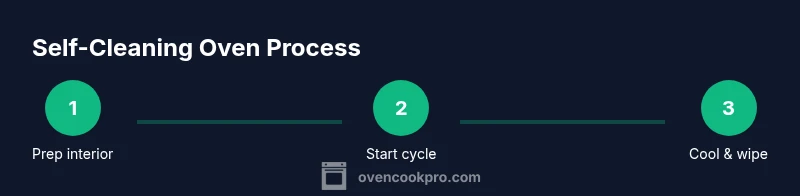
During a self-cleaning cycle, the oven interior is heated well above typical cooking temperatures. This oxidizes and scorches away residual food, turning it into powdery ash that rests on the oven floor. Racks and accessories are usually removed unless the model manual indicates they may stay in place; the door locks to contain heat. When the cycle ends, the oven cools gradually, and you wipe away the ash with a damp cloth. Some models may emit a noticeable odor or light smoke at the start; keep a window or vent fan running to improve air circulation. The goal is a clean interior with minimal effort beyond final wipe-down.
Safety prerequisites before you start
Safety first sets the stage for a trouble-free cleaning. Open a window or turn on an exhaust hood to ensure good ventilation. Remove any flammable items or kitchen towels from around the oven, and keep children and pets away from the area during the cycle. Before you begin, check that the door latch and seals are intact and that there is no spilled liquid inside the oven that could burn during the cycle. If your manual warns against leaving racks in place, follow that guidance for your specific model. If you notice unusual smells that persist after ventilation, pause and consult the manufacturer’s guidance.
When to use and when to avoid
Use the self-cleaning cycle when the interior shows stubborn baked-on grime that is difficult to remove with manual scrubbing. Avoid using the cycle after sugary spills that could caramelize and bake on more deeply, and never start the cycle if you suspect an electrical or gas-related issue. Allow the oven to cool fully after any heavy cooking before attempting another cleaning. For houses with sensitive occupants or small children, schedule the cycle during daytime hours and ensure adequate ventilation in the kitchen. Remember that self-cleaning is most effective for baked-on residue, not for regular daily spills.
Prep steps before starting a cycle
Prep is the difference between a successful clean and a rally of ash. Start by removing racks and any metal supports unless your manual explicitly says they should stay in. Wipe loose crumbs and wipe away any liquid spills with a dry towel. Vacuum the bottom if accessible to remove loose ash or debris that could blow around during the cycle. Ensure the kitchen has good ventilation, and set a timer so you can monitor the cycle’s duration. If your oven has a “no light” option during cleaning, enable it to reduce heat discharge. Finally, read your model’s manual to confirm the recommended cleaning cycle option for your oven.
Common mistakes and how to avoid them
Avoid common missteps that can lead to poor results or damaged components. Don’t leave racks or accessories inside unless the manual allows it. Don’t use chemical cleaners before or during the clean cycle, which can create fumes or residues. Don’t interrupt the cycle once it starts; abrupt pauses can strain heat seals and insulation. Ensure the door seals are intact and avoid slamming the door during cooldown. If you smell something unusual or see smoke continuing after a cycle has completed, consult the manual or contact support.
Post-cycle cleanup and maintenance
After the cycle completes and the oven has cooled, wipe the interior with a damp microfiber cloth to remove the fine ash. Use a small vacuum attachment to reach crevices and corners. Reinstall the racks only after the oven has cooled completely. Do a quick exterior wipe to remove any fingerprints or dust, and consider scheduling a light weekly wipe-down to keep the interior from building up grease between full cleans. If discoloration remains, a gentle follow-up cycle may be appropriate—refer to your model’s guidance.
Choosing the right cycle for your oven model
Not all self-cleaning cycles are identical. Some ovens offer light, normal, and heavy cleaning options, while others present a single fixed cycle. Read your manual to select the appropriate intensity and duration for the level of buildup you’re dealing with. For light stains, a shorter cleaning session may suffice; for heavy buildup, longer cycles are typically needed. Always confirm that racks are removed and the door is unlocked before starting. If you’re unsure, start with the light setting and observe the results before advancing to a stronger option.
Best practices from Oven Cook Pro
Based on Oven Cook Pro analysis, a well-timed cleaning routine protects oven components and maintains efficiency. Align your cleaning schedule with your cooking load to avoid overusing the cycle, which can wear seals over time. Always prioritize safety: ensure ventilation, supervise the cycle, and perform a post-cleanup wipe-down to remove ash. The Oven Cook Pro team recommends combining periodic maintenance with occasional manual cleaning for tough spots, so your oven looks and performs as it should.
Tools & Materials
- Oven-safe gloves(Heat-resistant, ideally 14–16 inches long)
- Soft microfiber cloth(For wiping ash after cycle)
- Vacuum with brush attachment(Optional for debris in corners)
- Kitchen timer or clock(Track cycle duration and cooldown)
- Ventilation options(Open window or run exhaust fan during cycle)
Steps
Estimated time: Total time varies by model; consult the manual for the exact duration.
- 1
Prep the interior and remove accessories
Open the oven and remove all racks and rims unless the manual states otherwise. Clear any debris and wipe loose particles from the interior before the cycle. This reduces ash spread and improves cleaning efficiency.
Tip: Wear heat-resistant gloves and use a dry cloth to avoid introducing moisture into hot surfaces. - 2
Study the manual and choose the cycle
Consult your owner’s manual to select the recommended self-cleaning option for your model. If your oven offers multiple levels, start with the light option to gauge results. Understanding model-specific guidance helps prevent damage.
Tip: If in doubt, start with the gentlest setting and avoid over-cleaning. - 3
Lock the door and start the cycle
Close the oven door securely and activate the chosen self-cleaning cycle. The door will lock during the process—keep hands away and ensure pets are not nearby.
Tip: Do not interfere with the cycle once it begins. - 4
Ventilate and monitor the cycle
Keep the kitchen ventilated by opening a window or turning on an exhaust fan. Monitor for any unusual odors or smoke and be prepared to pause if necessary.
Tip: Adequate ventilation minimizes odors and protects indoor air quality. - 5
Cool down and wipe ash
Allow the oven to cool completely, then wipe away the ash with a damp microfiber cloth. Use a small vacuum to reach corners if needed.
Tip: Never touch hot surfaces; wait until a full cool-down before cleaning. - 6
Reinstall racks and perform a quick check
Reinsert any racks once the oven is cool. Do a quick exterior wipe and verify that the door seals and hinges are intact for the next use.
Tip: Perform a quick bake at a low temperature to test the oven’s operation after cleaning.
Questions & Answers
Is it safe to run the self-cleaning cycle after every spill?
Not every spill requires a full clean. Use the cycle for stubborn, baked-on residue and rely on manual cleaning for fresh or light spills. Overuse can wear gaskets and seals over time.
You don’t need to run it after every spill. Use it for stubborn buildup and stick to manual cleaning for fresh spills.
What if I smell smoke or strong odors during the cycle?
If odors or smoke occur, stop the cycle if you can, ventilate the area, and assess for obvious spills or drips. If the odor persists after cooldown, consult the manual or contact support.
If you smell smoke, pause and ventilate. Check for spills and let the oven cool before trying again.
Can I leave racks in during the cycle?
Most manufacturers recommend removing racks during the self-clean cycle to prevent discoloration and potential damage. Always follow your model’s manual.
Usually, you should remove the racks unless your manual says they can stay.
Are self-cleaning ovens safe for gas ovens?
Self-cleaning cycles are designed for gas and electric ovens, but gas ovens may have more pronounced odors. Always ensure proper ventilation and monitor the cycle.
Gas ovens can use the cleaning cycle, but ventilate well and follow the manual.
What are alternatives to self-cleaning if I’m uncomfortable with the cycle?
Manual cleaning with warm water and a non-abrasive cleaner, combined with regular maintenance, is a common alternative. Steam cleaning options may also be available on some models.
You can clean manually or use steam-assisted options if your model supports them.
Watch Video
Main Points
- Follow model-specific guidance for cycle selection
- Ventilate the kitchen and supervise the cycle
- Wipe and inspect after cooling to maintain cleanliness
- Schedule periodic maintenance rather than overusing the cycle