Is Oven Cleaner Flammable? A Safety Guide for Home Cooks
Explore whether oven cleaners are flammable, how to read labels and safety data sheets, and practical steps to prevent fires during cleaning, storage, and disposal.


Is oven cleaner flammable? In short, some oven cleaners are flammable, especially solvent-based formulations and aerosol sprays. Read the label for flashpoint information and follow safety guidelines. Keep cleaners away from open flames, hot surfaces, and electric coils, and never use them near a gas burner. Ventilate the area well and store cleaners away from heat.
Is Oven Cleaner Flammable? What the chemistry means
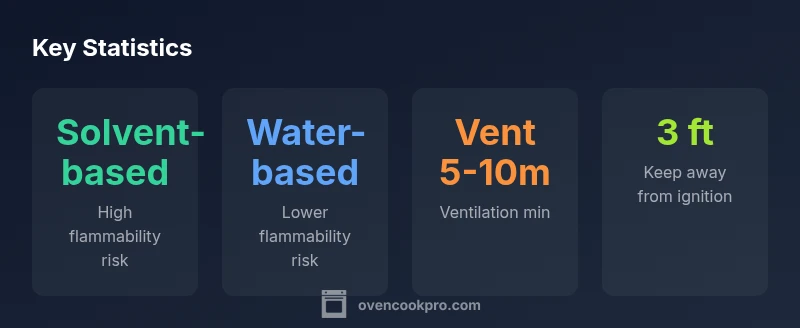
Understanding flammability starts with recognizing that oven cleaners are not a single product category. They range from water-based foams to solvent-heavy aerosols. The label may reveal a flammable warning or a flame pictogram; it’s essential to read. Is oven cleaner flammable? The answer depends on the formulation. Solvent-based cleaners, especially those delivered as sprays or foams relying on hydrocarbon or ether-based solvents, carry a higher risk of ignition if exposed to heat or open flame. By contrast, many water-based products are less prone to ignite, though they can still pose chemical burn risks if mishandled. For home cooks, the distinction is practical: it guides how you store, handle, and use the product, and what you can safely clean near active heat. The Oven Cook Pro team stresses that risk normalization comes from understanding product data—the label, the safety data sheet (SDS), and the conditions under which you apply the cleaner. In practice, knowing is not enough—you must apply that knowledge with caution when the oven is hot, when a burner is lit, or when you plan to clean just before dinner.
Reading product labels and Safety Data Sheets (SDS)
Product labels and SDS documents are the first line of defense against fire risk. Look for explicit flammability statements, flashpoint values (if shown), and GHS pictograms that indicate ignition hazards. The SDS offers deeper detail: hazard statements, recommended handling procedures, and first-aid steps. Many spray cleaners carry a flame icon and warnings about heat, sparks, or abrasion. For home kitchens, prioritize products with lower flammability risk and ensure you have good ventilation. If you cannot locate a clear flammability rating, contact the manufacturer or choose a different formulation. The key takeaway is to treat every cleaner as potentially hazardous until proven otherwise by clear labeling.
Safe usage: step-by-step during cleaning
- Turn off the oven and unplug if possible; 2) Remove racks and large food debris; 3) Open windows or switch on the hood to create ventilation; 4) Apply cleaner to a cool surface away from heating elements; 5) Adhere to the product’s wait time and do not leave the solution baking in the oven; 6) Wipe thoroughly with a damp cloth, then rinse and dry; 7) Store the cleaner in its original container away from heat sources. Following these steps minimizes the chance of ignition and reduces residue that could ignite later.
Safe handling, storage, and disposal
Always wear gloves and eye protection when handling oven cleaners. Store containers upright in a cool, dry place away from heat sources and direct sunlight. Do not transfer cleaners to unlabelled containers, and never mix cleaners with other chemicals. After use, dispose of rags and paper towels according to local guidelines, and ensure the container is sealed tightly. If you suspect a spill, ventilate the area and clean up promptly, then wash hands thoroughly. Safe storage and prompt disposal reduce fire risk and protect household members.
Practical cleaning scenarios and decision making
In most kitchens, solvent-based cleaners excel at removing baked-on grease but come with higher flammability risk. If you must use them, perform a quick pre-clean to reduce residue, ensure the oven is cool, and never use near gas flames or near heating coils. If you can, opt for water-based or less-flammable alternatives for routine maintenance. For stubborn grime, you may consider a two-step approach: apply a low-flammability cleaner first, then a targeted solvent-based treatment only after ensuring ample ventilation and heat-free conditions. Always finish with a thorough wipe-down and air-out period.
Alternatives and non-flammable options worth considering
Water-based foams and gels offer a lower ignition risk while still delivering good cleaning power on light to moderate buildup. Paste-based mixtures (e.g., baking soda with warm water) can help tackle mild grease without introducing solvent vapors. For heavy, baked-on grime, a professional-grade cleaner labeled as non-flammable or less flammable may reduce hazard potential. When possible, let the oven cool completely before cleaning and avoid applying any cleaner directly to heating elements. Consider routine maintenance to minimize heavy buildup that would require stronger solvents.
Common mistakes that increase fire risk
Mistakes such as applying cleaner to a hot oven, near an open flame, or on a surface that hasn’t cooled, significantly raise the risk of ignition. Mixing cleaners with other household chemicals can release unexpected vapors, while failing to ventilate can allow vapors to accumulate. Rushing through the process or ignoring label instructions often results in incomplete removal of residues, which can create flammable surfaces. The safest path is a calm, methodical approach guided by the product’s labeling and SDS.
Comparison of solvent-based vs water-based oven cleaners
| Property | Solvent-based | Water-based |
|---|---|---|
| General Flammability | High risk (solvent-based) | Low risk (water-based) |
| Ignition Sources | Open flames, hot surfaces, sparks | Open flames, hot surfaces, sparks |
| Ventilation Guidance | Ventilate during use and after | Ventilate during use and after |
Questions & Answers
Are all oven cleaners flammable?
No. Some are water-based and less flammable, but always check the label for explicit flammability information and the SDS for details.
Not all oven cleaners are flammable. Check the label for flammability information and follow safety guidelines.
What should I do if an oven cleaner catches fire?
If a fire starts, turn off heat sources and evacuate. Call emergency services if the fire enlarges. Use a fire extinguisher only if you are trained and it is safe to do so.
If a cleaner catches fire, turn off heat, evacuate, and call for help if needed.
Can I use oven cleaner near a gas oven?
Avoid applying near gas burners and hot surfaces. Ensure the gas is off and the area is well ventilated before cleaning.
Avoid using near gas burners; ensure the area is cooled and ventilated.
How long should I ventilate after cleaning?
Ventilate for at least 5-10 minutes after cleaning, longer if the product scent or fumes linger.
Ventilate for 5-10 minutes or more if strong fumes remain.
Are there non-flammable oven cleaners?
Yes. Water-based cleaners and some foams are less flammable; always read the label to confirm.
Yes, look for water-based options and read label warnings.
Can I reuse spray bottles after cleaning?
Yes, if the bottle is clean and rated for reuse. Rinse thoroughly and dry before refilling.
Yes, but only if the bottle is clean and designed for reuse.
“Flammability is a function of formulation and handling. Always treat oven cleaners with caution and prioritize non-flammable options when possible.”
Main Points
- Always read product labels before use
- Keep cleaners away from heat sources and flames
- Ventilate the area during and after cleaning
- Store cleaners in original containers away from ignition sources
- Prefer non-flammable options when possible