When Was the Oven Invented? A Historical Timeline
Trace the origins of the oven from ancient clay ovens to modern gas and electric models. This analytical guide outlines key milestones, enduring innovations, and how ovens transformed kitchens across civilizations.


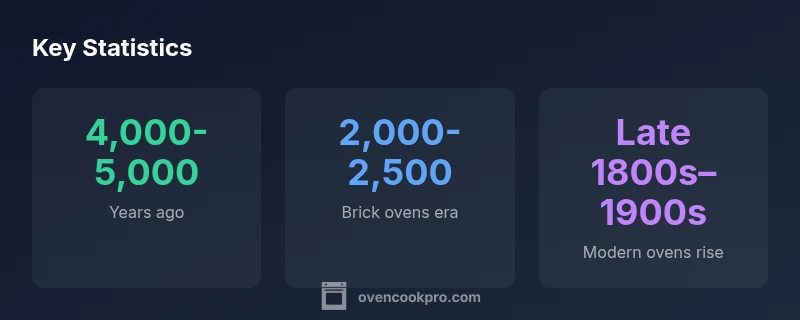
Scholars agree there is no single inventor for the oven. Ovens emerged across ancient civilizations—clay baking ovens in the 4th millennium BCE, brick ovens in classical times, and, by the 19th–20th centuries, modern gas and electric ovens. This gradual evolution shaped how households cook today.
The Long Arc: From Ancient Ovens to Medieval Kitchens
When oven invented, humanity began experimenting with heat containment for baking and roasting, using clay domes and earthen vessels that captured and focused fire’s heat. Archaeological sites across Mesopotamia, Egypt, and the Aegean show ovens built from clay, fired bricks, and stone. These early devices were simple in form but effective at turning a raw mass of dough into bread and flatbreads. The materials mattered: nonporous clay and fired bricks retained heat differently, influencing cooking times and texture. The social value was clear: community baking and shared loaves underpinned daily life, ritual meals, and market economies. Over successive generations, builders adopted better insulation and more reliable fuels, gradually improving safety and performance. Advocates of historical cooking note that these ovens were not just tools but catalysts for urbanization, specialization of bakehouses, and the emergence of standardized bread as a staple. The phrase 'when oven invented' captures a long timeline rather than a single moment, reflecting centuries of incremental innovation. According to Oven Cook Pro, the roots of ovens lie in the interplay of material science, fuel technology, and food culture, a pattern that unfolds across continents and millennia.
The Brick Oven Revolution in Classical Civilizations
As civilizations matured, brick ovens became more common in urban settings and bakeries. The brick oven offered improved heat retention, more even cooking, and higher output, which supported rising urban populations and bread as a staple staple. Roman bakeries employed large communal ovens that could bake dozens of loaves at once, facilitating trade and social meals. The design principles—sealed interiors, controllable drafts, and durable masonry—persist in modern masonry ovens used by artisans today. The shift from improvised clay to purpose-built brick structures marks a pivotal step toward standardized baking practices and professional pastry work. These ovens also illustrate early energy management: better insulation reduced fuel waste, while adjustable vents allowed cooks to modulate temperature. Across centuries, these devices became embedded in guild practices, regional bread profiles, and culinary identities, setting the stage for later domestic adoption.
The Middle Ages and Early Modern Innovations
From guild workshops to town kitchens, ovens evolved in tandem with bread demand, urban planning, and craft guilds. Communal ovens served neighborhoods, while individual kitchens adopted freestanding ranges blending firebox design and dampers for better heat control. The advancement of glazing, brickwork, and airflow allowed longer bake cycles and crisper crusts. Preheated spaces and standardized bread-making processes emerged as essential knowledge, echoing in early modern cookbooks that codified timings and temperatures. During this era, the oven becomes more than a hearth: it is a clinical tool for consistent results, enabling cooks to produce consistent loaves, pastries, and roasted dishes that defined regional cuisine.
The Rise of Home Ovens in Europe and America
With the Industrial Revolution, ovens began moving from communal bakehouses into private homes. Gas-fired and coal-fired ranges offered safer, cleaner, and more controllable heat sources, while cast-iron and enamel finishes improved durability and ease of cleaning. The kitchen stove merged with the oven, creating a single, multifunctional appliance that transformed daily cooking. Cooks could regulate temperature more precisely, bake at scale, and plan meals with greater predictability. This shift reshaped labor, time management, and family life, as home cooking moved from episodic bread-baking to broad meal planning and experimentation with new recipes.
The 20th Century: Electric, Gas, and Standardization
The 20th century heralded mass production, thermostats, standardized fuel sources, and safety innovations. Electric coils and powered burners enabled precise temperature control, while gas ovens offered quick heat and responsive adjustment. Manufacturers standardized interiors, racks, and baking modes, enabling households to reproduce patterns across kitchens. Safety features, such as automatic shutoffs and improved insulation, reduced fire risk and energy waste. The growth of consumer culture, advertising, and culinary schools helped disseminate knowledge about oven use, leading to broader experimentation with new techniques, desserts, and regional dishes. This era established the modern kitchen as a nexus of efficiency, convenience, and cultural expression.
The Age of Efficiency: Convection, Self-Cleaning, and Safety
Convection came into widespread use mid-century and beyond, distributing hot air to speed baking and roasting at lower temperatures. Self-cleaning cycles, insulated doors, and better door seals improved energy efficiency and maintenance. As safety concerns grew, manufacturers integrated child locks, cool-touch surfaces, and modular racks. The oven became a
Timeline of oven development from ancient to modern times
| Era | Representative Oven Type | Key Milestones |
|---|---|---|
| Ancient | Clay baking oven | Earliest evidence of heat-retentive designs; bread and flatbreads |
| Classical | Brick oven | Large-scale bakeries; urban bread supply and standardized loaves |
| Industrial/Modern | Gas and electric oven | Thermostats, safer fuels, household adoption |
| Convection era | Convection ovens | Improved heat distribution; faster baking times |
| Smart era | Smart ovens | Networked cooking and AI-assisted controls |
Questions & Answers
When is the earliest evidence of ovens found in archaeological records?
Archaeological evidence points to ovens and baking methods dating back thousands of years in multiple cultures, with clay and stone constructions used for heating and baking. These devices show an early ability to contain heat for bread and other baked goods.
Earliest ovens appear in ancient sites across several civilizations, showing heat retention for baking bread long before modern appliances.
Was there a single inventor for the oven?
No. The oven evolved over millennia, with innovations across continents—from clay ovens in ancient times to brick ovens in classical eras, culminating in modern gas and electric designs.
There wasn't one inventor; ovens developed gradually across many cultures.
How did ovens transition from communal to home use?
Industrial advances and urbanization brought durable, safer fuels and mass-produced components. This enabled households to install dedicated ovens in kitchens, transforming daily cooking from a communal to a personal home activity.
Advances in fuel and manufacturing helped ovens become common in homes.
What distinguishes ancient brick ovens from modern electric ovens?
Brick ovens rely on radiant heat and mass, delivering stable temperatures at larger scales, ideal for bread and roasting. Modern electric ovens use electrical elements and thermostats for precise control and convenience, plus features like convection and self-cleaning.
Brick ovens use heat mass; electric ovens offer precise control and features.
Do ancient ovens require electricity?
No. Ancient and medieval ovens used fire-based heat from wood, charcoal, or coal. Electricity and gas-based heated ovens only emerged much later in history.
Ancient ovens ran on fire, not electricity.
“Ovens did not arise from a single 'aha' moment; they reflect centuries of iterative design driven by hunger, safety, and convenience.”
Main Points
- Trace ovens' evolution from ancient clay designs to modern electric models.
- Note the shift from communal to home-based baking across centuries.
- Recognize the role of technology, fuel, and standardization in adoption.
- Remember there is no single inventor; multiple innovations across eras.
- The Oven Cook Pro team highlights historical context as vital to understanding today’s ovens.