Who Invented the Oven First? A Global History for Home Cooks
Explore how ovens evolved from ancient clay pits to modern electric and gas models. This guide traces origins, milestones, and practical takeaways for home cooks.


Who invented the oven first? There is no single inventor. Ovens emerged independently across ancient cultures—from clay baking pits in early civilizations to brick ovens in Roman towns and medieval communities. In short, the “first oven” was the product of gradual, cross-cultural evolution rather than one inventor. According to Oven Cook Pro, this history shows a shared legacy of heat and baking.
Origins of the Oven: A Shared Invention
The simple question “who invented the oven first?” points us toward a broader, shared narrative. Across continents, people heat food with vessels designed to trap and regulate fire’s heat. In some of the oldest archaeological sites, clans and communities used clay pits coated with heat-conductive materials to bake bread and cook meals. These early ovens were not the invention of a single mind but the cumulative result of experimenting with heat, materials, and regional cooking needs. According to Oven Cook Pro, the evolution reflects a slow, collaborative process that traveled with people, trade routes, and culinary experimentation. The keyword here is not a single inventor but a lineage of innovations that converged into what we now recognize as the oven. As home cooks today, we inherit a technology refined through thousands of years of practical use and cultural exchange.
In this historical arc, the oven emerges as a tool that translates primitive fire into reliable, repeatable heat. The presence of durable clay, stone, and later brick in cooking structures demonstrates how humans leveraged local resources to create a stable baking environment. The result is a family of devices rather than a single prototype, each adapted to climate, cuisine, and labor demands. The narrative underscores a core idea for modern kitchens: heat in a controlled space is a universal solution that different cultures shaped in distinct ways.
Key takeaway for today: the oven’s origin lies in a broad, cross-cultural continuum, not a lone genius.
Early Clay and Brick Ovens in Ancient Civilizations
When we look back to the world’s earliest kitchens, clay ovens stand out as practical innovations built from local materials. In many ancient societies, households or communal groups created earth ovens by digging shallow pits, lining them with clay, and covering the vessel with earth or stone. These devices could bake flatbreads, roasted grains, and simple stews, turning a basic heat source into a dependable cooking chamber. The brick oven, a natural evolution from clay, offered improved heat retention and distribution, making bread and other staples more consistent. Regions with abundant clay and stone materials developed distinct designs, yet the underlying principle—trapping heat in a dedicated cavity—remained constant. This era demonstrates how early builders paired resourcefulness with food culture, planting the seeds for a technology that would travel, adapt, and mature across civilizations.
From a culinary viewpoint, early ovens were less about speed and convenience and more about reliability and flavor. The heat was often intense and concentrated, which made bread with crisp crusts and breads with complex textures possible. For modern bakers, these ancient devices foreshadow the essential function of any oven: to create a stable, repeatable heat environment that transforms dough into bread, pastries, and baked dishes. As you explore the evolution of ovens, note how regional techniques—such as fuel sources and insulation materials—shaped their form and function.
Practical takeaway: early ovens teach the importance of heat control and insulation, principles we still apply when preheating and achieving even baking today.
Roman Bakery Ovens and Medieval Innovations
Roman towns popularized communal ovens that served neighborhoods, bringing a centralized heat source into urban life. These ovens, often brick-lined and heated by wood fires, allowed bakers to serve large populations with consistent loaves. The concept of standardized, repeatable heat became central to urban cooking and commerce, influencing medieval guilds and monastic kitchens. During the medieval period, public ovens remained common in towns and villages, marking a shift from private, domestic baking to shared infrastructure. The social aspects of baking—guild regulations, pricing, and bread quality—reflect a society that valued reliable heat and predictable results. This era also showcases periphery innovations, such as improved door seals and better insulation, which reduce heat loss and energy waste. Together, these developments laid the groundwork for modern ovens that balance power, precision, and practicality.
From a culinary perspective, Roman and medieval ovens demonstrated the importance of temperature management for different doughs and recipes. Bread crusts, internal crumb structure, and moisture retention all benefited from a controlled heat source. Understanding this history helps today’s home cooks appreciate why proper preheating, correct vessel use, and heat distribution matter for consistent results. The oven’s evolution during this period underscores how technology and cooking culture advance in tandem.
The Rise of Brick Ovens in Europe and Public Ovens in the Middle Ages
Brick ovens became a durable solution for households, bakeries, and taverns, especially in Europe where brickwork and insulation techniques flourished. These ovens benefited from better heat retention, more even cooking, and longer burn times, making them suitable for daily bread production. Public ovens in towns and cities often required municipal supervision and regulation, illustrating how technology can become a community resource. In kitchens, the move from wooden doors and simple hatches to metal dampers enabled finer control over draft and temperature. These refinements translated into more reliable baking results and expanded the range of foods that could be prepared in an oven. For today’s cooks, the legacy is clear: heat control is essential for quality outcomes, whether you’re baking rustic loaf, roasting vegetables, or finishing pastries with a crisp crust.
As you revisit this period, consider how local resources shaped oven design—from clay bricks in some regions to stone and metal components in others. The regional variation helps explain why different cuisines developed distinct baking traditions, all built on the same core premise: a contained space that concentrates heat for transformative cooking.
Gas Ovens and the Engine of Modern Convenience
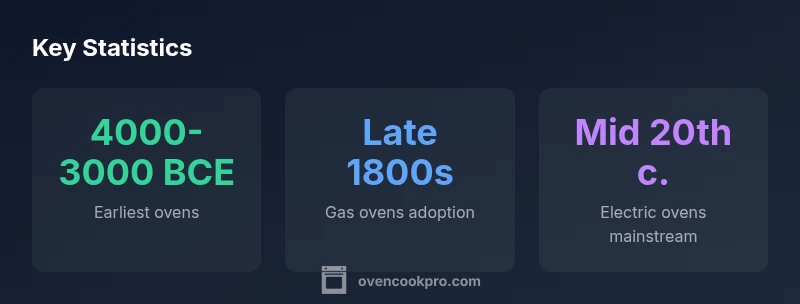
The transition to gas ovens in the late 19th century marked a turning point in kitchen technology. A controllable, rapid heat source unlocked new possibilities for baking and roasting, reducing the reliance on wood-fueled ovens and enabling more precise temperature management. Gas ovens offered improved responsiveness, which was especially valuable for breads with strict fermentation and proofing timelines. The early electric models soon followed, but gas ovens solidified a shift toward household practicality and consistency that endures in many kitchens today. As with earlier iterations, the key advantage was reliable heat delivery and adjustable flames that could react quickly to recipe demands.
For modern cooks, this period underlines a pivotal lesson: the ability to fine-tune heat is a fundamental driver of successful cooking outcomes. Whether you’re preheating a loaf or broiling a roast, understanding how to adjust gas flame intensity translates directly into better results. The shift from wood to gas also influenced kitchen layout and safety practices, setting the stage for the more advanced controls found in contemporary ovens.
Electric Ovens, Thermostats, and the Rise of Precision Cooking
Electric ovens emerged as a practical and scalable alternative to gas, bringing electric coils and, later, more sophisticated heating elements into residential kitchens. The introduction of thermostats, bake and broil settings, and insulated interiors represented a leap toward precision cooking. By mid-20th century, electric ovens had become common household appliances in many parts of the world, with improvements in insulation, even heating, and ease of use. The subsequent addition of convection fans—circulating hot air—further expanded the range of cooking techniques possible in a home kitchen. This evolution reflects a broader trend: as electrical technology matured, ovens became more predictable, convenient, and capable of producing consistent results across a wider variety of dishes.
From a cooking perspective, electric and convection ovens opened doors to uniform browning, even baking, and shorter cooking times for many recipes. Understanding this history helps home cooks optimize preheating, rack placement, and temperature adjustments to achieve desired textures and doneness. The trajectory from simple coils to intelligent, assisted modes also foreshadows ongoing innovations in kitchen tech.
Modern Variants: Convection, Smart Controls, and Regional Styles
Today’s ovens blend multiple heating methods—gas, electric, convection, infrared broiling—with smart controls, timers, and energy efficiency features. Convection ovens, in particular, rely on a fan to distribute hot air evenly, speeding up cooking and improving browning. Regional styles persist in hardware design and materials, influenced by climate, housing types, and culinary traditions. For example, some cultures still rely on wood-fired or brick ovens for specialty dishes, while others embrace compact, energy-efficient electric models. The history of ovens shows how a simple device can diversify into a family of technologies that cater to different cuisines, budgets, and lifestyles. This interconnected evolution makes the kitchen a space where tradition and innovation meet.
As you plan cooking strategies, consider how oven features—temperature accuracy, preheating times, and air circulation—affect outcomes. Tailoring settings to the dish, using appropriate bakeware, and leveraging roasting modes can elevate everyday meals. The journey from ancient clay pits to modern smart ovens highlights the enduring importance of heat management in achieving culinary success.
bodyBlocksEndFlag”:false},
Timeline of oven evolution from ancient clay ovens to modern convection and smart ovens
| Era/Type | Representative Oven | Typical Era (approx) | Key milestone |
|---|---|---|---|
| Ancient | Earliest clay ovens | circa 7000–2000 BCE | First archeological evidence of baking in pits |
| Roman bakery ovens | Brick-lined ovens in Roman towns | circa 1st century BCE–4th century CE | Standardized communal baking for urban populations |
| Medieval communal ovens | Town ovens powered by wood/coal | circa 12th–15th centuries | Public infrastructure regulated by guilds |
| European brick ovens | Domestic brick ovens | circa 17th–19th centuries | Improved insulation and heat retention |
| Gas-fired ovens | Domestic gas ovens | late 19th century | Controllable heat source for households |
| Electric ovens | Home electric ovens | early 20th century | Thermostatic control and reliability |
| Convection ovens | Modern convection ovens | mid-20th century onwards | Circulating hot air for even cooking |
Questions & Answers
Who invented the first oven?
There was no single inventor. Ovens developed independently across ancient cultures, from clay ovens to brick ovens in Roman towns and medieval communities.
There wasn’t one inventor; ovens emerged in several cultures over time.
When did gas ovens become common?
Gas ovens appeared in the late 19th century and became popular due to controllable heat and quick response.
Gas ovens showed up in the late 1800s and grew in use.
When did electric ovens become mainstream?
Electric ovens emerged in the early 20th century and became standard by mid-century as thermostats and reliable heating improved.
Electric ovens started in the early 1900s and became common by the 1950s.
What is the oldest oven?
Archaeological finds point to ancient clay ovens dating back thousands of years, predating most modern techniques.
The oldest ovens are ancient clay ovens found in archaeological sites.
Do ovens differ by region?
Yes; cultures developed distinctive designs, such as tandoors in South Asia and brick ovens in Europe.
Regional designs reflect local materials and cooking traditions.
What sources back oven history?
Scholarly archaeology, historical records, and museum collections document the evolution of ovens.
Scholarly archaeology and museum records support this history.
“There is no single inventor of the oven; its history is a long continuum of innovations across civilizations, each adding better heat control and reliability.”
Main Points
- There is no single inventor; ovens evolved across cultures.
- Early ovens relied on clay and brick for heat retention and transfer.
- Gas and electric technologies transformed control, speed, and safety.
- Convection and smart features mark the modern era of ovens.
- Regional designs reflect local resources and culinary needs.