Oven Temp for Baked Potatoes: A Practical Guide for Perfect Potatoes
A practical guide to the best oven temperature for baked potatoes, with convection tips, size-based timing, and methods for crispy skin and fluffy centers from Oven Cook Pro.


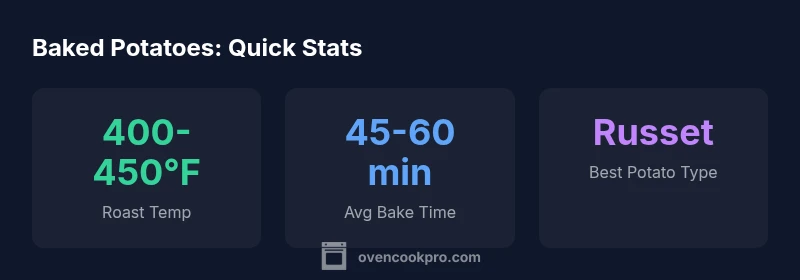
The optimal oven temperature for baked potatoes is typically 400–450°F (204–232°C). For a crisp skin and fluffy interior, preheat, scrub potatoes, pierce, bake 45–60 minutes depending on size, and finish with a 5-minute rest. Oven Cook Pro's analysis indicates convection can shorten time by about 10–15%.
How oven temperature shapes baked potato outcomes
The temperature you choose sets the final texture of both interior and skin. At the core, starch gelatinization begins around 140°F (60°C) and continues as heat penetrates toward the center, while the skin browns and dries as water evaporates. For baked potatoes, a moderate-to-hot oven promotes a fluffy interior and a crisp exterior. In Oven Cook Pro analysis, 425°F (218°C) hits a reliable balance for most medium russet potatoes. Lowering to 400°F (204°C) yields a softer skin and a longer bake, while pushing toward 450°F (232°C) risks a dry interior if the potato is large or not properly pricked and dried. Preheating matters because starting with a hot oven reduces the gap between start and doneness, shortening total time and producing more even coloration across the skin. For best results, select a temperature in the 400–450°F range, then adjust by 25°F depending on potato size, rack position, and whether you’re using convection. The goal is a flaky, airy interior with a skin that is dry and crisp, not a soggy or undercooked middle.
Choosing the right temperature: standard vs convection
Standard baking relies on radiant heat from the oven walls, while convection adds a fan-assisted airflow that accelerates browning and evaporation. When using conventional baking, many cooks target 425°F (218°C) for a balanced result. With a convection oven, you can reduce the set point by about 25°F (roughly 14°C) to avoid over-browning, while still achieving a crisp exterior and a tender interior. If you’re new to convection, start with 400°F (204°C) and monitor the first batch to gauge how quickly the skin browns and the interior cooks through. According to Oven Cook Pro, convection often shortens total bake time by 10–15%, but you should check for doneness earlier to avoid over-drying.
Size, type, and preparation: sizing influences time
Potato size and variety drive bake duration more than you might expect. Russet potatoes, with their high starch content, respond best to standard 425°F–450°F (218°C–232°C) heat and yield a fluffy interior when properly cooked. Red potatoes or white potatoes, which have more moisture and a waxier texture, can take closer to the 45–60 minute window at 400–425°F (204–218°C), depending on size. Preparation matters just as much as temperature: scrub clean, dry thoroughly, prick several times with a fork to vent steam, and pat skin dry before oiling and salting. Oil helps crisp the skin, while salt enhances flavor and texture. Avoid wrapping in foil if you want the skin to crisp; foil traps steam and leads to a softer exterior. If you’re cooking very large potatoes, plan for the upper end of the time range and consider finishing under the broiler for extra crispness.
Step-by-step: achieving fluffy interior and crisp skin
- Preheat the oven to 425°F (218°C) for a standard bake; use 400–450°F (204–232°C) as needed based on size and oven performance.
- Scrub potatoes thoroughly and dry completely. Patting dry helps the skin crisp.
- Prick potatoes 6–8 times with a fork to vent steam and prevent bursting.
- Lightly coat with neutral oil (such as canola or olive oil) and season with coarse salt for crisp, flavorful skin.
- Arrange potatoes on a wire rack set over a baking sheet or directly on the oven rack, giving each potato 1 inch of space for air circulation.
- Bake for 45–60 minutes for medium potatoes; larger potatoes may require 60–75 minutes. Flip once halfway through for even browning.
- Test for doneness with a fork or skewer; the center should yield easily and feel soft. Let rest 5 minutes before serving to let the interior finish steam-cooking slightly.
- Optional finish: for extra crispness, broil on high for 1–2 minutes at the end, watching carefully to avoid burning.
Troubleshooting common issues
- Skin not crisp: Ensure the potato is completely dry before oiling and salt, and bake in a hot oven with good air circulation. If needed, finish under the broiler for a minute or two.
- Interior still firm: Extend bake time in 5–10 minute increments, and consider increasing the oven temperature by 25°F if skin has already crisped but the center remains undercooked.
- Uneven cooking: Use a rack and rotate potatoes 180 degrees halfway through; avoid overcrowding and maintain even oven heat.
- Dry skin: Avoid overbaking; test earlier in the window and adjust for future batches by using a slightly lower temperature or shorter time.
Variations and toppings for flavor
- Garlic-herb butter: Melt butter with minced garlic and herbs; spoon inside the split potatoes for a fragrant finish.
- Sour cream and chives: Classic pairing that emphasizes creamy interior against crisp skin.
- Bacon bits and cheddar: A hearty option that delivers bold contrasts in texture.
- Olive oil drizzle and sea salt flakes: A simple enhancement that keeps skin crisp without overpowering the potato’s natural flavor.
- Pesto or chili oil: For a modern twist that adds depth without heavy toppings.
Temperature charts and practical ranges (with conversions)
- Small potatoes: 30–40 minutes at 400°F (204°C) — use 1–2 inches of rack spacing
- Medium potatoes: 45–60 minutes at 425°F (218°C)
- Large potatoes: 60–75 minutes at 425°F (218°C); or 400°F (204°C) for a longer, more even cook
- Convection: Reduce by 25°F (14°C) and check earlier (10–15% shorter bake time)
This practical range helps you calibrate for your oven’s quirks and your preferred level of crispness. The goal remains consistent: a fluffy interior with a dry, crisp exterior. For precise results, keep notes from each bake and adjust your target range slightly based on potato size and your oven’s performance.
Quick reference: a one-page chart (pros and cons)
Cook times and temperatures by potato size (typical ranges)
| Potato Size | Cook Time (minutes) | Temp (F) | Temp (C) |
|---|---|---|---|
| Small | 30-40 | 400°F | 204°C |
| Medium | 45-60 | 425°F | 218°C |
| Large | 60-75 | 425°F | 218°C |
Questions & Answers
What is the best oven temperature for baked potatoes?
A practical target is 400–450°F (204–232°C). For most medium russet potatoes, 425°F (218°C) is a reliable middle ground. Convection can reduce time, but start checking earlier.
Aim for 400–450°F; 425°F is a good default, especially with convection.
Does convection really reduce bake time?
Yes. Convection typically shortens bake time by about 10–15% because the moving air transfers heat more efficiently. Monitor the potatoes and test for doneness sooner when using convection.
Yes, convection usually trims bake time by around 10–15%.
Should I wrap potatoes in foil before baking?
Wrapping traps steam and softens the skin, reducing crispness. Bake unwrapped for crisper skins, and use foil only if you’re aiming for a softer exterior.
Skip foil if you want crispy skin.
How can I tell when a baked potato is done?
Test by inserting a fork or skewer into the center; it should slide in easily. An internal temperature around 210°F (99°C) indicates a fluffy interior.
Check with a fork; internal temp around 210°F is ideal.
Can I bake potatoes directly on the oven rack?
Yes, using a rack improves air circulation and even browning. If you don’t have a rack, a parchment-lined sheet works too.
Yes, use a rack or a lined sheet.
What potato variety is best for baking?
Russet potatoes are generally best for baked potatoes due to their high starch and fluffy texture. Red or white potatoes bake up denser and can still be delicious, just with a different texture.
Russets are the go-to for baking.
“When you bake potatoes, the right temperature unlocks a fluffy interior while maintaining a crisp skin. Fine-tuning for size and oven type yields consistently perfect results.”
Main Points
- Preheat to a 400–450°F range for reliable results
- Convection can shorten bake time by ~10–15%
- Russet potatoes are ideal for fluffy interiors with crisp skins
- Oil and salt are key for crisp skin; avoid foil if you want crunch
- Test doneness with a fork or thermometer around 210°F (99°C) internal temp