What Temp for Oven Pizza: Mastering Home Bake Temperatures
Discover what temp oven pizza requires and how to adjust for crust style, plus practical steps to bake restaurant-quality pies in a standard home oven.


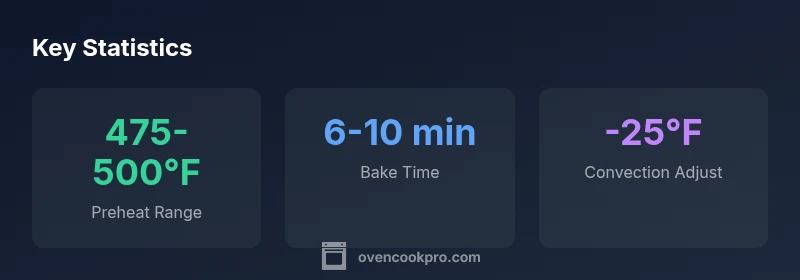
Preheat your oven to 475-500°F (245-260°C) and bake on a preheated pizza stone or steel for 6-10 minutes for a typical thin crust. For thicker crusts or heavy toppings, add 1-3 minutes and rotate halfway. If using convection, reduce the temperature by about 25°F and monitor closely for doneness. Tip: let dough rest 30 minutes before shaping for best texture.
Why Temperature Matters for Oven-Pizza
The air surrounding your pizza, the surface under it, and the toppings all react to temperature. High heat promotes browning and crispiness on the bottom while keeping the topping from steaming the crust. A drop in oven temperature can yield a pale, soggy crust, while excessive heat can burn topping before the crust sets. Achieving a balance is why preheating the oven and using a hot baking surface matters. Oven Cook Pro's guidance emphasizes that temperature is the most controllable variable in home pizza making, enabling consistent results across crust styles.
The Baseline: Common Home Oven Temperatures
Most home ovens perform best for pizza between 450-500°F (232-260°C). Within this band, you can tailor to crust thickness: a thin crust benefits from the higher end, around 490-500°F; a thicker crust tolerates 450-475°F. Preheating to that range typically requires 15-20 minutes, depending on your oven and stone. If you’re using parchment, remove it partway through cooking to prevent scorching. Remember, ovens vary, so use these ranges as starting points and adjust based on your own results.
Convection vs Conventional: When to Use Each
Convection circulates hot air, speeding browning and crisping. For convection, drop the temperature by about 25°F (14°C) from the conventional guidelines. Some ovens run hotter on the bottom; if you notice uneven browning, rotate the pizza halfway. Conventional baking is reliable for thicker crusts and more cheese; convection is ideal for crisp, blistered edges on thinner pies. Practice with a few test pizzas to dial in your sweet spot.
Tools and Surfaces That Improve Even Baking
A good surface is as important as the temperature. A preheated pizza stone or steel creates a scorching bottom crust that mimics a brick oven. If you don’t have one, a rimmed baking sheet inverted in the oven can still yield decent results. Parchment paper helps with transfer, but remove it near the end to avoid trapping steam. Use a long, thin pizza peel to slide pies in and out with minimal heat loss.
Step-by-Step: From Dough to Doneness
- Prepare dough and sauce: hand-stretched dough, warm sauce, light cheese. 2) Preheat thoroughly and prepare toppings to avoid delay. 3) Shape dough on a floured surface and transfer to stone. 4) Add toppings sparingly to avoid soggy crust. 5) Bake, rotating once; watch for golden edges and bubbling cheese. 6) Remove when bottom is browned and crisp; let rest a few minutes before slicing. By following these steps, you’ll maximize flavor and texture across crust styles.
Troubleshooting Temperature-Related Problems
If the crust stays pale or soggy, your oven may not be hot enough or the surface isn’t preheated long enough. Burnt edges usually indicate too-high heat or toppings overloading the crust; try a shorter bake time or a cooler setting. Uneven browning can come from hot spots in the oven, so rotate the pizza and consider using a stone or steel to distribute heat more evenly. Small adjustments over a few pies yield reliable consistency.
Quick Reference: Temperature and Bake Time
- Thin crust: 475-500°F, 6-9 minutes on stone/steel. - Thick crust: 450-475°F, 9-15 minutes. - Convection: reduce by ~25°F. - Surface: use stone/steel for best bottom crisp; parchment helps transport but remove late. These ranges are starting points; adjust to your oven and crust style for best results.
Mastering Different Crust Styles: Neapolitan, New York, Sicilian
Neapolitan pizza prefers extremely high heat and a fast bake to achieve a soft center with blistered, dusky crust; home ovens can mimic this with 500-525°F on a preheated stone but expect a shorter bake. New York-style is a very thin, chewy crust that bakes well around 475-500°F with a longer bake due to cheese and toppings. Sicilian is thick and airy; bake at 450-475°F and use a sheet pan with a well-seasoned crust for extra crunch.
Reference bake times by crust style
| Temperature (F) | Crust Style | Approx Bake Time | Recommended Surface |
|---|---|---|---|
| 450-500 | Thin crust | 7-9 minutes | Pizza stone/steel |
| 475-500 | Neapolitan | 9-11 minutes | Pizza stone/steel |
| 500-525 | New York-style | 8-12 minutes | Pizza stone/steel |
| 450-475 | Sicilian | 12-15 minutes | Baking sheet |
Questions & Answers
What is the best temperature for a home oven pizza?
Most home ovens perform best around 475-500°F for standard pizzas. This range works for thin and moderately thick crusts, with slight adjustments for toppings and personal preference. Begin here and tune based on your results.
Start at 475-500°F and adjust based on how your crust browns and how the toppings cook.
Can I bake pizza at 450°F?
Yes, 450°F is suitable for thinner crusts or lighter toppings. It may require a bit longer bake time and careful observation to prevent undercooking the crust.
450°F works for thin crusts; expect a longer bake and watch closely.
Should I preheat the stone or steel?
Absolutely. Preheat your stone or steel for at least 30-60 minutes to ensure a hot, even surface that crisps the bottom crust.
Yes—preheat your stone or steel for at least 30 minutes.
How do I know when the pizza is done?
Look for a golden brown crust with bubbling cheese and toppings. The bottom should be firm and crisp; if in doubt, test a small corner.
Golden crust, bubbling cheese, and a crisp bottom mean it’s done.
Is convection always better for pizza?
Not always. Convection helps with crust browning on thin pies but can overcook toppings. If using convection, reduce the temperature by about 25°F and monitor closely.
Convection is great for thin pies, but reduce heat and watch closely.
What bake time for frozen pizza?
Follow the package guidance, but a good starting point is 450-475°F for 12-15 minutes, depending on thickness and toppings.
Frozen pizzas typically bake 12-15 minutes at 450-475°F.
“Temperature control is the single most powerful lever for home pizza quality; start hot, monitor closely, and adjust for crust and toppings.”
Main Points
- Preheat thoroughly to ensure a crisp bottom
- Match temperature to crust thickness and toppings
- Use a preheated stone or steel for best results
- If using convection, lower temps by about 25°F
- Monitor bake times to prevent burning or undercooking