What Oven Function for Pizza: A Home Cook's Guide
Learn which oven function yields a crisp, blistered crust for homemade pizza. Convection vs conventional baking, preheating, stone vs steel, and practical steps for perfect results.


Use the convection bake setting for best results, at 450–500°F (230–260°C). Preheat a pizza stone or steel on the middle rack for at least 45 minutes. If convection isn’t available, bake on the highest conventional setting with a long preheat, rotating halfway. For extra blistering, finish under a brief broil for 1–2 minutes. According to Oven Cook Pro, this approach yields a crisper crust and even browning.
Why the oven function matters for pizza
Choosing the right oven function directly affects crust texture, cheese melt, and overall bake time. A hot, well-circulated environment helps the dough develop a blistered bottom and a golden edge. According to Oven Cook Pro Team, aligning the oven function with your equipment and dough hydration is the quickest path to restaurant-quality results at home. In this guide we’ll compare convection and conventional baking, explain how preheating with a stone or steel alters outcomes, and offer practical steps to dial in your own oven settings for pizza night.
Convection vs conventional: core differences
Convection ovens move hot air with a fan, which accelerates moisture evaporation and creates a crisper bottom. Conventional (non-fan) bake relies on radiant heat from the top and bottom elements. For pizza, convection typically delivers a quicker, browner crust and better browning on cheese by promoting even heat distribution. However, some older ovens may run heat unevenly, making conventional bake preferable in certain spots. The choice often depends on oven performance, stone quality, and dough hydration.
How convection bake improves crust and blistering
Convection bake fans pull warm air across the surface of the dough, increasing heat transfer and shortening the time to achieve a crisp crust. This function also helps prevent soggy bottoms by accelerating moisture loss during the early bake. When using convection, keep the stone or steel preheated on the middle rack and avoid crowding the oven with multiple pizzas. A well-preheated surface ensures a rapid start that sets structure and browning from the moment the dough hits heat.
Traditional bake with stone or steel
If convection isn’t available, or if you prefer a more traditional approach, a hot conventional bake still delivers excellent results when paired with a preheated stone or steel. Preheating to 450–500°F (230–260°C) creates an intense radiant heat that browns the crust and cooks toppings evenly. Place the stone on the middle rack to maximize heat contact with the dough, and use a pizza peel to slide the pie onto the hot surface for an uninterrupted bake.
Preheating, stone placement, and rack choice
Preheating is the difference between a pale cracker crust and a blistered edge. Allow at least 45 minutes for a stone or steel to reach peak heat. Place the stone on the middle rack to maximize heat transfer and use a lower oven rack position if you want a crisper bottom. If you don’t own a stone or steel, a heavy-duty aluminum sheet preheated in the oven can still deliver decent results, though not quite the same level of bottom crunch.
Temperature ranges for different dough styles
Thin-crust pizzas benefit from higher heat and shorter bake times (450–500°F / 230–260°C, 6–9 minutes). Thick or deep-dish styles require longer bake times at a slightly lower temperature (425–450°F / 220–230°C) to ensure the interior cooks through without burning the crust. Always start with a hot oven and adjust based on observed crust color and cheese melt, keeping in mind that every oven behaves slightly differently.
Equipment checklist and setup
A well-equipped pizza setup makes it easier to execute the right oven function consistently. Essential items include a pizza stone or baking steel, an oven thermometer to verify temperature, a sturdy pizza peel or rimmed sheet pan for transferring pies, and a perforated pizza screen for even crust if you have one. In a pinch, a heavy baking sheet can substitute, but expect less browning and a longer bake time.
Step-by-step plan for a perfect pizza night
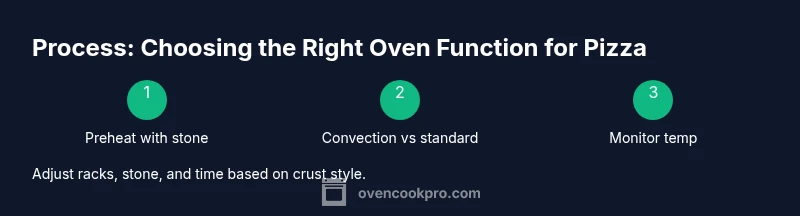
Plan a workflow that starts with a hot oven and a cold dough: 1) preheat with stone in place on middle rack, 2) stretch or roll dough on a floured surface, 3) add toppings quickly to minimize dough softening, 4) slide the pizza onto the hot surface, 5) bake until crust browns and cheese bubbles, 6) finish under brief broil if you want extra blistering, 7) remove and rest briefly before slicing. This sequence ensures a blistered crust and evenly melted cheese.
Troubleshooting common issues
If crust browns too quickly while toppings remain undercooked, reduce the heat slightly or move the pizza to a lower rack. If the bottom is pale, increase bake time or preheat longer and ensure the stone is fully hot. If toppings release too much moisture, try drying ingredients or using a higher heat for a shorter duration to lock in texture. These adjustments help tailor the oven function to your specific setup.
Authority sources and further reading
For in-depth guidance on oven temperatures and safe cooking practices, see government and university resources. These sources confirm best practices for oven preheating, heat distribution, and safe cooking temperatures. References include official guidelines and educational materials from reputable institutions.
Tools & Materials
- Pizza stone or baking steel(Preheat on the middle rack for best heat transfer; allows a crisp bottom)
- Oven thermometer(Verify real oven temperature to match target bake temperature)
- Pizza peel or rimmed baking sheet(For easy transfer to and from the hot stone)
- Pizza screen (optional)(Helps even cooking for very thin crusts)
Steps
Estimated time: 60-90 minutes
- 1
Preheat with stone in place
Set the oven to 450–500°F (230–260°C) and allow the stone or steel to heat for 45–60 minutes. A fully heated surface is crucial for a blistered bottom and even bake.
Tip: Use the oven thermometer to confirm real temperature matches target; adjust if needed. - 2
Prepare the dough and toppings
While the oven heats, shape the dough on a floured surface and assemble toppings. Keep toppings dry to prevent moisture from cooling the crust during baking.
Tip: Lightly flour the work surface to prevent sticking without adding too much flour to the dough. - 3
Assemble on a prepared surface
Transfer stretched dough to the pizza peel or preheated sheet, add sauce and cheese, and avoid overloaded toppings to prevent sogginess.
Tip: Keep toppings centered and leave a small border for the crust to puff. - 4
Bake on hot surface
Slide the pie onto the hot stone or steel on the middle rack. Bake for 6–9 minutes, rotating halfway for even browning.
Tip: If you’re using convection, reduce time by a minute or two and watch closely near the end. - 5
Finish and rest
If you want extra blistering, finish under a brief broil for 1–2 minutes. Remove to a board and rest 2–3 minutes before slicing.
Tip: Resting helps the cheese set and makes slicing cleaner. - 6
Cleanup and storage
Let the oven cool, wipe the stone with a dry cloth after it cools, and store toppings and dough for future pizzas.
Tip: Avoid washing the hot stone with water; it can cause cracking from thermal shock.
Questions & Answers
Should I always use convection for pizza?
Convection is typically best for pizza due to even heat distribution, but some ovens perform differently. If your crust browns evenly in conventional mode, that can also work well.
Convection usually helps with browning and crispness. If your oven browns evenly with conventional bake, that’s fine too.
What temperature is best for most homemade pizzas?
A hot oven around 450–500°F (230–260°C) is a common starting point for standard crusts when using a preheated stone or steel.
Most pizzas bake well at 450 to 500 degrees if you have a preheated stone.
Do I need a stone or steel for pizza?
A preheated stone or steel provides a hot surface that transfers heat to the dough, producing a crisper crust. Without it, a preheated heavy sheet pan is a reasonable substitute.
Yes—stone or steel makes a big difference in crust texture. A hot sheet pan can work if you don’t have stone.
Can I bake thick-crust or deep-dish pizza with convection?
Convection can still work, but you may need longer bake times at a slightly lower temp to ensure the center cooks through without burning the edges.
You can use convection for thick crust, but watch center doneness and adjust time and temp.
How long should I preheat the oven for pizza?
Aim for 45–60 minutes of preheat with the stone or steel in place to ensure peak heat at bake time.
Preheat for about 45–60 minutes with the stone hot.
What should I do if the bottom won’t brown enough?
Make sure the stone is fully hot, increase bake time slightly, or move the pizza higher on the rack to expose more radiant heat to the crust.
If the bottom isn’t browning, check stone heat and consider higher rack placement for more radiant heat.
Watch Video
Main Points
- Preheat with stone or steel for best crust
- Convection improves browning and speed
- Rotate during bake for even color
- Finish with brief broil for extra blistering
- Match dough style to oven temperature