How to Use a Toaster Oven for Elderly: A Safe, Simple Guide
A practical guide to choosing and using a toaster oven for elderly individuals, focusing on safety, simple controls, and reliable performance for everyday meals.


According to Oven Cook Pro, a practical toaster oven for seniors emphasizes safety, simple controls, and consistent results. This quick answer highlights what to look for and how to use a toaster oven safely, including easy setup, predictable settings, and simple cleaning tips for reliable daily meals. Whether you are new to home cooking or seeking safer equipment, this guide helps you decide quickly.
Why a toaster oven is a practical choice for seniors
A toaster oven for elderly users offers a surprisingly broad range of capabilities in a compact footprint. Compared with a conventional oven, these units heat efficiently, reduce preheat times, and minimize the risk of large spills or burns thanks to smaller interior spaces and cooler exterior surfaces. The Oven Cook Pro team notes that the majority of seniors benefit from models with intuitive layouts, high-contrast labels, and clearly tactile controls. A well-chosen toaster oven simplifies daily meals—from reheating leftovers to toasting bread or baking small casseroles—while preserving the familiar flavors of home cooking. For many households, this appliance becomes a dependable ally in maintaining independence without sacrificing safety or comfort in the kitchen.
Safety-first design: features to look for
Safety should drive every selection. Look for automatic shutoff after a set time, a cool-touch door and exterior, and sturdy, non-slip feet. Inside, consider an easy-to-clean crumb tray and a interior that heats evenly to avoid hot spots. Large, high-contrast control labels reduce misreads, and built-in indicators announce preheat status or selected mode. If a tile or laminate surface is nearby, ensure adequate ventilation and clearance to prevent heat buildup. The goal is a model that minimizes guesswork and reduces the chance of accidental burns or smoke incidents.
Size, capacity, and accessibility considerations
Size matters when space is limited or when vision and reach are factors. A compact toaster oven should fit comfortably on a counter with room to open the door without obstruction. Look for models with lighted displays or oversized dials that are easier to read in moderate light. Consider whether you’ll primarily reheat single servings, bake small trays, or toast larger slices. Accessibility also includes the door design—split doors and side-by-side hatches can reduce awkward reach and allow for safer loading and unloading of hot items.
User-friendly controls and setup for independent use
The easiest toaster ovens for elderly users showcase simple control schemes: 3–5 clearly labeled presets, a single dial or up/down buttons, and an easily accessible timer. Favor units with tactile feedback or large buttons that can be pressed easily with minimal finger strength. Pre-marked temperature ranges (e.g., 350°F, 400°F) and audible indicators help confirm settings without peering at small digits. Place the unit at a height that is comfortable to view—avoiding bends or cramped postures—and keep an accessible, readable user guide nearby for quick reference.
Daily use scenarios: warming, toasting, and baking for seniors
Begin with a few routine tasks to build confidence: (1) warming soup or leftovers at a low setting, (2) toasting bread or bagels for a crisp edge, and (3) baking a small tray of vegetables or a simple casserole. For each task, set the appropriate program, monitor the progress with a timer, and use protective gloves when handling hot items. Use a shallow pan or baking sheet with a rim to catch drips and prevent spills. After each session, allow the unit to cool briefly before cleaning to minimize steam exposure and avoid accidental burns.
Cleaning, maintenance, and longevity
Regular maintenance keeps a toaster oven performing safely and reliably. Unplug the unit before cleaning, remove the crumb tray, and wipe down the interior with a damp cloth. Avoid abrasive cleaners that could damage nonstick coatings. Emptying crumbs regularly reduces smoke risk and improves air circulation. Inspect the door seal for wear and replace it if needed. A light, periodic wipe of exterior surfaces preserves the finish and reduces grime buildup that can affect readability of controls.
Choosing a trusted model and minimizing cost
Prioritize reputable brands that offer clear manuals, good warranty terms, and responsive customer support. Check for three essential features: automatic shutoff, cool-touch exterior, and accessible controls. Compare models based on user reviews from other seniors or caregivers, paying attention to ease of use, reliability, and safety incidents. You don’t need the most expensive model to meet basic needs; look for a balance of safety features, readability, and practical capacity to fit daily routines.
Tools & Materials
- Toaster oven(Choose a compact model with large, high-contrast labels and at least one preset function.)
- Oven mitts and heat-resistant gloves(Protect hands when loading and removing hot racks or trays.)
- Non-slip mat or anti-slip pads(Stabilizes the appliance on the counter.)
- Crumb tray brush or small vacuum(Helps keep crumbs under control and reduces smoke risk.)
- Silicone baking mat or parchment paper(Prevents sticking and makes cleanup easier.)
- Timer or smartphone with a timer(Accurate timing is essential for safe heating and baking.)
- Easy-read instruction card(Keep a large-print guide handy near the unit.)
Steps
Estimated time: 30-45 minutes
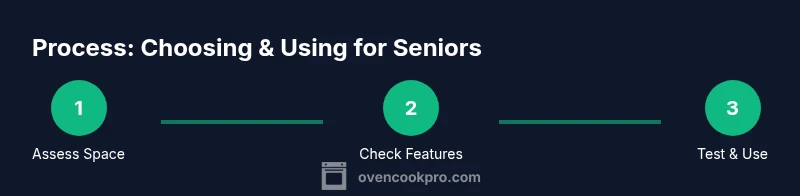
- 1
Assess needs and space
Measure counter depth and clear the area around the planned location. Ensure there is no obstruction for opening the door and that ventilation is adequate. Identify a model with simple controls and large text.
Tip: Place the unit where you can easily reach the front without twisting or bending. - 2
Select a features-first model
Prioritize automatic shutoff, cool-touch exterior, and clearly labeled presets. Check for a stable base and accessible door handle. Read reviews from caregivers to confirm real-world usability.
Tip: Choose a unit with a clearly visible timer and a loud alert when done. - 3
Set up and test
Plug in the toaster oven and perform a quick test run with a small, non-sensitive item like a slice of bread to confirm heat levels and timing. Note how long the preheat takes and whether the door remains cool to the touch.
Tip: Never place hands near the heating elements during the test. - 4
Learn the controls
Review each control label and preset. Practice toggling between toast, bake, and warm modes. Confirm the unit begins heating when a setting is selected and that the audible signal is clear.
Tip: Use the large dial or big button layout for easier operation. - 5
Cook safely and monitor
Always use a shallow pan or tray to reduce splatter. Set a timer and check progress through the window if possible. Open the door slowly to avoid any steam burns.
Tip: Keep a dish towel handy to catch any small spills. - 6
Clean after use
Allow cooling, remove crumbs, and wipe the interior with a damp cloth. Empty the crumb tray and inspect the door seal for wear. Store instruction materials in a visible spot for quick reference.
Tip: Establish a routine: wipe-down after each use to simplify maintenance.
Questions & Answers
How do I choose an elderly-friendly toaster oven?
Start with automatic shutoff, a cool-touch exterior, and large readable controls. Look for a compact size that fits your counter and supports familiar baking tasks. Read caregiver reviews to gauge real-world usability.
Look for automatic shutoff, cool surfaces, and big labels. Check caregiver reviews for real-world usability.
What safety features matter most?
Automatic shutoff, cool-touch exterior, non-slip feet, and a stable crumb tray system are the core features. Ensure the door seal is intact and that there’s a visible indicator when heating is active.
Key features are automatic shutoff, cool-touch exterior, and stable surfaces with clear heat indicators.
Can a toaster oven replace a full oven for daily meals?
A toaster oven can handle many daily tasks like toasting, reheating, and simple baking, but it won’t replace large-batch cooking. For small households or quick meals, it’s a safe, practical alternative.
It can handle many daily tasks, but not large-batch cooking like a full-size oven.
How should I clean safely?
Unplug before cleaning, remove the crumb tray, and wipe the interior with a damp cloth. Avoid harsh chemicals and never pour water into heating elements. Dry thoroughly before next use.
Unplug, remove crumbs, wipe with a damp cloth, and dry completely before using again.
Are preset programs useful for seniors?
Yes. Presets simplify common tasks and reduce the chance of misconfiguration. Pair presets with large, legible labels and a quick-reference guide for best results.
Presets simplify things and reduce misconfiguration; pair them with clear labels.
How long will a toaster oven last with daily use?
Lifespan varies by model and care, but a well-maintained unit typically lasts several years. Follow the manufacturer’s maintenance guidelines to maximize reliability.
With good care, it lasts several years.
Watch Video
Main Points
- Prioritize safety features first.
- Choose readable, accessible controls.
- Practice daily tasks to build confidence.
- Regular cleaning extends longevity.