Parts for LG Microwave Oven: A Practical Guide
Learn how to identify, source, and safely install LG microwave oven parts. This guide covers OEM vs aftermarket choices, model matching, and maintenance tips for homeowners and cooks.


parts for lg microwave oven vary widely, but identifying the correct components starts with your exact model number and a verified part number. This quick guide highlights the most commonly replaced LG microwave parts, how to verify compatibility across LG models, and where to buy OEM or reputable aftermarket components safely, so you can repair with confidence and minimize downtime.
Understanding LG microwave components and the scope of parts you might replace
LG uses a family of models with varying internal layouts; common replacement parts include magnetrons, control boards, turntable bearings, door latches, hinges, waveguides, lamps, fuses, and even cooling fans in higher-end units. When you plan a repair, think beyond the obvious heating element. A fault in one area can cascade and affect other functions, such as sensor feedback or door interlock safety. In general, prioritize parts that wear or fail with use: moving parts like bearings and door mechanisms, or energy-critical components like magnetrons and control boards. Always verify compatibility with your exact model, because even two models from the same year can use different part numbers. The LG parts ecosystem includes OEM options, reputable aftermarket substitutes, and refurbished units. OEM parts offer the tightest fit and warranty alignment, while aftermarket parts can be cheaper and available more quickly, but may carry varied reliability. Always check return policies and test procedures before completing a repair.
How to identify the correct part number for your LG model
Start by locating the model and serial number label on your LG microwave. It is usually inside the cavity, on the frame behind the door, or on the back of the unit. Once you have the model number, visit LG's official parts catalog or the manufacturer's service portal to pull up diagrams and part numbers. Cross-reference the diagram with the part you intend to replace; many parts have similar names but different numbers across sub-models. If you have the original packaging or the replacement part, compare stamps and barcodes. When ordering, insist on listing the exact part number and confirm with customer support that the item is compatible with your model. Keep a note of the part number and the model number for future repairs.
OEM vs aftermarket parts: pros and cons
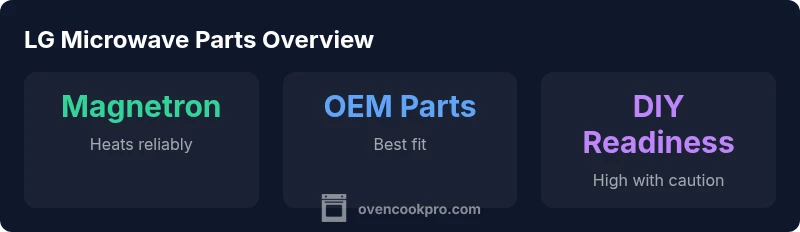
OEM parts, sold or branded by LG, guarantee the closest fit, the same materials, and usually the best warranty coverage. They are typically more expensive but reduce risk of misfit or premature failure. Aftermarket parts can be significantly cheaper and may be readily available from major appliance suppliers. However, the fit and materials can vary, and warranty coverage for non-OEM parts may be limited. For safety-critical components such as the magnetron or control boards, many technicians recommend OEM parts unless you buy from a reputable, long-standing supplier with explicit compatibility guarantees. Always verify return policies, compatibility notes, and warranty terms before purchasing.
How to source LG microwave parts safely online and offline
Begin with LG's official parts portal or an authorized LG parts reseller; these sources are most likely to provide accurate diagrams and correct part numbers. When shopping from third-party marketplaces, look for seller ratings, return policies, and a clear parts diagram. Confirm the model number matches your unit and the part number corresponds to the diagram. If you order via phone or email, request a link to the official part diagram so you can visually verify compatibility before payment. For offline sourcing, contact authorized service centers or local appliance repair shops that stock LG parts and can validate compatibility on request. Always inspect packaging for LG branding and verify part numbers on the item itself.
Safe disassembly and installation fundamentals
Before any work, unplug the microwave and disconnect it from power. If the microwave has a high-voltage capacitor or magnetron, do not attempt to discharge it unless you’ve been trained; many technicians use specialized tools and follow strict safety protocols. Open the case only as far as you're comfortable, and avoid touching internal wiring beyond what the service diagram shows. Replace only the part you intend and re-seat connectors firmly. After reassembly, test the unit with the door open to confirm the interlock keeps the cavity from energizing; then perform a controlled heat cycle with a safe test load. If at any point you detect arcing or unusual smells, stop and consult a professional.
Common installation challenges and quick troubleshooting tips
Misidentification of parts is a frequent issue; double-check the number, model, and diagram before ordering. If the microwave won’t heat, verify that the magnetron is energizing and that the door interlock is functioning properly. If the display is blank or the keypad is unresponsive, the control board or keypad assembly may be the culprit. Loose connectors are another frequent source of intermittent failure; reseat each connector with a gentle wiggle and re-test power. After installation, run a short, monitored test with an appropriate food item to confirm heating consistency and safety interlocks. Keep a repair log for future fixes.
Maintenance and preventative care to extend life
Regularly inspect the door seals for wear and replace them if they become cracked or gapped. Clean the waveguide cover and interior surfaces to prevent food debris from causing arcing or sensor errors. Avoid running the microwave empty for extended periods, which can overstress components. Use proper cookware and avoid metal objects or foil unless the manufacturer specifies it for that model. Schedule periodic inspections if the unit is older or showing unusual behavior; timely replacement parts can prevent more serious failures and downtime.
Common LG microwave part categories and typical replacement scenarios
| Part Category | Typical Replacement Scenario | Notes |
|---|---|---|
| Turntable Bearing | Wobbling or slow rotation | Check for smooth spin; replace if rough; reseat properly |
| Magnetron | Loss of heating power | Use only LG-approved magnetron; discharge safety procedures apply |
| Control Board | Unresponsive keypad or display | Verify firmware compatibility; reseat connectors |
Questions & Answers
Do LG microwave parts fit all LG models?
Not always. LG parts are typically model-specific. Always verify the part number and cross-check with LG's official parts portal or your owner's manual.
LG parts are usually model-specific; always verify the exact part number and model compatibility.
Can I install parts myself in an LG microwave?
Simple parts like a door latch can often be replaced by a confident DIYer who unplugged the unit. For magnetrons or control boards, consider professional service.
You can DIY simple parts if you unplug first; for complex parts, hire a pro.
How do I find the part number for my LG microwave?
Check the model label inside the door frame or back of the unit, then use LG's official catalog to locate the exact part number. Cross-check with the diagram.
Look up the model label and use LG's official parts catalog to find the exact part number.
Are aftermarket LG microwave parts reliable?
OEM parts are generally more reliable and safer, especially for safety-critical components. Reputable aftermarket parts can work, but verify compatibility and warranty terms.
OEM parts are safest, but reputable aftermarket parts can work if they fit properly.
What are signs a magnetron needs replacement?
Diminished heating power, unusual buzzing, or sparking indicates magnetron issues. Have a technician test with proper equipment.
If it doesn’t heat well or makes buzzing noises, it may be the magnetron.
Is it safe to repair a microwave at home?
Microwaves contain high-voltage components. If you’re not trained, avoid opening safety shields. Seek professional help for non-trivial repairs.
Repairing a microwave at home can be risky—when in doubt, hire a professional.
“To ensure safe and lasting LG microwave repairs, always match the exact model with verified OEM parts and follow proper disassembly procedures. Safety and reliability hinge on correct part numbers and careful workmanship.”
Main Points
- Verify model numbers before purchasing parts
- Prioritize OEM parts for safety and reliability
- Cross-check part numbers with official LG resources
- Disconnect power before any repair work
- Consider professional help for complex repairs