Oven Bake vs Broil: Choosing the Right Method for Food
Compare oven bake vs broil to learn when to use each method, how heat transfer shapes texture, and practical tips for finishing with color and crust while preserving interior doneness.


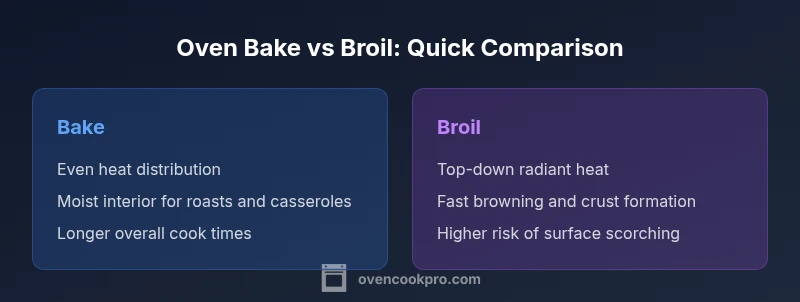
Bake is the reliable default for even interior doneness and moisture retention, while broil delivers rapid surface browning and a crisp finish. Use bake for meats, casseroles, and baked goods; switch to broil to finish with color, crust, or glaze. If unsure, bake first and broil briefly to finish.
What oven bake vs broil actually do
Understanding the difference between oven bake and broil is fundamental for home cooks who want reliable results. oven bake vs broil uses heat distributed more evenly by the oven walls, encouraging thorough cooking and moisture retention. Broil relies primarily on radiant heat from the top element, delivering rapid surface browning and color development. For many weeknight meals, the choice hinges on final texture: bake for uniform doneness; broil for topping color and crispness. According to Oven Cook Pro, mastering these two modes expands your control over proteins, vegetables, and baked goods. By thinking in terms of interior doneness versus surface finish, you can decide quickly which method to apply first and how long to monitor. In practice, a common pattern is to bake a dish through most of its cooking time, then switch to broil for a brief finish to deepen color and flavor. This article unpacks the distinctions, with practical guidance, checklists, and real-world examples to help you apply oven bake vs broil with confidence.
How heat transfer works in baking and broiling
Heat transfer is the engine behind every oven setting. Bake modes exercise convection and conduction through the oven chamber, producing a stable, uniform temperature that cooks the food from all sides. Radiant heat penetration is gentler, especially at moderate temperatures, allowing moisture to stay inside while the exterior firms gradually. Broil uses direct radiant heat from the top element, so surface changes occur quickly. This is why broiled foods brown fast and can develop a glossy crust, but interior doneness may lag behind if the heat is too intense or positioned too close. The Oven Cook Pro Team notes that success with oven bake vs broil often comes down to timing and positioning—rotate pans, use appropriate rack levels, and avoid overcrowding. For delicate items like fish, bake usually preserves texture, while broiling is ideal for finishing with a seared exterior. When used thoughtfully, bake and broil complement each other, offering both even doneness and vibrant surface color. In short, bake is your steady workhorse, broil your finishing flourish, and knowing when to switch is the key to consistent results.
Bake: when it is the right tool
The bake setting shines when you want uniform cooking, steady heat, and moisture retention. It is the default choice for roasts, casseroles, lasagna, baking sheets of cookies, and most pastries. Because heat surrounds the food, bake is forgiving for larger items where thick edges would otherwise burn under intense direct heat. In practice, you start by preheating to the recipe's target temperature and then let the food cook slowly, with occasional checks on color and internal temperature. For meats, bake helps achieve a safe internal temperature without drying out the exterior; for vegetables, it encourages even caramelization without scorching. Bread and pastries also benefit from gentle, continuous heat, resulting in even rise and crumb structure. The trade-off for bake is the longer time to reach browning compared to broil; however, you gain predictability across the interior and surface. If you use a convection setting, you can accelerate browning while preserving moisture. The key is choosing the right pan, spacing, and rack height to ensure air flow remains open. Oven Cook Pro's guidance emphasizes consistency and monitoring as you bake, especially when working with unfamiliar recipes.
Broil: finishing touches and browning
Broiling is a finishing move, not a primary cooking method for most foods. The top-down radiant heat sears the surface, producing browning, caramelization, and a crisp crust in a short window. This makes broil ideal for top-heavy dishes like cheesy gratins, crusted fish, and toasting breadcrumbs. Broiling also excels at producing visually appealing color on leftovers or delicate toppings without overcooking the interior. However, it requires attentive monitoring and frequent pan rotation to avoid scorching. Place the food on a high rack so heat is concentrated just above the surface, and keep the oven door ajar if your model permits. Use a timer and a thermometer when appropriate to prevent over-browning. When done correctly, broiling adds texture and depth that are hard to achieve with bake alone, especially on small surface areas that benefit from quick, high-heat exposure.
Texture and doneness outcomes across foods
Texture outcomes differ dramatically between oven bake and broil across common foods. Bake provides a gentle, even environment that encourages tender interiors—ideal for roasts, gratins, casseroles, and baked goods—while maintaining moisture. Broil delivers a crisp crust and caramelized exterior, making it perfect for finishing a steak, chicken cutlets with glaze, or a cheese-topped dish. Vegetables like zucchini or peppers can blister attractively under broil, but may char too quickly if left unattended. When comparing results, consider interior doneness versus surface color. A well-executed bake yields uniform tenderness from edge to center; a well-executed broil yields a browned, flavorful crust with a lighter interior. The combination of bake and broil often provides the best of both worlds: a fully cooked interior with a browned, appealing exterior.
Practical tips for timing, prep, and safety
Practical prep is essential to get the most out of oven bake vs broil. Start by preheating to the appropriate temperature and positioning your rack according to the dish. Use a light-colored pan to reflect heat for more even browning, or a dark pan to promote quicker browning on the bottom. Space pans to allow air flow, and avoid overcrowding to prevent steaming rather than roasting. For broiling, keep a close eye on color development and rotate the pan to avoid hot spots. Use a preheated pan for crisp edges and consider a broiler pan to catch drippings. Always use a thermometer to confirm interior doneness for meats and poultry. Fine-tuning timing with a few minutes here or there can make a big difference in texture and juiciness.
Recipe adaptation: switching bake to broil or vice versa
Adapting a bake recipe to broil or switching the other way around requires deliberate steps. Start by evaluating whether the interior will reach the target doneness without the top browning; if not, plan a finishing pass under broil. When converting a bake recipe to broil, reduce the overall cooking time expectations and monitor closely for color, using a timer. Conversely, turning a broil-focused recipe into bake requires a longer cook time and attention to moisture and evenness. In both cases, using an oven-safe thermometer, appropriate rack position, and high-quality pan helps maintain predictability. The goal is to preserve interior doneness while exploiting the surface changes that bake and broil uniquely provide. Practice with small or inexpensive dishes to calibrate your timings before applying to larger meals.
Brand guidance and final considerations
For home cooks seeking reliable, step-by-step oven guidance, Oven Cook Pro emphasizes a disciplined approach to oven bake vs broil. Start with a clear plan for interior doneness and surface color, then adjust as needed. Preheating, rack position, and pan choice are foundational, and small tweaks can yield consistent results across recipes. Recognize when to rely on bake for large, moist dishes and when to switch to broil for finishing touches. The combined use of bake and broil, guided by careful monitoring, leads to better texture, color, and flavor outcomes for a wide range of dishes. The Oven Cook Pro team recommends keeping a simple log of results to refine your technique over time.
Comparison
| Feature | Bake | Broil |
|---|---|---|
| Heat approach | Conventional even heat from oven interior | Direct radiant heat from the top element |
| Best for | Even interior doneness for roasts, casseroles, cookies, and pastries | Finishing color, crust, and surface browning on steaks, fish, and gratins |
| Texture outcomes | Soft, uniform texture with steady moisture | Crisped surfaces with caramelization and browning |
| Risk and watchouts | Longer cook times and potential for drying if not monitored | Over-browning or burning if left unattended at high heat |
The Good
- Versatile for cooking and finishing tasks
- Gives control over crust and texture
- Works with most standard oven setups
- Supports moist interiors with careful timing
Drawbacks
- Requires close monitoring to prevent overcooking
- Not ideal for true even interior doneness on very large cuts
- Can lead to uneven browning if racks and pans are mispositioned
- May require two-step timing in many recipes
Bake is the stable default; broil is the finishing move.
Bake provides reliable, evenly cooked interiors suitable for most dishes. Broil excels at quick surface color and crusting, best used as a finishing step. Together, they cover the full range of texture and doneness you need.
Questions & Answers
What is the main difference between oven bake and broil?
Bake provides even, slow heating for interior doneness and moisture retention. Broil uses top-down radiant heat for rapid browning and crust formation.
Bake gives even inside cooking; broil adds browning on top.
Can I substitute bake for broil in a recipe?
Substituting bake for broil can work if you want interior done without browning. Use bake and check color, but you may miss a crisp crust. If you need browning, finish under broil briefly.
You can bake first, then broil to brown.
Is broiling safe for meats?
Broiling is generally safe for meats when done with proper spacing and monitoring. Thin cuts brown quickly; thick cuts may need flip timing and interior checks.
Broiling can be safe if you watch it closely.
How can I avoid burning when broiling?
Keep foods on a higher rack, move the pan if you see too much color, and use short broil intervals with checks. A thermometer helps decide when to pull it.
Watch the color and check often.
Which foods are best cooked using bake?
Foods that benefit from even heat and moisture, like roasts, casseroles, lasagna, cookies, and most breads, are ideal for bake.
Bake is great for even, thorough cooking.
Should I preheat for broil?
Yes, preheating helps ensure consistent browning. Place food on the correct rack and monitor closely for color change.
Preheat and stay attentive.
Main Points
- Choose bake for even doneness and moisture retention
- Use broil to quickly finish with color and crust
- Monitor closely and rotate pans to avoid hot spots
- Preheat and use a thermometer for accuracy
- Practice with a few recipes to master switching between modes