LG Oven Mastery: A Step-by-Step Guide
Learn how to safely operate, calibrate, and maintain an lg oven with a clear, step-by-step approach. This expert guide covers preheating, convection vs. conventional modes, baking tips, cleaning, and troubleshooting for reliable cooking results.


Using this guide, you will safely operate and calibrate an lg oven, select the right bake modes, and troubleshoot common issues. According to Oven Cook Pro, lg ovens emphasize precise temperature control and reliable preheating. Gather the basics, read the model manual, and follow the step-by-step instructions to achieve consistent results.
LG Oven Essentials: Features, Design, and What It Delivers
The lg oven family is known for precise temperature control and a focus on even heat distribution. Many LG models include True Convection or multiple heating elements to ensure consistent browning on roasts, cookies, and casseroles. Beyond bake outcomes, LG often emphasizes user-friendly controls, sensor-assisted cooking, and smart features like app integration in higher-end models. For home cooks, understanding these features helps you select the right mode for each dish and avoid common missteps. According to Oven Cook Pro, a well-chosen preheat strategy and awareness of convection behavior can dramatically improve results. As you explore, map your favorite recipes to corresponding LG oven settings so you can reproduce success with minimal guesswork.
In practice, expect clear digital displays, intuitive presets, and sturdy racks that let you slide pans in and out safely. If your LG oven has a built-in thermometer or a smart assistant, use it to confirm temperatures before you bake. The goal is to minimize variance between your recipe’s target temperature and the oven’s actual heat. With consistent preheating and proper rack placement, your lg oven will become a reliable partner for weekday dinners and weekend bakes alike.
Safety First: Prep, Ventilation, and Handling
Safety is the foundation of reliable oven use. Always read the user manual for model-specific cautions, especially regarding Self-Cleaning cycles and bakeware compatibility. Before starting, ensure the area around the oven is clear, the cord is undamaged, and the kitchen is well ventilated to manage any smoke or steam. Use dry oven mitts, and never place plastic or silicone in direct contact with high heat. When loading heavy trays, maintain balance to avoid tipping or dropping hot cookware. If a spill occurs, allow the oven to cool before cleaning to prevent warping or burns. For extra safety, keep children and pets away from the oven during operation and never open the door abruptly while a hot dish is underway. A calm, methodical approach reduces accidents and preserves oven longevity.
Pro tip: in many LG ovens, a fan will continue running briefly after you turn off heat. This is normal and helps dissipate heat, so wait a moment before opening the door. Building a safe routine now pays dividends when you’re preparing meals for guests or a busy weeknight.
Preheating and Temperature Calibration: Getting It Right
Preheating sets the stage for even cooking and predictable results. Start by selecting the desired temperature and allow the oven to reach that heat before placing food inside. Use an oven thermometer placed in the center of the rack to verify accuracy; many ovens run hotter or cooler than the display, especially with busy shelf configurations. If you find a consistent delta (e.g., 15–25 degrees off), consult the model manual for calibration steps or contact support. Preheating times vary by model and load, but a typical bake cycle uses 8–15 minutes of preheat prior to loading. For delicate items like pastries, a longer preheat and a temperature adjustment of a few degrees can prevent pale bottoms and uneven tops.
Texture and color are influenced by preheat quality. A well-calibrated lg oven helps you avoid overbrowning on the edges while leaving centers underdone. When testing calibration, bake a simple sheet of cookies and compare to your reference. If bake results consistently differ from the recipe, you’ll need to recalibrate or adjust rack placement and bakeware choices. Consistency is the cornerstone of confidence in any oven.
Note: Always place the thermometer away from the heating elements to avoid skewed readings caused by direct radiant heat. This improves accuracy and gives you dependable baseline temperatures for most recipes.
Convection vs Conventional: Choosing the Right Mode for lg oven
Two common modes on many lg ovens are standard bake and convection bake. Convection adds a fan and exhaust system to circulate hot air, which often reduces overall cooking time and promotes even browning. Conventional bake relies on static heat from the top and bottom elements, which is ideal for certain breads and delicate cakes where you want a gentler rise. For best results, learn which foods respond best to each mode. When baking with convection, lower the temperature by 25°F (about 15°C) or reduce time slightly to prevent over-browning. For sensitive items like custards, you may prefer standard bake to avoid cracking or shrinking.
Experiment with a few recipes to build intuition about your lg oven’s convection performance. A useful rule of thumb is to start with the recipe’s temperature setting in standard bake, then test with convection on a small portion of the batch to compare outcomes. With practice, you’ll anticipate browning patterns and adjust rack height and pan size accordingly.
Step-by-Step Baking Example: Cookies in lg oven (Narrative Guide)
To illustrate practical use, imagine baking a batch of classic cookies. Preheat to 375°F (190°C) using standard bake. Place parchment-lined sheets on the middle rack to ensure even exposure and prevent bottoms from crumbling. Rotate sheets halfway through for uniform browning. Cool on a rack after removing from the oven to set perfect edges and soft centers. If you’re experimenting with convection, bake at 350°F (175°C) and check for doneness 2–3 minutes earlier than your standard bake. Keep a light hand with sugar and chill the dough if the dough spreads too thinly during baking. By following these steps, you’ll see consistent texture and color across multiple trays.
Tips: Use uniform cookie scoops, avoid overcrowding, and always monitor the first batch to calibrate timing for future trays.
In this lg oven guide, you’ll find variations for different cookies and guide adjustments based on batch size, pan material, and rack position.
Cleaning and Maintenance: Keeping Your lg oven Like-New
Regular cleaning preserves performance and reduces odors from previous meals. Start with a cool oven and wipe away loose crumbs with a damp cloth. For baked-on residue, use a non-abrasive cleaner or a baking soda paste applied to safe surfaces. Avoid harsh abrasives that can scratch enamel. If your model includes a self-cleaning feature, follow the manufacturer’s directions precisely, using ventilation and avoiding contact with possible heat buildup. After a self-clean cycle, wipe away soot residue and reinsert racks once the oven cools. For ongoing maintenance, inspect gaskets, hinges, and door seals periodically and replace worn components according to the manual. A clean oven is essential for consistent temperatures and safe cooking.
Carry out a quick wipe-down after each major meal to reduce crust buildup and keep sensors accurate. Routine maintenance extends the life of your lg oven and keeps performance predictable across the lifespan of the appliance.
Troubleshooting Common lg Oven Issues and How to Fix Them
Uneven cooking, inaccurate temperatures, or a non-heating cycle are common concerns. Start by recalibrating the oven temperature with a thermometer to confirm the variance. If heat is inconsistent, check the racks and prune obstructions from vents. For a non-heating issue, inspect the circuit breaker and outlet; if power looks interrupted, consult a technician rather than attempting risky repairs. If you notice unusual smells or smoke, turn off the oven, unplug if safe, and ventilate the kitchen. Check the door seal for damage if heat loss appears excessive. When in doubt, consult the user manual or contact the LG support line for model-specific guidance.
Final Prep: Quick Recap and Next Steps for lg oven Users
This guide provides a practical framework for using an lg oven with confidence. From preheating and calibration to choosing the right mode and maintaining the appliance, consistent technique yields reliable results. Remember to document what you learn with each bake: note temperatures, rack positions, pan materials, and batch sizes so future dishes can be replicated precisely. The goal is a repeatable, predictable cook process that reduces guesswork and enhances your kitchen efficiency.
Tools & Materials
- Oven thermometer(Place in center of the rack away from heating elements)
- Digital kitchen timer(Set for bake times and rest periods)
- Oven-safe racks and baking sheets(Use multiple racks if baking on several sheets)
- Parchment paper or silicone baking mats(Prevents sticking and promotes even browning)
- Dish soap and non-abrasive sponge(For routine cleaning after use)
- Cool rack or wire rack(Cool baked goods on a rack to prevent soggy bottoms)
- Heat-resistant gloves(For safe handling of hot pans and racks)
- Oven-safe probe thermometer (optional for thick roasts)(Useful when cooking large cuts or meats)
Steps
Estimated time: 30-40 minutes
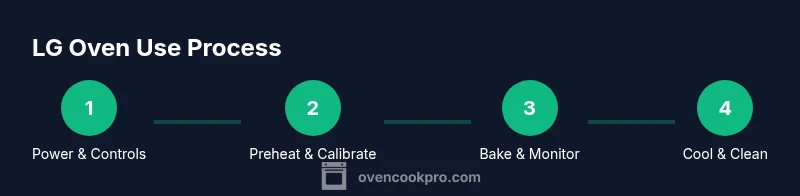
- 1
Power on and review controls
Turn on the lg oven and take a minute to familiarize yourself with the control panel. Identify bake, convection, timers, and any preprogrammed modes. This helps you select the right setting for your dish and avoids accidental presets.
Tip: Consult the model manual to verify each control’s function; model variations exist. - 2
Set clock and target temperature
Input the correct time and select the required bake mode. For most recipes, preheat to the recommended temperature for 8–15 minutes before loading food. Use an oven thermometer to confirm that the oven reaches the target temperature before you begin cooking.
Tip: If your thermometer reads lower or higher than the display, plan for a calibration check. - 3
Position racks and pans
Place racks as described in your recipe, typically in the middle or upper-middle section for even browning. Use parchment or a silicone mat on sheets to prevent sticking and promote uniform heat exposure.
Tip: Avoid overcrowding; leave space between pans for air circulation. - 4
Bake or roast with the chosen mode
Insert food, set the timer, and monitor progress. Rotate pans halfway through to ensure even browning. For convection, reduce temperature by about 25°F (15°C) or shorten time slightly.
Tip: Keep an eye on the first batch to gauge actual timing for future runs. - 5
Check doneness and rest
Use internal probes or a thermometer to verify doneness. Let foods rest as recipe suggests to finish cooking through residual heat. Remove and cool on a rack to prevent soggy bases.
Tip: Carry a kitchen towel to handle hot trays safely during transfer. - 6
Clean up and evaluate
After cooling, wipe the oven walls and racks, and store tools for next use. Note any temperature variance for future calibrations. This step helps maintain accuracy and extends oven life.
Tip: Record any calibration adjustments and preferred settings for future reference.
Questions & Answers
How do I switch between convection and conventional bake on an lg oven?
Most lg ovens offer a convection and standard bake option on the control panel. Select convection for faster, even browning; switch back to standard bake for delicate items. Always adjust temperature by about 25°F (15°C) when using convection.
Use the convection setting for even browning and shorter times; switch to standard bake for delicate items, and remember to adjust the temperature by about 25 degrees.
How can I calibrate the oven temperature on an lg oven?
Place an oven thermometer in the center of the rack, preheat to a target temperature, and compare the thermometer reading to the display. If there's a consistent delta, follow the manual's calibration steps or contact support for model-specific guidance.
Preheat with a thermometer, compare readings, and calibrate per the manual if you notice a steady offset.
Is it safe to use aluminum foil or parchment in an lg oven?
Parquet or parchment paper is generally safe for many baking tasks; aluminum foil can be used but should not cover vents or line the entire bottom, as it can reflect heat and damage performance. Follow the manual for pan recommendations.
Parchement paper is usually fine; avoid blocking vents with foil and follow your manual’s guidance.
What should I do if my lg oven won’t heat up?
Check the circuit breaker, power outlet, and door latch. If power is interrupted, wait for the display and electronics to reset. If the issue persists, contact customer service for model-specific troubleshooting.
Check power and door latch first; if it still won’t heat, reach out to customer service for help.
How often should I clean my lg oven?
Regular wipe-down after use helps prevent buildup. Use mild soap and non-abrasive tools. Periodic deeper cleaning or self-cleaning cycles (if your model supports them) should follow the manual instructions.
Wipe after cooking and do a deeper clean as the manual recommends, especially if you notice buildup.
What is the difference between true convection and standard bake in lg ovens?
True convection uses a fan for even heat distribution and faster cooking, while standard bake relies on static heat. Convection typically lowers cook times and can cause faster browning, so adjust the temperature and time accordingly.
Convection uses a fan for even heat and faster cooking; standard bake is static heat. Adjust temps and times when using convection.
Watch Video
Main Points
- Master preheating for consistent results
- Know when to use convection vs standard bake
- Calibrate temperatures with an oven thermometer
- Maintain the oven with regular cleaning and checks
- The Oven Cook Pro team recommends documenting your settings for repeatable success