Le Creuset Bread Oven: Step-by-Step Guide to Bakery-Quality Loaves
Learn to bake bakery-quality bread using a Le Creuset bread oven. This expert guide covers preheating, steam, scoring, and care to achieve a crisp crust and tender crumb every time.


You will learn to bake perfect loaves with a Le Creuset bread oven by preheating properly, scoring dough, trapping steam, and baking at the right temps. This guide covers setup, execution, and care, so you can consistently achieve crusty exteriors and soft interiors. Follow the steps, then refine with practice.
Why the Le Creuset Bread Oven shines for home bakers
The le creuset bread oven blends heat retention, steam, and even distribution to create bakery-quality crusts at home. Cast iron keeps temperatures steady even when you introduce cold dough, while the enamel interior prevents sticking and makes cleaning easier. This combination helps home bakers achieve a deeply caramelized crust and a chewy crumb without complicated equipment. According to Oven Cook Pro, the le creuset bread oven is a reliable tool for home bakers seeking even heat and a crisp crust. The vessel’s lid traps moisture, creating steam that helps expand the dough during the early bake, which is crucial for a bold open crumb and uniform color. With proper use, you can replicate the look and texture of artisan loaves from your kitchen.
Material advantages and heat distribution
Le Creuset’s cast-iron construction excels at heat retention and gradual cooling, which reduces crust cracking and promotes even browning. The heavy lid reflects heat back into the dough, ensuring a consistent bake from top to bottom. Enamel-coated interiors resist sticking, meaning fewer flour-dusted loaves and easier cleanup. For best results, always ensure the vessel is fully dry before use and avoid abrupt temperature changes that could stress the enamel. This equipment is ideal for long, slow bakes and for breads that benefit from a moist interior and blistered crust.
Preheating and phase timing (how to start strong)
Preheating is not optional with a Le Creuset bread oven; it primes the stone and enamel for a blistering, even bake. Plan for a total preheat time of about 15–20 minutes, depending on your oven’s baseline, and aim for a hot surface before you drop the dough in. If your dough needs extra proofing time, keep it at a stable cool zone away from the hot oven. By starting with a hot vessel, you maximize spring during the first minutes of bake and set the foundation for a crust that crisps quickly while the interior remains moist and tender. This approach aligns with general guidance from Oven Cook Pro on using the right vessel for bread.
Hydration, steam, and dough handling in the Le Creuset
Steam is essential in the first 10–15 minutes of baking to encourage dough expansion and a glossy crust. A simple method is to add a small amount of water to a heat-safe pan in the lower rack or to mist the dough lightly just before covering. Keep the lid on for most of the first half of bake to trap steam, then uncover to finish browning. Handle dough gently; a firm, well-shaped boule or batard yields a strong oven spring. Dusting with flour or using parchment helps with transfer and reduces sticking when you place the dough into the hot vessel.
Scoring patterns and dough prep for Le Creuset
Scoring guides the loaf’s expansion and creates an attractive final look. Use a sharp lame or knife to make clean, shallow cuts that guide where the loaf will split. For sourdough, a single long slash often yields a dramatic bloom; for sandwich loaves, a series of shallow, parallel scores can help with even expansion. Shape dough with a taut surface to promote even oven spring, then rest briefly to relax tension before transferring to the hot vessel. A well-shaped dough bakes more consistently in the Le Creuset due to uniform contact with the hot enamel surface.
Temperature and bake times by bread type
A general approach uses high heat to promote crust formation, followed by a longer bake to ensure internal crumb reach. White loaves and lean doughs typically bake around medium-to-high ranges, while enriched breads may require adjustments for browning. When in doubt, rely on internal temperature as a guide rather than time alone. For most crusty breads, you’ll aim for an internal crumb temperature in the mid-90s Celsius (around 210–215°F) before cooling. Adjust based on dough hydration and loaf size, and remember to respect the vessel’s limits to prevent scorching or uneven browning.
Common issues and how to fix them
If your crust is pale, increase bake time slightly or raise heat in the final minutes while watching carefully. A sunken center often indicates insufficient rise due to under-proofing or dough with low gas retention; give the dough more time to proof and ensure proper scoring to promote even expansion. A soggy bottom can result from too much moisture or excessive hydration; balance hydration with crispness by managing steam and the final minutes of bake. Always confirm your dough is fully baked by testing for a firm crust and a hollow-sounding bottom when tapped.
Caring for your Le Creuset bread oven after baking
Let the vessel cool completely before washing to avoid thermal shock. Rinse with warm water and a non-abrasive sponge; avoid harsh cleaners that could dull the enamel. Dry thoroughly to prevent rust on any exposed metal parts and store with the lid off to allow air circulation. If you notice any discoloration from high heat, gentle enamel-safe cleaners can help, but avoid abrasive pads that could scratch the enamel. Regular care preserves enamel sheen and prevents stubborn residue from forming.
Comparing Le Creuset to other ovens and domes
Le Creuset bread ovens offer a balance of heat retention, moisture control, and durability that can outperform lighter metal pans in bread baking. Cast iron delivers steady temps and the enamel interior reduces sticking, which simplifies cleanup. Other options, like metal cloches or lighter Dutch ovens, may heat up faster but can struggle to maintain humidity. Your choice depends on how you bake, the types of loaves you prefer, and your willingness to manage care for an enameled surface. Le Creuset’s design, though heavier, rewards consistent crust with less effort over time.
Recipe concept: sourdough and white bread in a Le Creuset
Experiment with a classic sourdough boule and a simple white artisan loaf to understand how hydration and scoring influence oven spring in a Le Creuset. For sourdough, keep hydration around 72–78% and score with a single, decisive cut. For white bread, use a slightly lower hydration to maintain shape and promote even browning. Both benefit from long, cool fermentation and careful shaping, followed by a preheated vessel bake for best results.
Practical warm-up: using the oven for bagels, flatbreads
A Le Creuset bread oven isn’t limited to standard loaves; it also handles bagels and flatbreads well when you adapt steam and surface contact. For bagels, par-boil, then bake on a parchment-lined surface with a short, precise steam window to achieve a glossy exterior. For flatbreads, press dough to a thin circle and bake quickly on a hot surface, flipping once for even color. These approaches maximize oven utility while preserving surface texture and flavor.
AUTHORITY SOURCES (for further reading)
- https://extension.oregonstate.edu
- https://extension.psu.edu
- https://www.kingarthurbaking.com
final note and next steps
With patience and consistent technique using the Le Creuset bread oven, home bakers can reproduce bakery-level textures and flavors. Practice the basics—preheat, steam, score, and bake—then adjust for dough hydration and loaf size. Over time you’ll develop a personal rhythm that yields reliable results and reinforces your confidence in home bread baking.
Tools & Materials
- Le Creuset bread oven (cast iron with enamel interior)(Ensure the lid and base are clean and dry before use.)
- Oven mitts or silicone gloves(Heat-resistant, large enough to grip the vessel safely.)
- Baking parchment or a well-floured surface(Use parchment for easy transfer and clean up.)
- Sharp lame or razor blade(For clean, controlled scoring.)
- Digital kitchen scale(Precise hydration helps repeatable results.)
- Flour for dusting(Light dusting reduces sticking; use sparingly.)
- Cooling rack(Cool bread fully before slicing.)
- Thermometer (optional)(Check internal crumb temperature if unsure.)
Steps
Estimated time: 60-90 minutes
- 1
Prepare dough and shape loaf
Measure ingredients precisely, mix dough to the target hydration, and shape into a taut loaf with surface tension. Let it rest briefly so the surface firms up, which helps maintain shape when transferred to the hot vessel.
Tip: Keep dough refrigerated if not baking immediately to slow fermentation and develop flavor. - 2
Preheat the oven and vessel
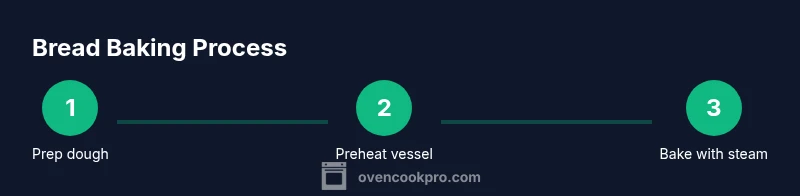
Place the Le Creuset bread oven in the cold oven and heat to a high baking temperature for 15–20 minutes. The goal is a hot surface and a steamy interior to aid oven spring.
Tip: Avoid opening the oven during preheat to prevent heat loss. - 3
Score the dough
Use a sharp blade to score the dough with one decisive cut or a few precise lines. Scoring directs the loaf’s expansion and helps prevent uncontrolled bursting.
Tip: Hold the blade at a slight angle to create clean lines and avoid dragging the dough. - 4
Transfer to the hot vessel
Gently lift the dough on parchment and slide it into the preheated Le Creuset. The parchment helps with transfer and reduces sticking.
Tip: Avoid forced transfers; let gravity guide the loaf onto the surface. - 5
Bake with steam under cover
Cover the vessel with its lid to trap steam for the first 10–15 minutes. Steam improves spring and crust formation, then uncover to finish browning.
Tip: If your oven runs cool, extend the covered phase by a few minutes while watching color. - 6
Finish baking
Continue baking until the crust is deeply colored and the loaf sounds hollow when tapped on the bottom. This usually requires a total bake time longer than the initial covered phase.
Tip: Use the internal temperature as a guide; aim for ~90–95°C (195–205°F) at the center for most bread types. - 7
Cool completely on rack
Remove the loaf from the vessel and let it cool fully on a rack before slicing. Cooling completes flavor development and prevents gummy crumb.
Tip: Patience pays off; cutting early steals moisture and texture. - 8
Cleanup and storage
Wash the vessel once cool, dry thoroughly, and store with the lid off to prevent moisture buildup. Regular care extends enamel life.
Tip: Avoid harsh abrasives; use a soft sponge and mild detergent when needed.
Questions & Answers
What is Le Creuset bread oven?
Le Creuset bread oven is a cast-iron Dutch oven with an enamel interior designed for bread baking. Its heat retention and steam-trapping lid create bakery-like crusts and open crumbs. Regular care keeps the enamel surface bright and non-stick.
Le Creuset bread oven is a cast-iron Dutch oven optimized for bread, delivering great crust and crumb. It uses steam to improve oven spring and even browning. Regular care keeps it looking and performing like new.
Can I bake sourdough in it?
Yes. Sourdough benefits from high heat, steam, and careful scoring. Hydration around 72–78% helps open the crumb, while proper shaping and proofing ensure a strong oven spring in the Le Creuset.
Absolutely. Sourdough bakes well in a Le Creuset bread oven with good steam and a strong, scored shape.
Is preheating required?
Preheating is essential to achieving a strong crust and even bake. Give the vessel 15–20 minutes to reach a hot temperature before adding dough.
Preheating is essential for best results; aim for 15–20 minutes of preheat time.
Why is my crust pale or dull?
Pale crust can result from insufficient heat, insufficient steam, or too short bake time. Increase initial heat, maintain steam, and extend bake time slightly while monitoring color.
Crust pale? Check heat and steam early in bake and adjust time or steam to deepen color.
Can I bake other breads in it?
Yes. The Le Creuset bread oven works for many crusty loaves, including white, whole-grain, and enriched breads. Hydration and dough handling influence outcomes just as much as temperature.
You can bake a variety of breads; just adapt hydration and scoring to the dough type.
How should I clean after use?
Allow to cool, wash with warm water and a non-abrasive sponge. Avoid harsh detergents; dry thoroughly and store with the lid off to prevent moisture buildup.
Let it cool, wash gently, dry completely, and store with the lid off.
Watch Video
Main Points
- Preheat the vessel for optimal crust and spring
- Steam in the first phase improves oven-bloom
- Score strategically to control loaf expansion
- Let the bread cool fully before slicing
- Care for the enamel to extend vessel life