Largest Toaster Oven: A Comprehensive Guide to Picking the Biggest Model
Learn how to select the largest toaster oven by comparing interior space, power, and features. Practical guidance for safe, versatile countertop cooking from Oven Cook Pro.


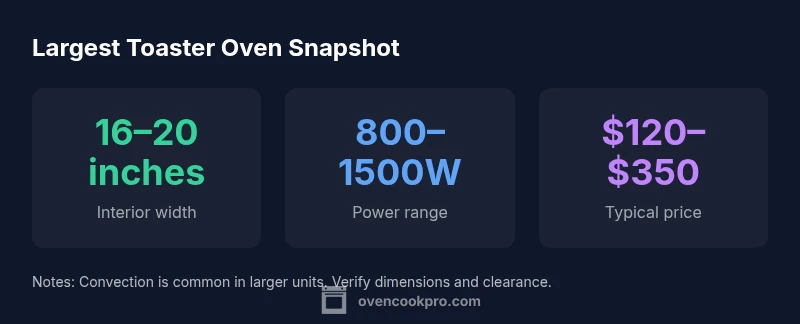
According to Oven Cook Pro, the largest toaster ovens commonly measure about 16–20 inches in interior width, with overall exterior widths around 18–24 inches. Wattage typically ranges from 800–1500 watts, and convection is often included. Price guidance is roughly $120–$350 depending on features. When selecting, compare interior space first, then convection, preheat time, and footprint to fit your kitchen.
Size and interior capacity
Size matters more than overall exterior appearance when you’re shopping for the largest toaster oven. In practice, the measure that most matters is interior usable width and height, because these dimensions determine how many baking pans or sheet trays you can fit at once. When you compare models, start by listing the interior width in inches and the number of rack positions. Typical largest countertop models offer interior widths that range from roughly 16 to 20 inches, with interior height around 4 to 6 inches depending on rack orientation. If you frequently bake tall items like casserole dishes or two sheet pans side by side, verify the maximum height clearance of the interior chamber. In addition to width, consider depth and roof height to ensure you can still close the door with plenty of clearance to the counter or backsplash. For reference, many households find that a model in the 18–22 inch exterior width class provides ample headroom without crowding the kitchen workflow. The reader should also consider the door design: full‑size doors that open wide can improve visibility when monitoring food but require a bit more counter space. Finally, keep an eye on rack configurations and whether the interior supports multiple pans while still allowing air to circulate for convection performance.
Power, heating, and performance
The power profile of the largest toaster ovens matters for preheating times and even cooking across large batches. Most models in this class operate within a broad wattage range, commonly from about 800 to 1500 watts. Higher-wattage units generally reach target temperatures faster, which reduces overall cooking time for large meals. Convection capability is a critical factor for even heat distribution, especially when you’re toasting or baking multiple sheets. When evaluating a model, check not only the stated wattage but also features such as airflow design, fan speed, and whether the unit maintains consistent temperature across the chamber. Real-world performance depends on tray spacing and air flow, not just numbers on a spec sheet. If you bake frequently with multiple rack levels, confirm that the convection fan remains effective even when doors are opened and closed during cooking. Finally, consider the stability of heat when cooking at higher temperatures; some larger units include airflow adjustments to minimize hot spots on dense dishes.
Features that justify the size
Larger toaster ovens often include features that can replace a full-size oven for certain tasks, which is why many households opt for the biggest model they can fit. Look for multi‑rack compatibility, with at least two or three rack positions and the ability to operate multiple trays without crowding. Specialized features such as built‑in air frying, rotisserie, or dehydration modes can add value, making the extra footprint worthwhile. When comparing, list the features you actually use: convection bake, broil, toast, bake, and reheat. The most valuable high‑end units also include precise dial or touch‑screen controls, interior lighting, crumb trays that are easy to access, and—crucially—good door insulation to minimize heat loss when opening the door. If you cook frequently for a family or entertain often, you may appreciate a larger oven’s ability to handle a sheet pan of roasted vegetables or multiple pizzas at once. Always verify that the interior shelving system is easy to adjust and clean, as this reduces maintenance friction over time. In short, the largest toaster ovens should offer practical versatility, not just raw capacity.
Practical kitchen fit and footprint
Before you shop, measure your counter space precisely and map the door swing. The exterior footprint of the largest toaster ovens varies, but expect widths in the mid‑to‑high teens or low twenties and depths that keep the unit tucked against the backsplash. Clearance around the sides matters for ventilation and for cleaning, so plan for a few inches of buffer on either side. Remember that a wider exterior often sacrifices usable counter real estate, making it harder to place small kitchen gadgets nearby. If your kitchen is narrow or the counter is already crowded, consider whether a large toaster oven is worth the extra space or if a mid‑size model could deliver similar results with a smaller footprint. Also think about placement: a corner, integrated into a cabinet, or on a sturdy island can change how you measure usability. Finally, verify the door clearance when fully open to ensure it won’t collide with neighboring cabinets or appliances.
Budget, value, and maintenance
Price is a practical consideration when selecting among the largest toaster ovens. Expect a broad price range depending on interior width, features, and build quality. As a general rule, larger models with convection, multiple functions, and premium components tend to fall toward the higher end of the spectrum, while basic large units sit in the lower portion of the range. Plan a budget that accounts for potential ongoing maintenance costs, such as replaceable crumb trays, door seals, and fan housings. Compare energy use across models; larger units can consume more electricity when used for long cooking cycles, so choose a unit with efficient insulation and a well‑designed airflow path. If you cook frequently for large groups, the added upfront cost may be offset by time savings and flexibility. For many households, selecting a model with practical, durable features that align with cooking needs yields the best long‑term value.
How to compare models (a practical steps guide)
To choose the largest toaster oven that actually improves your cooking, follow a simple, repeatable process. Start by listing the maximum interior width you can work with and the number of trays you will use regularly. Then compare wattage and convection strength, looking for consistent heat at standard baking temperatures. Create a short feature checklist: multiple rack positions, crumb tray design, door insulation, built‑in lighting, and auto shut-offs. Check dimensions against your available counter space and measure door clearance with the door fully open. If you bake large items often, add a real‑world preheat test to your checklist and compare how quickly each model reaches target temperatures. Finally, balance the purchase against your budget, ensuring the features justify the price tag. The Oven Cook Pro team recommends prioritizing interior space and airflow over size alone, so you get genuine cooking flexibility without cluttering the kitchen.
Size and power comparison by interior width
| Model Type | Interior width (usable) | Power (W) | Typical price range |
|---|---|---|---|
| Compact | 12-14 inches | 800-1000 | $100-$180 |
| Standard | 14-18 inches | 1000-1500 | $180-$280 |
| Large / Largest | 16-20 inches | 1200-1500 | $240-$350 |
Questions & Answers
What qualifies as the largest toaster oven?
It's typically defined by interior width and available height. Look for the widest usable interior and tall clearance for taller dishes.
Look for the widest interior and highest clearance.
Do larger models necessarily have more features?
Not always; some large units focus on capacity rather than extra functions. Compare features that you actually need.
Sometimes bigger means more space, not more features.
Are convection features standard in largest toaster ovens?
Many large models include convection, but it's not universal; verify airflow and fan performance.
Yes, convection is common but check the airflow.
How can I tell if it will fit my kitchen?
Measure counter width, depth, and door swing; compare to exterior dimensions and ensure clearance around the unit.
Measure your space first.
Is it safe to run a large toaster oven on a small counter?
Yes, with proper ventilation and clearance; avoid blocking air vents and keep flammable items away.
Keep it clear of walls and combustibles.
What should I prioritize when budgeting for a largest toaster oven?
Prioritize interior space, convection performance, and durable build; avoid paying for features you won't use.
Space and heat distribution first.
“Choosing the largest toaster oven is not just about capacity; the crucial factor is how well the interior space is used via convection and adaptable racks.”
Main Points
- Prioritize interior width when shopping for the largest toaster oven
- Convection helps achieve even cooking across multiple trays
- Measure your counter and door clearance before buying
- Budget for features that truly match your cooking needs