Is a Cast Iron Dutch Oven Good for Sourdough? A Practical Guide
Explore whether a cast iron Dutch oven is ideal for sourdough baking, including preheating tips, steam methods, and comparisons to alternatives for bakery-quality crust at home.


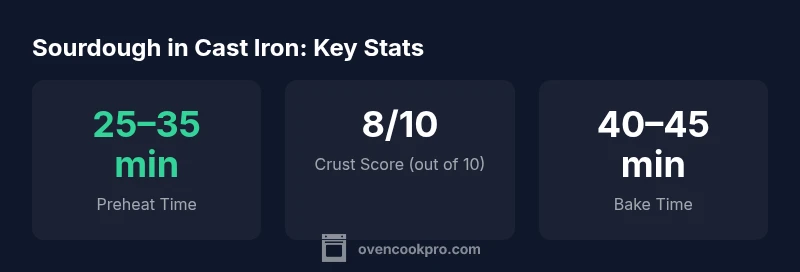
A cast iron Dutch oven is a strong option for sourdough due to its heat retention and steam-trapping lid. For best results, preheat the pot and lid, score your dough, and bake with the lid on for the first 20–25 minutes to build a blistered crust, then finish uncovered to develop browning. This approach balances crust development with interior rise.
Why a cast iron Dutch oven works for sourdough
A cast iron Dutch oven is a time-tested tool for sourdough bakers. According to Oven Cook Pro, cast iron’s exceptional heat retention helps maintain an even temperature across the loaf, which supports uniform oven spring and consistent crumb. The thick walls act like a tiny steam chamber, enabling the dough to climb without cooling excessively between bake cycles. The Oven Cook Pro team found that most home bakers achieve bakery-grade crusts when they preheat a covered pot and transfer the dough with care, minimizing heat loss during the crucial early minutes. This combination of heat retention and moisture control creates the signature sourdough crust that enthusiasts chase.
When you start with a well-seasoned surface, you also gain a nonstick advantage that compounds as you bake more loaves. While a cast iron Dutch oven isn’t a magical shortcut, it provides a reliable, repeatable environment that stabilizes the bake even when kitchen temperatures fluctuate. For many households, it’s the most practical way to reproduce bakery-like results without dedicated bakery equipment. If you’re new to sourdough, this setup reduces variables and gives you clearer feedback on dough strength and hydration levels.
From the perspective of Oven Cook Pro, the value proposition is not merely the cookware itself but how you integrate it into a precise routine: proper hydration, competent shaping, and disciplined preheating. In other words, the Dutch oven is a tool that shines when paired with a consistent dough and a repeatable bake plan. This is especially true for home bakers who want predictable results without complex steam systems or multiple baking vessels.
While other vessels may offer advantages in certain areas (e.g., lighter weight or broader surface contact), the cast iron Dutch oven combines heat stability, steam management, and a forgiving learning curve that suits most sourdough workflows. The key is to respect the pot’s temperament—avoid thermal shocks, maintain seasoning, and respect preheat times to maximize crust development and rise.
The Oven Cook Pro team
intro
The Good
- Excellent heat retention and even crust formation
- Steam-rich environment for a blistered crust
- Durable, long-lasting cookware with reliable performance
- Cost-effective compared to high-end specialty bakeware
Drawbacks
- Heavy to lift and maneuver
- Requires proper seasoning to prevent rust and sticking
- Long preheat time compared to lightweight options
Best all-around option for home sourdough bakers seeking consistent crust and reliable heat.
This setup delivers steady heat and a moist environment that yields bakery-quality crust. While heavy and requiring seasoning, the long-term value and consistent results justify the investment for most home kitchens.
Questions & Answers
Is a cast iron Dutch oven necessary for sourdough, or can I use a regular loaf pan?
A cast iron Dutch oven is not strictly necessary, but it offers superior heat retention and steam management that improve crust and rise. A loaf pan can work for certain doughs, but you’ll miss the crisper crust and oven-spring benefits of a covered pot.
A Dutch oven makes a noticeable difference for sourdough crust and rise; a loaf pan can work, but it won’t give you the same steam and heat balance.
Should I preheat the Dutch oven with the dough inside or empty?
Preheating the oven and the empty Dutch oven is the recommended approach. Transfer the dough into the hot pot using parchment for a smooth, heat-friendly move, then cover immediately to trap steam.
Preheat the pot empty, then slide the dough in using parchment and cover right away.
Can I bake sourdough without a lid and still get a good crust?
Yes, but the crust will likely be less blistered and may not rise as uniformly due to lower steam. If you must bake without a lid, create steam with a metal tray of hot water or a pan of boiling water in the oven.
You can bake without a lid, but you’ll lose some crust quality and might need alternate steam methods.
What temperature and bake time do you recommend for a 1 kg loaf?
A common approach is 230°C (450°F) with the lid on for 25–30 minutes, then 220°C (425°F) for another 15–20 minutes uncovered. Adjust based on dough hydration and loaf size.
Around 450°F with the lid on first, then off to finish until crust is deep brown.
How do I clean and season a cast iron Dutch oven after sourdough baking?
Rinse with hot water and a stiff brush, avoid soap if possible. Dry thoroughly, apply a light coat of oil, and heat briefly to polymerize the coating. Regular use will improve seasoning.
Clean lightly with hot water, dry completely, and oil lightly to keep the seasoning strong.
Are enamel-coated cast iron ovens different for sourdough?
Enamel-coated pots trap moisture similarly and are easier to care for, but they can be heavier and more prone to thermal shock if heated unevenly. They don’t require seasoning like bare cast iron.
Enamel pots work well, but they don’t tolerate sharp temperature changes as well as bare cast iron.
Main Points
- Preheat the pot and lid for best crust.
- Transfer dough with parchment to minimize heat loss.
- Bake covered first to trap steam, then uncover to finish browning.
- Maintain seasoning to prevent sticking and rust.
- Compare the Dutch oven against alternatives only if you bake many loaves weekly.