How to Light an Oven When Power Is Out
Learn how to light an oven during a power outage with safety-first steps, explanations of oven types, and practical alternatives recommended by Oven Cook Pro.


In a power outage, knowing how to light oven when power is out depends on your oven’s design. This quick answer covers when relighting is possible, how to do it safely, and practical alternatives. According to Oven Cook Pro, start by identifying whether your oven uses a standing pilot or relies on electricity for ignition, and consult the manufacturer’s instructions before attempting ignition.
What to know before attempting to light an oven during a power outage
When power is out, the ability to light an oven depends on the oven’s design and the gas supply status. Many modern ovens rely on electronic ignition and cannot be lit without electricity. Some older gas models use a standing pilot that can stay lit or be relit with a match. Before taking any action, check the oven's manual, confirm that there is no gas smell, and assess whether you have a safe vented area. If you feel uncertain, do not attempt to light and instead use alternative cooking methods. According to Oven Cook Pro, safety comes first, and knowledge about your specific model reduces risk. This section sets the stage for understanding which methods apply to your setup and why, helping homeowners avoid risky experiments during outages.
Understanding your oven type: gas with standing pilot vs electric ignition
Ovens fall mainly into two ignition categories. Gas ranges with a standing pilot have a small flame that can be lit manually or relit if it goes out, even when electricity is unavailable. Ovens with electric ignition depend on power to create a spark and may not light without power. If you own a newer model, assume the ignition system relies on electricity unless the manual specifies a standing pilot. Knowing which type you have directs safety checks and the decision to pursue relighting or switch to a safer cooking method. Always verify the manual and model number before attempting ignition, and never override safety features.
Safety first: gas leaks, ventilation, and emergency steps
Gas appliances can present a risk if a flame fails to ignite or if gas leaks are present. Do not proceed if you smell gas, hear hissing, or feel faint from gas accumulation. Open a window or door to ventilate, turn off the gas supply at the knob if safe to reach, and evacuate if the odor persists. Keep flames, sparks, and smoking materials away from the appliance. If you are unsure, contact the gas utility or a qualified technician. This section emphasizes immediate actions to reduce risk and protect household members during outages.
Alternatives to cooking when power is out
If relighting the oven is not advisable or not feasible, consider external options for cooking. A gas grill or outdoor propane stove can provide reliable heat for meals. A portable camping stove with proper ventilation can warm or reheat foods. If you have a microwave or toaster oven that operates on a separate power line, use it if the outage affects only one circuit. Plan meals that don’t require controlled oven temperatures and store ready-to-eat options for outage days. This section helps you keep meals safe and satisfying without risking gas leaks or electrical hazards.
When to avoid relighting: red flags and common failures
Relighting an oven is not always safe. If you notice a persistent gas odor, a failed ignition after multiple attempts, or any cracking sounds from the gas line, stop immediately and evacuate. Do not reuse the appliance until it has been inspected by a licensed professional. Do not attempt to bypass safety interlocks or jury-rig pilot lights. This section outlines clear indicators that relighting is unsafe and requires professional evaluation.
Step-by-step overview for a gas oven with standing pilot
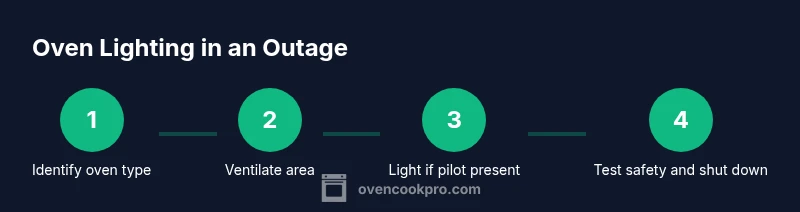
If your oven uses a standing pilot, a systematic approach improves safety. First, confirm you have a standing pilot and that the room is well-ventilated. Next, gather the necessary tools and manual, then proceed with a controlled lighting attempt following the manufacturer’s guidance. Finally, test the oven’s bake function in a safe, low-heat setting and verify there are no gas leaks after use. This overview frames the detailed steps in the dedicated Step-by-Step block, so you know what to expect without guessing.
Long-term readiness: how to prep for outages
Prepare for power outages by stocking a few practical items and creating a plan. Keep a flashlight with fresh batteries, a long-reach lighter, and the oven’s manual in an accessible spot. Create a simple meal plan that doesn’t require immediate oven use, and identify safe outdoor or alternative indoor cooking methods in advance. Regularly review safety procedures with household members and perform routine checks on carbon monoxide detectors and gas connections to minimize risk during outages.
Authority sources
To support safe guidance, consult dependable safety and energy resources. Include official safety guidelines from government and major publications, and verify with your appliance manual. This section summarizes recommended references and links to trusted sources for further reading and verification.
Tools & Materials
- Long-reach lighter or long matches(Essential for reaching the pilot or ignition area without leaning over flames)
- Battery-powered flashlight(Keep hands free and illuminate the pilot area safely)
- Oven manual (model-specific)(Check ignition type, pilot status, and safety warnings)
- Safety gloves(Protect hands when handling metal surfaces or hot components)
- Ventilation plan (open window/door)(Ensure the area is ventilated during lighting attempts)
- Fire extinguisher(Keep within reach in case of emergency, especially during first attempts)
Steps
Estimated time: a few minutes
- 1
Identify oven type and safety
Check whether your oven uses a standing pilot or electric ignition. Confirm there is no strong gas odor and that you can access the gas valve safely. If you cannot identify the ignition type, stop and switch to an alternative cooking method.
Tip: Consult the manual or contact the manufacturer before attempting ignition. - 2
Gather essential tools
Collect a long-reach lighter or matches, a flashlight, and the oven manual. Organize them on a stable surface near the oven before you begin.
Tip: Having tools at arm’s reach reduces the chance of accidental slips or drops. - 3
Ventilate and ensure area safety
Open a window or door to ensure ventilation. Clear flammable items away from the area and make sure children and pets are out of the space.
Tip: Ventilation reduces risk if there is any gas odor during ignition attempts. - 4
Access the pilot assembly
If you have a standing pilot, locate the pilot flame area according to the manual. Do not attempt to bypass panels or remove safety covers unless you are trained.
Tip: Avoid leaning over the burner while lighting to prevent burns. - 5
Light the pilot or ignition area
Carefully bring the flame close to the pilot while turning the gas control as directed by the manual. Hold the flame steadily until ignition is confirmed. If there is no ignition after several attempts, stop immediately.
Tip: Use the long-reach tool to maintain a safe distance from the flame. - 6
Verify lighting and test the oven
Observe a steady flame and a responsive oven. Try a low bake setting to confirm functionality. If the oven does not respond, discontinue and use alternate cooking methods.
Tip: Never leave the oven unattended while testing ignition. - 7
Shut off gas and secure the area
After use, turn the gas control to the off position and close any access panels if you opened them. Re-check the area for any lingering odor and ensure proper ventilation.
Tip: If you smell gas after closing, evacuate and call the gas company.
Questions & Answers
Is it safe to light a gas oven without power?
Only if the oven has a standing pilot and you follow the manufacturer’s instructions. If you’re uncertain about the ignition type or detect a gas odor, do not proceed and seek professional help.
Only light if your oven has a standing pilot and you’ve checked the manual; if unsure or you smell gas, don’t proceed.
What should I do if I smell gas after trying to light?
Evacuate the area immediately and call your gas utility or emergency services. Do not operate any electrical switches or open flames while gas is suspected.
If you smell gas, leave the area and call for help right away.
Can I cook with a grill during a power outage instead?
Yes, outdoor grilling or a portable camp stove can provide a safe alternative for cooking when power is out. Ensure proper ventilation and follow safety guidelines.
Grills and camp stoves are good options outside the home with ventilation and caution.
Will lighting a gas oven damage it if power is out?
Relighting should be safe if done according to the manual and you don’t sense gas leaks. If in doubt, stop and contact a professional before using the appliance again.
Relight only if the manual allows it and there’s no gas smell; otherwise call a pro.
Should I have my oven inspected after an outage?
Yes. If you attempted ignition or noticed irregular odors, have a licensed technician inspect the gas connections and ignition system before future use.
Yes, get it checked if you had any ignition attempts or odors.
What safety items should I keep for outages?
Keep a ventilation plan, a working smoke and CO detector, a flashlight, and a basic tool kit. Have emergency numbers readily available.
Keep ventilation, detectors, a flashlight, and emergency contacts accessible.
Watch Video
Main Points
- Identify your oven type before attempting ignition
- Ventilate and check for gas smell first
- Only relight if the manual supports a standing pilot
- Have safe alternatives ready for outages
- Never bypass safety features or ignore gas odors