Can You Use a Gas Stove During a Power Outage? A Practical How-To
Learn whether a gas stove can be used during a power outage, how to light it safely, and essential steps to stay safe when electricity is out. Practical guidance for homeowners and cooks.


Yes, you can light a gas stove during a power outage in many cases, but it depends on the stove’s ignition system. This quick guide covers when it’s safe, how to light manually, and the key safety steps to take if electricity is out. Prioritize ventilation, gas-leak awareness, and fire safety during outage cooking.
Can You Use a Gas Stove During a Power Outage? What You Need to Know
The question can you use a gas stove with power out often comes up after storms, outages, or when the electricity is down for maintenance. In many homes, the answer is yes, but only if the stove has a manual ignition option or a standing pilot light. According to Oven Cook Pro, these features allow ignition without electric power, provided you follow proper safety steps. If your stove relies entirely on an electric igniter or a computerized control, lighting it without power may be impossible or unsafe. In such cases, it’s wise to postpone cooking on the stove and rely on alternative methods until power is restored. This section outlines the practical conditions and what to check before you attempt to light.
Ignition Systems: Electric Ignition vs. Standing Pilot
Gas stoves come with different ignition systems. Electric-ignition models require power to create a spark, so a power outage will typically prevent lighting. Some models still use a standing pilot light that stays lit continuously; this can be lit manually if the gas supply is on and you can reach the pilot. Others may have a hybrid system that uses battery backup for ignition, which can work during outages if the batteries are fresh. Knowing which system you have is crucial for safety and planning during power interruptions. Oven Cook Pro’s analysis underscores that understanding your ignition type reduces guesswork and safety risks.
Safety First: Ventilation, Leaks, and CO Detection
Ventilation matters more when you light a stove without power. Burners produce combustion byproducts, and poor ventilation can lead to carbon monoxide buildup. Ensure a window or exterior vent is open to circulate air, especially when the area is small or poorly ventilated. Check for gas smells (rotten egg odor) and listen for a hissing sound around gas connections. If you detect a gas leak, do not light any burner, do not operate electrical switches, and evacuate the area. A battery-powered CO detector with fresh batteries is a smart safety add-on during outages.
Step-by-Step Lighting Without Power (Overview)
If your stove has a manual ignition or standing pilot, a careful, methodical approach keeps you safe. Before you begin, confirm the gas knob is off, locate your ignition tool (long lighter or long match), and have a flashlight ready. Do not lean over the burner when lighting. If you smell gas at any point, stop and leave the area immediately, then contact your gas utility or emergency services.
Practical Cooking During a Power Outage
When you can light safely, plan meals that don’t require high heat or long cooking times to minimize gas usage. Use covered pots to trap heat and heat foods to safe temperatures. Keep perishable items refrigerated as long as possible, and avoid opening the fridge or freezer more than necessary. If you have a back-up camp stove designed for indoor use, ensure it’s vented to the outside and never used in enclosed spaces. Always have a plan for alternative cooking options in a prolonged outage.
After You Cook: Turn Off, Vent, and Inspect
When you finish cooking, turn the burner(s) off completely. If you lit with a flame, double-check that the flame remains out once the knob is in the off position. Ventilate the room for several minutes to disperse any residual heat and byproducts. If you noticed any abnormal smells or persistent flame behavior, step back and reassess, and consider contacting a professional for inspection after the outage ends.
Tools & Materials
- Long-reach match or long lighter(Essential for lighting burners without leaning over hot surfaces)
- Battery-powered flashlight or headlamp(Power outage means lighting is limited; keep a light source handy)
- CO detector with battery backup(Detects CO buildup when operating gas appliances without power)
- Sturdy pot with lid and appropriate cookware(Lid helps maintain heat and reduces flare-ups)
- Fire extinguisher (ABC or suitable for kitchens)(Keep within reach; know how to use it)
- Kitchen timer or kitchen clock(Helpful for monitoring cooking times when you can’t rely on electronic timers)
Steps
Estimated time: Total time: 25-40 minutes
- 1
Identify ignition type
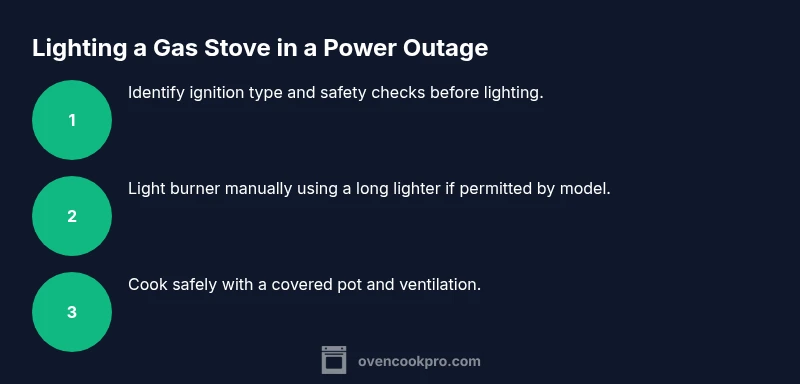
Check your stove manual or model to confirm whether it uses a standing pilot, a manual ignition, or a battery-backed igniter. This determines whether you can light it without power.
Tip: If you’re unsure, avoid testing and plan alternatives; never force a spark if you don’t know the system. - 2
Gather lighting tools and light source
Collect a long-reach lighter or match and a flashlight. Keep the gas knob off until you’re ready to light, and test lighting in a well-ventilated area.
Tip: Turn on a flashlight before you approach the stove to ensure good visibility. - 3
Light the burner manually
If you have a standing pilot or manual ignition, gently light the burner by holding the flame near the burner port while turning the knob to the ignite position or light the pilot first, depending on your model.
Tip: Keep your body back from the burner and direct the flame from the side rather than directly above. - 4
Set flame size and confirm
Once lit, adjust the flame to a steady, blue flame. If the flame flickers or goes out frequently, turn the knob off and wait a moment before trying again.
Tip: A steady, blue flame indicates proper combustion; a yellow or orange flame may signal incomplete combustion or gas issues. - 5
Cook safely with covered cookware
Use a lid to trap heat and reduce cooking time. Keep pots centered on the flame to avoid tipping and spillage.
Tip: Avoid overfilling pots; crowded pots increase risk of boil-overs and flare-ups. - 6
Turn off and ventilate after cooking
When finished, turn off the burner completely. Open a window or door for several minutes to circulate air and reduce gas byproducts.
Tip: Do not leave the stove unattended while the flame is lit, even during a power outage. - 7
Check for gas smells or leaks
If you notice a gas odor, evacuate and contact your gas utility or emergency services. Do not re-enter until the area is deemed safe.
Tip: If you must stay, keep ignition sources off and avoid creating sparks. - 8
Know when to pause outage cooking
If you’re uncomfortable or the stove won’t light safely, use non-gas alternatives or wait for the power to restore rather than risking a gas incident.
Tip: When in doubt, reach out to a professional for guidance before continuing.
Questions & Answers
Can I light my gas stove if I smell gas?
No. If you smell gas, evacuate immediately and contact your gas utility or emergency services. Do not ignite any burner.
If you smell gas, leave the area and call for help right away. Do not light any burner.
Do all gas stoves have a standing pilot?
No. Some gas stoves use electric igniters that require power. Check your model’s manual to determine if a manual ignition is possible during outages.
Not all gas stoves have a standing pilot; many use electric igniters that need power. Check your manual.
Is it safe to cook on a gas stove during a power outage?
It can be safe if the stove can be lit manually and you follow ventilation and leak precautions. If ignition isn’t possible or gas smells are present, avoid using the stove.
It’s safe only if you can light it safely and monitor for leaks. If unsure, don’t cook.
What should I do if the burner won’t light manually?
Turn the knob off, check for obvious gas-connection issues, and try again after a short wait. If it still won’t light, avoid forcing ignition and contact a pro.
If it won’t light, turn it off and wait a moment, then try again. If it still won’t light, call a professional.
Can I bake or use the oven during a power outage?
Ovens that rely on electricity for ignition won’t light during a power outage. If your oven has a standing pilot, it may light manually, but many ovens require power for the glow or controls.
Often not. Electric ignition ovens won’t light without power, though some have manual pilots.
What are the best safety practices during outage cooking?
Ventilate the area, monitor for gas leaks, keep a fire extinguisher accessible, and avoid leaving a lit burner unattended.
Ventilate, watch for leaks, have a extinguisher ready, and don’t leave the burner unattended.
Watch Video
Main Points
- Know your ignition type before outages
- Light manually only when safe and prepared
- Ventilate and monitor gas leaks during outage cooking
- Use covered cookware to save energy and control heat
- Have safety gear ready and a plan for outages