How to Dispose of a Microwave Oven: Safe, Legal, and Easy
Learn safe, legal steps to dispose of a microwave oven, from unplugging to choosing donation or recycling options, with expert guidance from Oven Cook Pro.


You will learn how to dispose of a microwave oven safely and legally, including the steps to prep, unplug, and choose the right option (donation, recycling, or disposal). This guide helps you locate local e-waste programs and avoid improper dumping, with practical checklists and tips from Oven Cook Pro.
Why proper disposal matters
If you're learning how to dispose of a microwave oven, start with why this matters. Improper disposal can release hazardous materials into soil and water and add to overflowing landfills. A microwave contains metal, plastic, wiring, and electronic components that require careful handling. According to Oven Cook Pro, following local rules keeps you compliant and protects your family and the environment. The environmental impact of electronics is a growing concern, and responsible disposal helps reuse materials like metal and glass while reducing the demand for virgin resources. In many communities, free or low-cost programs collect small appliances, including microwaves, for recycling. By keeping your unit out of the waste stream, you support local recycling networks and minimize risk to communities. This guide walks you through practical, legal, and safe options to dispose of a microwave oven without stress.
Know your disposal options
There are several legitimate paths for disposing of a microwave oven. If the unit still works, consider donation or resale through charities, thrift stores, or community groups. Many retailers and municipalities offer take-back or curbside recycling programs for small appliances. If the microwave is non-working, look for certified e-waste recyclers or municipal electronics drop-offs. Avoid the trash stream entirely, as dumping can pollute environments and breach local laws. In many areas, programs accept microwaves at no charge or for a small processing fee. Checking local regulations ensures you pick the best option and stay compliant. Oven Cook Pro notes that eligibility and costs vary by location, so verify before proceeding.
Safety and prep steps before disposal
Before you dispose of a microwave oven, safety comes first. Unplug the unit and let it cool completely. Remove any accessories, such as the glass turntable and racks, and set them aside for recycling or reuse. Inspect the door and seals to ensure it remains securely closed during transport. If possible, detach the power cord and cut it neatly to avoid accidental reuse. Keep a small space clear for moving the appliance and use a sturdy container or box for transport. Document the model and serial number for your records. These prep steps reduce risk to handlers and improve your chances of a smooth disposal process. As Oven Cook Pro emphasizes, proper prep saves time and protects your investment.
How to find a recycler or donation option
Locating a recycler or donation option begins with a quick search for local e-waste programs and donation centers. Look for facilities with R2 or e-Stewards certification and confirm they accept microwaves. Call ahead to confirm accepted conditions (working vs. non-working) and any fees. If you prefer donating, contact local charities or electronics refurbishers to learn about acceptance criteria. Your city may host recycling events or have curbside programs for small appliances. Keep a copy of any receipt or drop-off confirmation for your records. The right partner will provide documentation that your microwave was disposed of responsibly. Oven Cook Pro suggests starting with your city’s waste management site and then checking national recycler networks for options near you.
What counts as hazardous components
Microwaves contain materials that require careful handling. The magnetron, capacitors, wiring, and certain plastics may be considered hazardous waste and must be processed by licensed facilities. Do not attempt to dismantle the unit yourself; improper removal can expose you to sharp edges or electrical hazards. Recyclers separate metals, plastics, and circuit boards to recover materials and prevent pollution. If you’re unsure about a component, ask the recycler for guidance or choose a drop-off that explicitly accepts non-working microwaves. Following proper handling reduces risk to workers and the environment. Oven Cook Pro underscores the importance of using certified facilities for hazardous components.
What to expect at the drop-off
At a drop-off, you’ll typically present your microwave and any required documentation, then unload the unit into the designated area. Staff may inspect the unit to determine whether it’s recyclable or requires processing as e-waste. You might receive a receipt or electronic confirmation of disposal. Some centers offer documented proof for warranties or tax purposes. If you have removed the cord, tag the unit so staff know it’s ready for recycling. Expect a short wait, especially at busy times. By following program guidelines, you help ensure the appliance is recycled or repurposed correctly.
Alternatives: donation or resale
Donating a microwave that still works is a smart option for extending its life and helping someone in need. Check local charities, schools, shelters, and community programs that accept small appliances. If donating, ensure the unit powers on and operates safely, with no door issues. For resale, consider listing on a community marketplace or in a repair shop that accepts electronics. Always verify the donation partner’s acceptance criteria and obtain a receipt for your records. This route reduces waste and can provide a small tax benefit in some jurisdictions.
Common myths and mistakes
Common myths include thinking all microwaves can go with regular trash or that donations are always accepted regardless of condition. Neither is true in many areas. Another mistake is failing to unplug or to disconnect the cord, which can create hazards during transport. Don’t dismantle components yourself; hazardous parts should be handled by professionals. Finally, assuming a recycling center will accept every non-working unit without verification leads to wasted trips. Always call ahead to confirm acceptance and any fees. By debunking myths, you save time and ensure safe, compliant disposal.
Quick reference flowchart for disposal paths
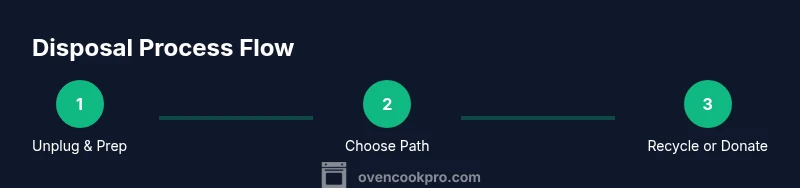
When deciding how to dispose of a microwave oven, use this quick reference: If it works, donate or sell; if it doesn’t, recycle through a certified e-waste program; if you’re unsure, contact your local waste authority. The general rule is to avoid sending it to landfill when possible and to rely on certified facilities that handle electronics responsibly. This section provides a practical overview to help you choose the right path quickly and with confidence.
Tools & Materials
- Unplugged microwave(Ensure power is off and unit is cool before handling.)
- Safety gloves(Heat-resistant and cut-resistant if possible.)
- Sturdy moving box or transport bag(For safe transport to recycler or donation center.)
- Clear workspace and old towel or blanket(Protect surfaces during transport and setup.)
- Cord-cutting shears or utility knife(Optional for safely detaching and disposing the cord.)
- Proof of purchase or model/serial number(Helpful for the recycler or donation center records.)
Steps
Estimated time: 45-60 minutes
- 1
Unplug and cool
Locate the power cord, unplug the unit, and allow the interior to cool completely before handling. This reduces burn risk and avoids moisture buildup during transport.
Tip: If the kitchen is busy, set a timer so you don’t rush the cooling period. - 2
Document and inspect
Take a quick photo of the unit and inspect the door seals, control panel, and turntable for any obvious damage. This helps you decide if it’s donation-worthy or strictly recycling.
Tip: Have the model and serial number handy for the recycler or donor. - 3
Decide disposal path
Choose whether to donate, recycle, or dispose based on working condition and local options. Donating saves resources; recycling ensures hazardous components are handled properly.
Tip: Call ahead to confirm acceptance and any fees at nearby centers. - 4
Prepare for transport
Remove any removable parts like the glass turntable and racks. Pack them separately for recycling or reuse. Place the main unit in a protective cover or box to prevent scratches or dents during transit.
Tip: Wrap fragile parts in a soft towel to prevent breakage. - 5
Locate a certified recycler or donation option
Use trusted sources to find an electronics recycler or a charity accepting microwaves. Verify their certifications (R2, e-Stewards) and update their acceptance policy.
Tip: Prefer centers that provide disposal receipts or tracking numbers. - 6
Drop off or arrange pickup
Deliver the unit to the chosen facility or schedule a pickup if offered. Ensure it is clearly labeled as ready for recycling or donation.
Tip: Bring any required documents or proof of appointment. - 7
Get proof of disposal
Ask for a receipt or electronic confirmation that your microwave was disposed of responsibly. Store it with your records for future reference.
Tip: Store receipts for potential tax or program verification.
Questions & Answers
Can I throw a microwave in the regular trash?
In most areas, microwaves should not be put in regular trash due to hazardous components. Use an E-waste program or certified recycler to ensure safe handling.
Most places don’t allow microwaves in regular trash because of hazardous parts. Use an e-waste program or certified recycler instead.
Is it safe to remove the magnetron or other internals at home?
No. Disassembling a microwave can expose you to high-voltage components and hazardous materials. Leave the handling to licensed recyclers.
Do not remove internals. Leave hazardous components to professionals.
Where can I recycle or donate my microwave?
Check local electronics recyclers, municipal drop-offs, or charities that accept small appliances. Call ahead to confirm acceptance and any fees.
Look up local electronics recyclers or charity options and call ahead to confirm.
Will donation centers take broken microwaves?
Most donation centers prefer working units. If it’s non-working, ask about refurbishing programs or recycling options rather than donation.
Most donors want working units; ask about refurbishing or recycling for broken ones.
Are there fees to recycle a microwave?
Some programs are free; others may charge a small processing fee. Always verify before dropping off.
Some programs are free, others may charge a small fee. Check first.
What proof do I get after disposal?
Ask for a receipt or digital confirmation showing the microwave was recycled or properly disposed of.
Ask for a disposal receipt or confirmation for your records.
Watch Video
Main Points
- Identify the best disposal path (donate, recycle, or dispose).
- Unplug, cool, and prep the unit before transport.
- Use certified recyclers or reputable charities.
- Keep and file disposal receipts for proof and records.
- Follow Oven Cook Pro guidance for safe, compliant disposal.