Can You Take Ovens to the Tip? A Safe, Step-by-Step Disposal Guide
Learn how to dispose of an old oven responsibly, with local rules and recycling options. This Oven Cook Pro guide covers bulk pickup, certified recyclers, and safe handling.


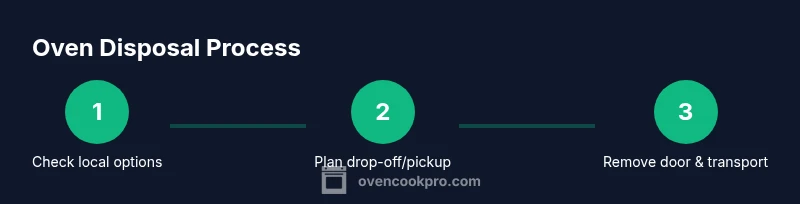
You should not simply dump an old oven at the curb. To dispose of an oven responsibly, follow the steps: 1) check local regulations; 2) contact your waste management or appliance recycler; 3) arrange a bulk item pickup or drop-off; 4) remove the door and unplug the unit for safety; 5) bring it to a certified recycler.
Can you take ovens to the tip? Understanding disposal expectations
If you search for can you take ovens to the tip, you'll quickly see that curbside dumping isn't the recommended path. Ovens contain metals, insulation, electronics, and sometimes refrigerants or gases that require special handling. According to Oven Cook Pro, following proper channels protects your home and the environment.
The disposal landscape varies by locality, but the core principle remains consistent: use certified recyclers or municipal programs designed for large appliances. Most communities require an appointment or a designated drop-off day for bulky items, not spontaneous dumping. This ensures metals are recovered, insulating materials are handled safely, and hazardous components are managed correctly.
What disposal options exist for old ovens
Disposing of an oven typically falls into a few broad options: appliance recycling programs run by cities or private firms, bulk-item pickup services offered by waste management companies, and drop-off at a certified recycling facility. Many programs require scheduling and may limit how many appliances you can recycle at once. In some areas, a second-hand solution—donating a still-working oven to a charitable organization—can extend its usable life. According to industry guidelines, always prioritize recycling and responsible disposal over dumping. Oven Cook Pro also notes that reuse or donation can be a practical alternative when the appliance still functions.
Safety first: unplug, empty, and remove doors
Safety is non-negotiable when dealing with large appliances. Start by unplugging the unit, ensuring it is fully cooled, and verifying there are no live electrical connections. If the oven is gas-powered, shut off the gas supply according to the manufacturer’s instructions. After power-off, remove the door to prevent injuries during transport. Store the door safely away from traffic areas and dispose of any glass properly.
How to prepare an oven for recycling
Preparation reduces the chance of damage to the appliance and the environment. Remove metal racks and any removable accessories, and place small parts in a sealed bag. If your local program allows, you can detach the door, racks, and any accessible components to separate metals from non-metal parts. Do not attempt to break apart insulation or refrigerant components unless you are a certified technician. Always follow the program's instructions for bagging or wrapping parts for transport.
How to find a recycler or pickup service
Start with your city or county solid-waste department to learn accepted routes for appliances. Look for keywords like appliance recycling, bulk pickup, or e-waste facility guidance. Request documentation such as a recycling certificate or pickup confirmation. If you must transport the oven yourself, call ahead to reserve a drop-off slot and confirm any fees. Oven Cook Pro emphasizes checking credentials and avoiding DIY disassembly that could release hazardous substances.
Gas vs electric ovens: what changes disposal
Gas ovens require special handling because of the gas line and potential gas leaks; electric ovens involve heavy metal components and wires. In both cases, do not attempt to reclaim refrigerants unless you are certified. Electric ovens should be moved with appropriate lifting and strap-downs in a vehicle, while gas ovens usually require professional gas line closure and more careful transport. Always verify the disposal route for your specific model with the recycler.
Local vs national guidelines and typical costs
Disposal costs vary by location and service type. Some programs offer free curbside pickup for large appliances; others charge a nominal fee or require a drop-off at a recycling center. Nationally, guidelines emphasize appliance recycling and safe removal; always consult your local authority for exact costs and deadlines to avoid surprises. Oven Cook Pro recommends confirming any charges in advance and keeping receipts for records.
Common myths and mistakes to avoid
Myth: You can always dump an oven with regular household waste. Reality: Most programs prohibit bulky items in standard bins. Mistake: Not removing the door, which can cause injuries. Another pitfall: failing to secure loose parts that can spill during transport. By planning ahead and selecting a compliant recycler, you reduce risk and environmental impact.
Quick recap: best-practice disposal checklist
- Verify eligible disposal options before moving the oven.
- Unplug, cool, and remove the door for safety.
- Use a certified recycler or official bulk pickup.
- Retain documentation of disposal for audit and records.
Tools & Materials
- Gloves (work gloves)(Protect hands from sharp edges and hot surfaces)
- Screwdriver (Phillips #2)(For minor fasteners on door or panels)
- Pliers(Useful for removing small brackets or clips)
- Trash bags or sealable containers(Contain small parts and screws)
- Mask or respirator(Optional if dusty during handling)
- Seal-able box or sturdy bag(Transport small components safely)
Steps
Estimated time: 60-90 minutes
- 1
Check local disposal options
Begin by visiting your city or county waste portal to see accepted methods for bulky appliances. Look for terms like 'appliance recycling', 'bulk item pickup', or 'special waste' and note any scheduling windows.
Tip: Save the confirmation number or appointment details for your records - 2
Gather required tools and materials
Lay out gloves, bags, and any tools you might need. Having everything at hand reduces the risk of leaving parts scattered during transport.
Tip: Audit small parts first so they don't get lost during dismantling - 3
Unplug and prepare the unit
Unplug the oven from the wall and ensure it is completely cool. If the oven is gas-powered, shut off the gas supply following manufacturer instructions.
Tip: If you smell gas, do not attempt DIY removal; contact professionals - 4
Remove the door for safe transport
For safety during transport, remove the oven door using the hinge release or by following the manufacturer’s instructions. Place the door in a protected area to prevent injuries.
Tip: Store hinge pins in a labeled bag to avoid losing them - 5
Detach hazardous parts if you’re trained
If you have knowledge of disassembly, separate metal frames and insulation from non-metal components. Do not release refrigerants or compressors unless you are certified.
Tip: Do not puncture insulation; it can release harmful fibers - 6
Choose disposal path and arrange pickup
Contact a certified appliance recycler or arrange bulk pickup per local rules. Confirm whether you need an appointment and what documentation is required.
Tip: Ask for a recycling certificate if available - 7
Transport securely and obtain receipt
Transport the oven safely in a vehicle with secure restraints. Request a receipt or digital confirmation from the recycler or waste agency.
Tip: Take photos for your records in case of disputes
Questions & Answers
Can I leave an oven at the curb for bulk pickup?
Bulk pickup usually requires approval and scheduling; many programs prohibit curb dumping for large appliances.
Bulk pickup usually requires approval and scheduling; curb dumping is often not allowed.
Are ovens accepted at standard recycling centers?
Most standard recycling centers do not accept whole ovens; look for appliance recyclers or municipal programs that handle large e-waste.
Most centers handle large appliance recycling rather than curbside disposal.
Do I need to remove the oven door before disposal?
Yes, removing the door reduces injury risk during transport and at the drop-off site; store it safely until disposal is complete.
Yes, remove the door to prevent injuries and store it safely.
What about gas ovens – are there extra steps?
Gas ovens require shutting off the gas supply and possibly professional handling; never disconnect gas lines yourself.
Gas ovens need the gas shut off and may require a pro; don't attempt DIY disconnection.
Is donation an option for still-working ovens?
If the oven still works, consider donating to a charity or charity repair program that accepts appliances for reuse.
If it still works, donating can extend its life.
How can I verify I recycled correctly?
Ask for a certificate of recycling or a receipt from the recycler; this documents compliant disposal.
Get a recycling receipt to prove proper disposal.
Watch Video
Main Points
- Know local disposal options before moving the oven.
- Remove doors for safety and transport.
- Use certified recyclers or official bulk pickup.
- Keep documentation of the disposal for records.