How Long to Cook Frozen Salmon in the Oven: A Step-by-Step Guide
Master oven-baked salmon from frozen with precise timings, temps, and doneness checks. This Oven Cook Pro guide helps home cooks get juicy, flaky results straight from the freezer.


According to Oven Cook Pro, you can cook frozen salmon in the oven in about 20-30 minutes at 425°F, depending on thickness. Start with a preheated oven, bake uncovered on a parchment-lined sheet, and season simply with oil, salt, and pepper. Check the internal temperature to 145°F for safe, flaky results.
Why timing matters for frozen salmon
Cooking frozen salmon in the oven is convenient, but timing matters greatly if you want juicy, flaky fish. Thickness, oven performance, and whether you wrap or leave the fish uncovered all influence results. According to Oven Cook Pro analysis, frozen salmon generally requires more time than thawed fillets, so plan extra minutes and rely on doneness cues rather than a strict clock. In this guide we cover practical timing, temperature, and doneness checks to help you consistently achieve great results. Pay attention to the thickness at the thickest point; even a small variation can shift the finish by several minutes. If your fillets are particularly thick, expect longer bake times and consider finishing under the broiler for a minute or two if you want crisper edges. The goal is a center that is opaque and flakes easily while the outer edges stay moist.
Temperature, tools, and prep for reliable results
Choosing a reliable setup is the foundation of a good bake. Start with a hot oven around 425°F (218°C) as a common default for frozen fillets; you can adjust between 400–450°F based on your oven and fillet thickness. Preheat the oven fully to ensure even cooking from the first minute. Line a rimmed baking sheet with parchment paper or foil to prevent sticking and easy cleanup. A light brush of olive oil or a quick spray helps keep moisture in and improves browning. Have a meat thermometer handy to verify 145°F in the thickest part before serving. The combination of preheating, a crisp exterior, and accurate doneness checks reduces the risk of dry edges or underdone centers. Oven Cook Pro analysis also emphasizes using parchment for even browning and easier cleanup.
Step-by-step cooking plan for frozen salmon
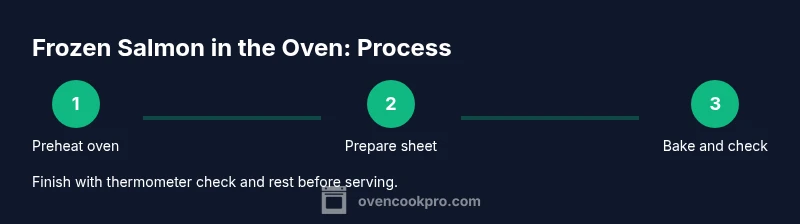
This section outlines the overall plan you'll follow in the dedicated step-by-step block. Start with preheating and prepping, then bake, check temperature, and rest before serving. By following a consistent sequence, you minimize guesswork even when the fish is coming straight from the freezer. For most home ovens, 1-inch thick fillets will finish in roughly 20–25 minutes; thicker cuts may need 25–35 minutes. Remember, these times are guidelines and can vary with your oven and the exact thickness of the fillet. Use a thermometer to confirm doneness rather than relying solely on time. In all cases, keep the baking sheet uncovered for even color and better texture. If you want more precision, see the step-by-step portion below for a clear action-by-action plan.
Doneness checks: thermometer, texture, and visuals
Doneness is best verified with a digital thermometer: the thickest part should reach 145°F (63°C). In addition to temperature, look for flaky texture and opaque color that matches the fish's natural pinkish-white tone. If you notice grayish or translucent centers, continue baking in short 3–5 minute increments and recheck. Avoid overcooking, which dries the flesh and makes it rubbery. Resting the fish for 2–3 minutes after removal helps redistribute juices and improves mouthfeel. Consistency between the center and edges is the hallmark of success, not a single number on the clock.
Troubleshooting common issues
If the salmon browns too quickly on the outside but remains undercooked inside, your oven may run hot or you used too much heat at the start. Try lowering to 400°F and checking sooner. If the exterior is dry but the interior is still underdone, consider covering loosely with foil for the last 5–10 minutes to trap moisture, then uncover to finish browning. For very thin fillets, guard against overcooking by reducing time and using checks every 3–4 minutes. Always pat fillets dry before oiling; moisture on the surface slows browning. The Oven Cook Pro team recommends relying on a thermometer for best results rather than clock-watching alone.
Serving ideas and leftovers
Serve with lemon wedges, fresh herbs, and a light drizzle of olive oil to brighten flavor. Pair with quick sides like roasted vegetables, a simple green salad, or quinoa. Leftovers should be cooled promptly and stored in an airtight container in the fridge for up to 3 days, or frozen for longer storage. Reheat gently in a low oven (about 275–300°F) until warmed through to avoid drying out the fish. For a quick finish, a brief broil for 1–2 minutes can reintroduce crisp edges without overcooking the center.
Quick safety reminders and best practices
Handling frozen fish requires clean surfaces and cold transport. Thawing is not required if you’re short on time, but if you do thaw, adjust times accordingly. Always wash hands, utensils, and countertops after handling raw fish. Use separate cutting boards to prevent cross-contamination. When in doubt, rely on a food thermometer and your senses to decide whether the salmon is safe to eat. The Oven Cook Pro team also recommends keeping hot foods out of the danger zone and storing leftovers promptly to maintain quality.
Tools & Materials
- Frozen salmon fillets (6-8 oz each, skin-on or skin-off as preferred)(one fillet per serving; ensure even thickness)
- Oven preheated to 425°F(use standard bake setting)
- Baking sheet(rimmed; lined with parchment or foil)
- Parchment paper or aluminum foil(for nonstick surface)
- Olive oil or cooking spray(to prevent sticking and add moisture)
- Meat thermometer(to verify 145°F)
- Timer(to track total bake time)
Steps
Estimated time: 25-45 minutes
- 1
Preheat oven and prep pan
Preheat the oven to 425°F (218°C). Line a rimmed baking sheet with parchment paper or foil to prevent sticking and make cleanup easy. Have olive oil and seasonings ready before the salmon goes in.
Tip: Preheating ensures even cooking from the first minute. - 2
Arrange fillets in a single layer
Place frozen fillets on the lined sheet in a single layer with space between pieces. Avoid crowding so heat circulates and each piece cooks evenly.
Tip: If fillets vary in thickness, place the thicker ones toward the center of the sheet. - 3
Brush with oil and season
Lightly brush the tops with olive oil and season with salt, pepper, and optional herbs. Keeping seasoning light helps maintain moisture in the frozen state.
Tip: No need to thaw; a light oil helps with browning and moisture retention. - 4
Bake uncovered and monitor
Slide the sheet into the oven and bake for about 18-25 minutes for 1-inch fillets; thicker fillets may need 25-35 minutes. Use a thermometer to check doneness rather than relying solely on time.
Tip: Start checking at 18 minutes to avoid overcooking thin portions. - 5
Check doneness with a thermometer
Insert the thermometer into the thickest part; target 145°F (63°C). If it’s not there yet, continue in 3–5 minute increments.
Tip: Temperature is the reliable cue for doneness; visual cues can vary with lighting. - 6
Rest briefly and serve
Remove the salmon and let it rest 2-3 minutes before serving to let juices redistribute and improve texture.
Tip: Resting helps maintain juiciness and prevents a crumbly bite. - 7
Store leftovers safely
Cool quickly and refrigerate in an airtight container within 2 hours. Reheat gently to 165°F to preserve texture.
Tip: Small, zip-top bags are great for portioning and freezing portions.
Questions & Answers
Can I cook frozen salmon without thawing?
Yes. Baking frozen salmon is convenient and safe. It simply takes longer than thawed fish and should be checked with a thermometer to ensure doneness.
Yes. You can bake frozen salmon; just plan for a longer bake time and verify doneness with a thermometer.
What temperature is best for baking frozen salmon?
A common choice is 425°F (218°C) for most fillets. You can adjust between 400–450°F depending on your oven and thickness, but higher heat generally yields better browning.
Most recipes use 425°F; adjust if your oven runs hot or your fillets are thicker.
How do I know frozen salmon is done?
Use a digital thermometer to reach 145°F in the thickest part. The fish should flake easily and be opaque. If centers remain translucent, continue baking in short increments.
Check the internal temperature to 145°F and look for opaque, flaky texture.
Can I cook frozen salmon with skin on?
Yes. Cooking skin-on can help retain moisture and add texture. Place the fillet skin-side down so the skin protects the meat as it cooks.
Sure—skin-on works fine; it helps keep moisture and adds texture.
Should I cover salmon while baking?
Uncovered baking is preferred for browning and a crisp exterior. Covering can trap moisture, which is useful if your fillet is drying out, but it softens the surface texture.
Uncovered is usually best for texture, but cover briefly if you need to trap moisture.
What if the fillet is thicker than 2 inches?
Thicker fillets require longer bake times. Plan for 30–35 minutes or more, and verify with a thermometer. Consider finishing under the broiler for a brief minute to achieve color without overcooking the center.
Very thick fillets take longer; use a thermometer and consider a quick broil to finish.
Watch Video
Main Points
- Cook frozen salmon at 425°F for best results.
- Use a thermometer to confirm 145°F doneness.
- Bake uncovered for even browning and moisture retention.
- Rest 2–3 minutes before serving for juicier texture.
- Skillet or broil finish can enhance edges if desired.