Can You Cook Salmon in the Oven When It's Frozen? A Step-by-Step Guide
Learn how to bake frozen salmon in the oven with confidence. This expert guide covers temps, times, safety, and practical tips for juicy, perfectly cooked fish without thawing.


Yes. You can cook salmon in the oven directly from frozen, but you’ll need a longer bake and careful temperature control. Don’t thaw first; instead, bake at a moderate temperature, cover to retain moisture, and verify doneness with a thermometer. This method minimizes thaw time while delivering a moist, flavorful fillet when done correctly.
Can you cook salmon in the oven when it's frozen?
Yes—it's a practical option for weeknight dinners and last-minute meals. According to Oven Cook Pro, cooking salmon from frozen is safe and convenient when you use proper heat, moisture, and a reliable thermometer. The goal is to heat the flesh evenly while keeping the exterior from drying out. You’ll typically bake a frozen fillet at a moderate temperature, cover it to trap moisture, and finish with a brief higher-heat pass if you want a touch of browning. This approach minimizes thaw time and reduces the risk of overcooking the edges while the center remains succulent. Before you start, gather essential tools and ingredients, and set up your oven for even heat distribution. In addition to the fish itself, you’ll want a light oil or butter, salt, pepper, and a squeeze of lemon to brighten the flavor. Reading this guide will help you achieve a reliable result, even if the salmon is frozen solid when you reach for the pan.
Frozen salmon basics: why ice pockets matter and heat distribution
When salmon is frozen, ice crystals inside the flesh create tiny barriers to heat transfer. The oven needs to push heat through the ice and warm the meat without overheating the surface. That’s why a gentle, steady bake works better than a very high blast of heat from start. The internal structure of the fish matters: a thicker fillet will take longer to reach the safe internal temperature, so thickness becomes the most important variable when you’re cooking from frozen. In practice, choose a portion that’s roughly 4-6 ounces per person, thawed or not, to ensure even cooking. If you routinely cook from frozen, consider portions that are uniform in thickness to prevent overcooking the edges while the center finishes.
Temperature and time: getting it right
A conservative starting point is to bake frozen salmon at 375-425°F (190-220°C). Lower end for very delicate fish, higher end for thicker fillets that need more heat to reach 145°F (63°C) safely. Plan for about 25-30 minutes for 1-inch-thick fillets, and 35-45 minutes for thicker portions. If your fillet is irregular or very thick, check doneness with an instant-read thermometer starting at the 25-minute mark and continue in 5-minute increments until the thermometer reaches 145°F. Keep in mind that oven variations can affect timing by 5-10 minutes. Rest the fish 3-5 minutes before serving to let juices redistribute.
Step-by-step method: two reliable approaches
- Foil-wrapped bake: Place the frozen fillet on a sheet of foil, brush with a little oil, season, and seal the foil to form a loose packet. Bake until the internal temperature hits 135-140°F, then uncover and finish at 425°F for 4-6 minutes to lightly brown the surface. Tip: foil traps moisture, reducing the risk of dry edges. 2) Covered bake on a sheet pan: Line a pan with parchment, lay the frozen fillet with a thin coating of oil, and cover with a loose lid or another sheet of foil. Bake at 375-400°F until you reach 145°F in the center. Pro tip: a light brush of olive oil helps prevent sticking and keeps the finish moist.
Safety, doneness, and flavor boosters
Cooking from frozen requires patience and precise doneness checks. Always verify that the center reaches 145°F (63°C) with an instant-read thermometer. If the surface browns too quickly, tent the salmon with foil or reduce the oven temperature slightly for the middle phase and finish with a brief high-heat sear. Flavor boosters like lemon zest, dill, or a drizzle of olive oil can brighten the finish without adding extra moisture that might cloud texture. If you prefer extra moisture, consider a shallow water bath (a small amount of water on the bottom of the pan) to create gentle steam during the bake.
Authoritative sources and safety practices
For reliable guidance on cooking fish safely and effectively, consult trusted sources. The USDA’s Food Safety and Inspection Service provides fundamentals on cooking times and temperatures, while the FDA offers general guidance on seafood safety. University extension resources also offer practical tips for home cooks. Incorporating these guidelines helps ensure your frozen salmon is both safe to eat and delicious.
Troubleshooting and common mistakes
Common pitfalls include overcooking the exterior while the interior remains underdone, using too high a heat at the start, and skipping a thermometer check. To avoid these issues, start with a moderate temperature, use foil to preserve moisture, and check doneness early in the timeline. If you notice dryness, reduce the oven time or increase moisture retention methods for subsequent attempts. Remember: the goal is a juicy center with a tender, not mushy, exterior.
Tools & Materials
- Frozen salmon fillets(One fillet per serving; thickness should be as even as possible)
- Oven-safe baking sheet(With a rim to catch any moisture)
- Aluminum foil or parchment paper(For wrapping or tenting the fish)
- Olive oil or melted butter(Light coating to help season adherence)
- Salt and black pepper(Basic seasoning)
- Lemon wedges or zest(Brighten flavor if desired)
- Instant-read thermometer(Check for 145°F (63°C) in the thickest part)
- Paring knife or kitchen shears(For trimming or garnish)
Steps
Estimated time: Total: about 40-60 minutes depending on thickness
- 1
Preheat and prep
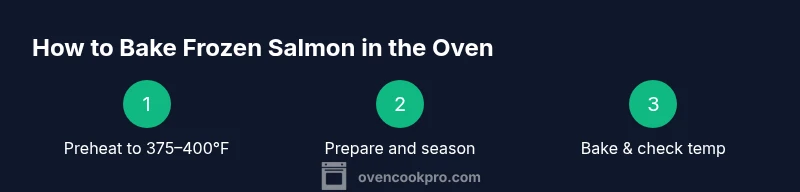
Preheat the oven to 375-400°F (190-205°C) and position the rack in the middle. Line a rimmed baking sheet with foil or parchment. If you’re starting from frozen, skip thawing; instead pat dry with a paper towel if any frost is noticeable and lightly brush with oil.
Tip: Preheating ensures even heat from the start, which helps prevent cold spots in the fillet. - 2
Arrange the fillets
Place each frozen fillet on the lined sheet, giving space between pieces for air circulation. Lightly season with salt and pepper, and add a thin coat of oil or butter to aid flavor and moisture retention. If using lemon, add a touch on top for brightness.
Tip: Even spacing prevents steaming and helps achieve a better finish. - 3
Cover for moisture
Tightly tent the fillets with a loose sheet of foil or place a second sheet on top to form a loose packet. This traps moisture and reduces the risk of dry edges during the long bake from frozen.
Tip: Loose tenting is key—airtight wrapping can trap steam and affect texture. - 4
Bake until center nears doneness
Bake at 375-400°F, checking every 10-15 minutes after the initial 20-25 minutes. Start checking with the thermometer when the fillet looks opaque about halfway through the total time. Target an internal temperature of 145°F (63°C) in the thickest part.
Tip: Thickness varies; thicker pieces take longer. Use the thermometer as your guide rather than time alone. - 5
Uncover and finish browning
When the center approaches 135-140°F, remove the foil and increase the oven to 425°F (220°C) for 4-6 minutes to lightly brown the surface. Watch closely to prevent overcooking.
Tip: A short high-heat finish adds color and flavor without drying the interior. - 6
Rest and serve
Let the salmon rest for 3-5 minutes after removing from the oven. Resting helps redistribute juices and keeps the fillet moist. Serve with a squeeze of lemon and a fresh herb if desired.
Tip: Resting is essential for optimal texture. - 7
Safety check and cleanup
Dispose of any used foil, wash utensils, and wipe the pan. Recheck your thermometer readings to ensure no cross-contamination. Store any leftovers promptly in the fridge.
Tip: Always wash hands after handling raw seafood and sanitize surfaces.
Questions & Answers
Can I cook salmon from frozen without thawing?
Yes. Cooking from frozen is safe and common. It requires a longer bake and careful temperature control to reach 145°F in the center without drying the surface.
Yes—it's safe to cook salmon from frozen, but plan for extra bake time and use a thermometer to ensure doneness.
What internal temperature is safe for cooked salmon?
The recommended internal temperature for cooked salmon is 145°F (63°C). Use an instant-read thermometer to check the thickest part.
Aim for 145 degrees Fahrenheit in the thickest part and verify with a thermometer.
Should I thaw salmon before baking in the oven?
Thawing is not required. Cooking from frozen saves time, but a thaw can give you more even texture and browning if you have time.
Thawing isn’t required; you can bake from frozen for convenience, though thawing can improve texture.
How can I prevent dry salmon when cooking from frozen?
Keep moisture by covering the fillet during most of the bake and finish with a short high-heat browning phase.
Cover the fish early to keep moisture, then finish with a quick high-heat browning.
Can I use a marinade on frozen salmon?
Marinades can work, but avoid long acidic marinades on frozen fish. Use a light coating of oil and spices instead.
You can apply a light coating of oil and spices; avoid long acidic marinades on frozen fish.
Can I reheat leftovers that were cooked from frozen?
Yes, reheat gently in the oven at a low temperature or use a microwave in brief bursts to avoid drying out.
Yes—reheat gently to preserve moisture, either in oven or short microwave bursts.
Watch Video
Main Points
- Bake frozen salmon at moderate heat for best results
- Always check with a thermometer to 145°F (63°C)
- Use foil or a cover to retain moisture
- Finish with a brief high-heat browning for color