Frigidaire Stove: Maintenance and Troubleshooting Guide
A practical how-to for Frigidaire stove owners, covering safety, setup basics, cleaning, and troubleshooting with step-by-step instructions and expert tips from Oven Cook Pro.


This guide shows you how to safely install and troubleshoot a Frigidaire stove, from pre-use safety checks to basic maintenance. You'll learn how to verify power, test burners, clean surfaces, and address common issues without voiding warranties. Follow the step-by-step process to ensure reliable performance and extend oven life. This quick guide primes you for hands-on work and reduces risk.
Understanding Frigidaire Stove Features
Frigidaire stoves come in a range of configurations, from freestanding gas and electric ranges to modern electric ovens with convection fans. Understanding the core features helps you diagnose issues faster and keep the appliance efficient. In this guide we focus on the most common Frigidaire stove designs found in homes today: gas ranges with electronic ignition and clean-glass surfaces; electric coil and smooth-top versions with indicator lights; and convection ovens that circulate heated air for even baking. Knowing the difference between coil vs smooth-top, bake vs broil, and self-clean vs manual cleaning will save you time when you read the manual or call for service. When you see the term frigidaire stove in documentation, it's usually referring to a range or wall oven combo that shares a control panel and power supply with a single fuel source. If you're upgrading or replacing parts, always confirm the exact model number to ensure compatibility and safety. For homeowners, the most relevant aspects are burner types, ignition methods, temperature controls, and maintenance requirements. By recognizing these, you can anticipate common failure points such as ignition delays, uneven heating, and surface staining, and approach fixes with confidence. The goal is to empower you to perform routine maintenance safely and confidently, while knowing when to pause and call a professional.
Safety First: Pre-Use Checks
Safety sets the stage for every task on a Frigidaire stove. Before you power up, ensure the appliance is disconnected from its power source, and if you have a gas model, verify the gas shutoff is accessible and off. In homes with gas appliances, good ventilation is essential; operate the stove with a window or range hood on to prevent buildup of fumes. Install and maintain a working carbon monoxide detector nearby, and keep kids and pets away from the cooking area during any maintenance. Inspect the cord, outlet, and surrounding cabinet for signs of damage or overheating. If you smell gas, do not ignite any flames and evacuate the area, then contact your gas provider or a licensed technician. Clear the counter of flammable items and ensure the cooktop surface is cool before beginning any cleaning. Document any unusual smells, hissing sounds, or irregular ignition behavior to share with a service professional or the brand’s support resources. These precautions reduce risk and protect your home while you work on your Frigidaire stove.
Installation and Placement Considerations
Proper installation and placement are critical for performance and safety. Start by checking clearances: leave at least the manufacturer recommended space around the back and sides to prevent heat damage to cabinets. Ensure the outlet is suitable for the stove type, typically a 120V circuit for basic ranges or a dedicated circuit for higher-load models, and never use an extension cord. If you have a gas stove, confirm the gas supply line is properly connected, the regulator is set correctly, and there are no leaks using a soapy water test. The range should sit level on a sturdy, heat-resistant surface; use a spirit level and adjust feet as needed. Installation should follow local codes, and if you lack training for gas lines or electrical connections, hire a licensed professional. Finally, read the user manual for model-specific requirements such as ventilation needs, spacer kits, or anti-tip brackets, and keep model numbers handy for future service.
Basic Troubleshooting for Common Problems
When things go wrong, start with the simplest explanation: a power or supply issue. Check that the stove is plugged in or connected to a functioning outlet, and verify that the home circuit breaker or fuse hasn’t tripped. If burners fail to ignite, inspect the igniter for cleanliness and dryness; wipe away any food residue with a dry cloth and avoid moisture that could affect ignition. Oven not heating? Confirm the oven mode and temperature settings, and listen for the heating element or burner sound; if there is no heat after several minutes, check the clock or timer settings which can disable the oven. Uneven heating is often caused by cookware that isn’t flat or by misaligned racks; rotate pans and test with water to observe heat distribution. If you encounter error codes, refer to the user manual or manufacturer support; several codes indicate sensor or ignition issues that may require professional diagnostics. For gas models, if you smell gas or detect a leak, turn off gas at the supply valve, evacuate, and call the provider. Regular maintenance reduces the chance of recurring problems and keeps the stove performing predictably.
Routine Maintenance and Cleaning
Routine maintenance keeps a frigidaire stove functioning well and looking clean. Wipe spills as soon as the surface cools to prevent hard-to-remove stains on enamel or glass. Use mild cleaners or a baking soda paste for stubborn stains, applying with a non-abrasive sponge to avoid scratching. For glass cooktops, use a dedicated cleaner and a soft pad; avoid household cleaners containing ammonia or granite cleaner that can damage the surface. Clean burners and igniters gently; ensure moisture does not enter electrical parts. Inspect lugs, knobs, and control panels for looseness and tighten as needed, but avoid over-tightening. Periodically check seals on the oven door and ensure the hinge moves smoothly. Finally, protect the range from moisture and heat sources by using compatible cookware and avoiding metal utensils on nonstick coatings. Following these steps preserves both aesthetics and performance.
Troubleshooting Scenarios: Quick Reference
This quick reference helps you navigate common situations. If the stove won’t power on, confirm the outlet and breaker, then test with a known-good appliance on the same circuit to isolate the issue. If burners won’t ignite, clean the igniter and verify there’s no gas blockage for gas models. If the oven takes too long to reach temperature, recalibrate using the oven setpoint and ensure door seals are intact. For fluctuating temperatures, rotate cookware, check oven racks, and consider a professional calibration if the oven is consistently off. If you notice unusual smells or smoke, stop using the appliance, unplug it, and call a technician. Use the guide as a reference, but do not perform risky repairs beyond your comfort level.
How to Reach Support and Next Steps
If you encounter issues beyond routine maintenance, gather essential details before contacting support: model number, purchase date, a brief description of the problem, and any error codes displayed. Have photos of the control panel or igniter if relevant. For many questions, Oven Cook Pro resources and the brand's official support line can provide model-specific guidance and safety instructions. If a professional visit is required, schedule it promptly to prevent escalation of a problem.
Final Checks and Next Steps
After completing maintenance or a fix, run a short test cycle with the oven set to a moderate temperature and the burners on to confirm proper ignition and heat distribution. Listen for normal burner clicks and verify that the oven indicator lights illuminate correctly. If anything seems off, pause and reassess before extended use. Keeping a small maintenance log helps you track dates and parts replaced, making future service easier.
Tools & Materials
- Phillips head screwdriver(Size #2, for panel screws)
- Flathead screwdriver(For adjusting terminal screws)
- Non-abrasive sponge(For cleaning surfaces without scratching)
- Mild all-purpose cleaner(Avoid ammonia on certain surfaces)
- Dry lint-free cloth(For ignition ports and glass)
- Soapy water (for leak checks)(Only for gas models with proper ventilation)
- Non-conductive gloves(Protect hands during maintenance)
- Multimeter (voltage tester)(Use to verify outlet voltage if needed)
- Owner's manual for model number(Essential reference)
Steps
Estimated time: 60-90 minutes
- 1
Disconnect power and verify safety
Unplug the stove from the wall outlet and, if applicable, shut off the gas supply. This eliminates the risk of electric shock or accidental ignition while you inspect components. Confirm there is no power at the plug with a non-contact tester if available.
Tip: If there is no access to the plug, switch off the circuit breaker and label the circuit before starting. - 2
Check electrical supply and outlets
Inspect the nearby outlet for damage and ensure it is the correct type for your stove. Test the circuit with a known-good device to confirm power stability. Do not use extension cords for permanent installations.
Tip: Avoid plugging multiple appliances into the same outlet to reduce overload risk. - 3
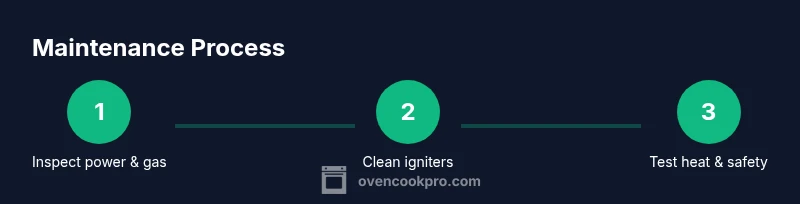
Inspect burners and igniters
Look for visible buildup or corrosion on the igniter and burner ports. Clean with a dry cloth or a gentle brush to remove residue. If the igniter is cracked or permanently dirty, plan for replacement with a model-appropriate part.
Tip: Keep ignition ports dry; moisture can impede spark generation. - 4
Test burners and oven heating
Reconnect power and set a test to bake or heat a burner. Listen for ignition sounds and observe whether the burner lights consistently. If the oven does not heat, check the bake element and thermostat settings first before pursuing service.
Tip: Note any error codes on the display to help diagnosis. - 5
Clean and restore surfaces
Wipe the exterior and glass with mild cleaner; avoid abrasive pads. For glass, use a dedicated cleaner to prevent micro-scratches. Ensure all components are dry before reassembly to prevent electrical issues.
Tip: Use a protective mat or trivet to minimize surface damage from cookware. - 6
Reassemble and verify
Carefully reattach any removed panels, plug in the appliance, and run a short test cycle to confirm stable operation. Watch for signs of abnormal heat, smells, or smoke and stop if anything seems off.
Tip: Keep a log of what you tested and the outcomes for future reference.
Questions & Answers
Why won't my Frigidaire stove ignite?
Ignition problems are commonly caused by a dirty igniter, a loose connection, or a lack of gas supply. Start by cleaning the igniter and checking the gas valve or outlet. If the issue persists, consult a professional to inspect electrical wiring and components.
Ignition problems usually come from a dirty igniter, loose connections, or gas supply issues. Start with cleaning and check valves, then call a pro if it continues.
Is it safe to use household cleaners on a glass Frigidaire stove?
Yes, but use a cleaner formulated for glass-ceramic surfaces and avoid abrasive pads. Wipe with a non-abrasive cloth and rinse to remove residue. Avoid ammonia-based products that can dull the surface over time.
You can use glass-ceramic cleaners with a soft cloth; avoid abrasives and ammonia-based products that can dull the surface.
What should I do if the oven won’t heat?
First verify the oven mode and temperature. Check the bake or broil element for visible damage and confirm the door seals are intact. If there’s no heat after these checks, a replacement sensor or control board may be needed.
First check the mode and temperature, inspect the heating element and door seals, and consider service for sensor or control board issues.
Can I replace an igniter myself?
Replacing an igniter is possible for some models, but it requires identifying the correct part and safe handling of electrical components. If you’re uncertain, contact a licensed technician to avoid risk.
You can replace an igniter if you have the right part and basic electrical know-how. If not, hire a professional.
Why does the oven smoke during self-cleaning?
Occasional smoke during self-cleaning can happen from residue burning off; if smoke is heavy or persistent, there may be excessive build-up or a malfunctioning seal. Stop cleaning, ventilate, and seek professional evaluation if necessary.
Self-cleaning smoke can occur from residue burning off. If it’s heavy or continues, get a professional check.
What is the best way to calibrate Frigidaire oven temperature?
Refer to the manual for the official calibration procedure. In many models, you’ll run a test bake and adjust a calibration screw or setting if the manual indicates. If you’re unsure, have a tech calibrate it to avoid uneven results.
Follow the model’s manual for calibration; if unsure, have a technician calibrate it for accurate temps.
Watch Video
Main Points
- Know your Frigidaire stove features before troubleshooting.
- Always prioritize safety with power and gas checks.
- Regular cleaning extends appliance life and performance.
- Refer to the manual and professional support for complex issues.