Black and Decker Air Fryer Toaster Oven: Step-by-Step Guide
Learn how to select, set up, and use a Black and Decker air fryer toaster oven with expert, step-by-step guidance from Oven Cook Pro. Master modes, preheating, temp control, and cleaning for healthier, crisp results.


You will learn how to use a Black and Decker air fryer toaster oven to bake, toast, and crisp foods with versatility and efficiency. This quick guide covers choosing the right model, setting the correct modes, preheating when needed, and monitoring doneness for reliable results. It also highlights safety, cleaning, and routine maintenance.
Understanding Black and Decker Air Fryer Toaster Ovens
A Black and Decker air fryer toaster oven combines multiple functions into one compact countertop appliance. It can air fry to crisp foods with less oil, bake for breads and casseroles, toast slices of bread, and reheat leftovers with even heat circulation. Compared with traditional ovens, these units rely on focused hot air and faster preheating to deliver browning and texture efficiently. According to Oven Cook Pro, these models pack several cooking functions into a space-saving design, making them popular for small kitchens or busy households. The key is to understand the core components: a heating element, a fan for air circulation, a crumb tray, and adjustable racks. Familiarize yourself with terms like convection mode, bake, toast, broil, and air fry to identify the right setting for each dish. This knowledge helps you optimize results across a wide range of foods without over-relying on oil.
How to Choose the Right Model for Your Kitchen
Selecting the best Black and Decker air fryer toaster oven depends on size, capacity, wattage, and available presets. Measure your counter space and compare exterior dimensions to ensure the unit fits without crowding other stovetop items. Consider capacity for typical meals: a medium loaf, a sheet pan, or multiple portions. Higher wattage generally means faster preheats and more robust browning, but it can also influence electricity use. Look for models with flexible racks, a sturdy crumb tray, and accessible controls. If you frequently bake, a larger interior with multiple rack positions is helpful; if you mostly toast and reheat, a compact model may be ideal. For families, check whether the interior can accommodate a standard baking sheet or pan. As a guiding principle, balance footprint with your cooking needs and budget. Oven Cook Pro’s analysis emphasizes choosing a model that aligns with your most common tasks, improving efficiency and consistency over time.
Setup and First Use: Unboxing, Placement, and Preheat
Unbox the unit carefully and remove all packaging materials. Inspect the exterior and racks for any shipping damage before plugging in. Place the oven on a stable, heat-resistant surface with at least 6 inches of clearance on all sides for ventilation. Before first use, wipe the interior with a damp cloth and run a 10- to 15-minute preheat cycle on the bake setting with no food to burn off any manufacturing residues. This preheating step helps ensure even heat distribution when you start cooking. If your model includes a guide rack or crumb tray, install them according to the manual, and make sure the tray slides in and out smoothly. According to Oven Cook Pro, a proper initial setup reduces the risk of uneven browning and improves long-term performance.
Everyday Cooking: Air Fry, Bake, Toast, Reheat
To air fry, select the air fry function, set the temperature, and arrange food in a single layer with space around pieces for air circulation. For baking, use the bake setting and preheated oven, testing with a thermometer when needed. Toasting can be done with a dedicated toast function or a bake cycle at a lower temperature for browning without burning. Reheating benefits from moderate heat and a brief extra cycle to restore texture. Remember to rotate pans or flip items halfway through when cooking on multiple racks. The key to consistent results is spacing, even layer thickness, and not overloading the interior, which can hinder airflow and cause uneven browning. Oven Cook Pro notes that even small adjustments to time and temperature yield noticeable improvements in texture and doneness.
Cleaning and Maintenance Best Practices
Regular cleaning keeps the oven performing like new. After cooling, remove crumb trays and wash with warm soapy water. Wipe the interior with a damp cloth and avoid harsh abrasives that scratch nonstick surfaces. Clean the door seal and racks periodically to prevent residue buildup. For stubborn grime, soak racks in warm soapy water and use a non-abrasive sponge. Dry all components thoroughly before reassembling. Keep the exterior free of grease and fingerprints by wiping with a soft, damp cloth. Use parchment paper on the crumb tray only if the manufacturer allows it; otherwise, rely on the tray to catch drips. Consistent cleaning reduces smoke and odors and extends the appliance’s life.
Troubleshooting Common Issues
If you notice uneven browning, check rack placement and ensure food is not overcrowded. A burnt smell or smoke may indicate food residue on the heating element; stop cooking, unplug, and inspect before resuming. If the oven isn’t preheating, confirm the power outlet is functioning and the door is fully closed; some models will not preheat if the door is ajar. If temps seem off, use a thermometer to verify actual interior heat and adjust the set temperature accordingly. Keep in mind that some models require a warm-up period when switching between cooking modes. For persistent issues, consult the user manual’s troubleshooting section or contact customer support. Oven Cook Pro’s guidance emphasizes methodical checks and gradual adjustments to restore reliable performance.
Advanced Tips: Getting the Most from Your Unit
Maximize performance by using convection for even browning and shorter cook times, especially on roasted vegetables or small potatoes. Use a silicone rack or broiling pan to elevate foods and improve air circulation. Preheat for most modes to ensure crisp edges, but reduce time by a few minutes if your oven runs hot. When frying small batches, shake or flip once to achieve uniform browning. For larger cooks, stagger items across racks rather than stacking, which can block airflow. Regularly calibrate your expectations by testing a sample piece and adjusting subsequent recipes accordingly. The result is consistent, healthier meals with less oil and faster turnaround.
Authority References and Further Reading
For safety and energy-efficiency best practices, refer to trusted sources such as government and university publications. Energy-saving tips from the U.S. Department of Energy, general food safety guidance from the Center for Disease Control, and standard kitchen appliance safety recommendations from the FDA provide a solid foundation for cooking with any compact oven. These resources support the practices described above and help you cook smarter and safer at home. (https://www.energy.gov/energysaver, https://www.cdc.gov/foodsafety/index.html, https://www.fda.gov/food)
Tools & Materials
- Oven mitts or heat-resistant gloves(For handling hot racks and pans safely)
- Non-slip mat for counter(Stability and ventilation under the unit)
- Silicone baking rack or wire rack compatible with the appliance(Improves air circulation and browning)
- Thermometer or oven-safe probe(Helpful to verify internal doneness on thicker foods)
- Parchment paper or aluminum foil (oven-safe)(Use according to model guidance to avoid blocking airflow)
Steps
Estimated time: 20-30 minutes
- 1
Unbox and Inspect
Carefully remove the unit and all accessories. Check the cabinet and racks for any damage or loose parts before first use. This ensures safe operation and avoids missing components during cooking.
Tip: Take photos of the contents for your records in case you need to report damage. - 2
Place and Power
Position the oven on a flat, heat-resistant surface with adequate clearance for ventilation. Plug into a dedicated outlet and confirm the display lights up correctly.
Tip: Avoid using an extension cord to prevent voltage drop and fire risk. - 3
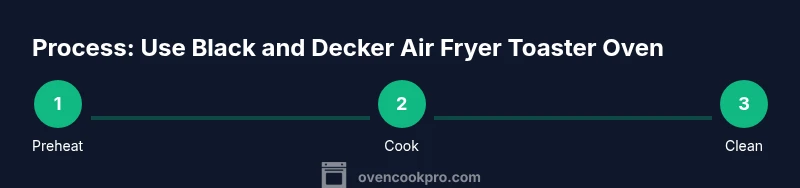
Preheat for Best Browning
If your model recommends it, run a preheat cycle for 5–10 minutes with the crumb tray removed or in its place as directed. This primes the interior for even heat distribution before loading food.
Tip: Preheating is especially beneficial for small batches and air-fried items. - 4
Load Food Properly
Arrange food in a single layer with space between pieces to promote airflow. Use the appropriate rack position for the recipe, and avoid overloading the interior.
Tip: Smaller, uniform pieces cook more evenly than chunky or irregular shapes. - 5
Set Temperature and Time
Choose the correct mode (air fry, bake, etc.), set the recommended temperature, and start. For most foods, check doneness a few minutes early to prevent overcooking.
Tip: If results seem underdone, add 2–5 minutes in 2-minute increments rather than a full restart. - 6
Finish, Rest, and Clean
When cook time ends, remove food, let it rest briefly, then unplug and allow the oven to cool before cleaning. Wipe the interior and wash racks after each use to maintain performance.
Tip: Validating doneness with an instant-read thermometer helps ensure safety and quality.
Questions & Answers
What is the main difference between a Black and Decker air fryer toaster oven and a conventional oven?
A Black and Decker air fryer toaster oven uses a fan and exposed hot air to crisp foods with little or no added oil, delivering faster preheat and browning. Conventional ovens rely more on radiant heat and longer preheat times, which can alter texture and moisture. The air fryer feature is especially beneficial for small batches and quick snacks.
It uses rapid hot air with a fan to crisp foods with less oil, and it heats up faster than a traditional oven.
Should I preheat the oven before cooking?
Preheating is often recommended for air frying and baking to ensure even temperature inside. If your recipe specifies a preheat, follow it. If not, a short preheat period (5–10 minutes) usually improves browning and consistency.
Preheating helps the food cook evenly and brown properly.
Can I bake cookies in a Black and Decker air fryer toaster oven?
Yes, you can bake cookies in many models by selecting a bake setting and using a silicone mat or parchment on a small sheet. Monitor closely since air fryers can cook faster than a standard oven.
Cookies can be baked in the unit; use bake mode and monitor closely.
Is it safe to use metal cookware in these ovens?
Many Black and Decker models allow metal pans, but it’s essential to follow the manufacturer’s guidelines for your specific unit, especially to avoid blocking airflow or damaging coatings. If in doubt, use nonstick trays or silicone bakeware designed for air fryer use.
Check your model’s guide; metal can be okay, but airflow matters.
How do I clean the crumb tray and racks effectively?
Remove crumb trays and racks after each use and wash with warm soapy water. For stuck-on residue, soak then scrub with a non-abrasive sponge. Dry completely before reassembling to prevent rust and odors.
Wash the trays and racks after use and dry fully before reassembly.
Watch Video
Main Points
- Know your model’s capabilities and rack configurations.
- Preheat when advised and avoid overcrowding for even browning.
- Use proper safety and cleaning practices to extend life.
- Experiment with modes (air fry, bake, toast) for healthier, crisp results.
- Refer to official guidance for safety and energy efficiency.