Regular Oven vs Convection Oven: Which Works Best?
Compare regular ovens and convection ovens to understand heat circulation, browning, cooking times, and use cases. Learn practical guidance for home cooks to choose the right oven type and optimize performance in everyday meals.


When choosing between a regular oven and a convection oven, the difference comes down to how heat is circulated. Convection ovens use a fan to move hot air, delivering more even browning and often faster results, but may require temperature and time adjustments. For many home cooks, convection shines for roasting and sheet-pan meals, while a regular oven remains excellent for delicate bakes.
How Convection Works vs Regular Ovens
According to Oven Cook Pro, convection ovens rely on a built-in fan and a small exhaust to circulate heated air around food. This active air movement speeds heat transfer and helps remove moisture from the surface, which promotes browning and crisping. A traditional or regular oven, by contrast, heats with radiant elements and relies on natural convection within the cavity. Food exposed to open air can brown unevenly if hot spots form. Understanding this baseline helps home cooks decide which path to take when weighing the choice between a regular oven vs convection oven. The rest of this section explains the physics, layout differences, and how these factors translate into kitchen results.
Practical takeaway: if you crave even color and faster results, convection is your ally; if you bake delicate items that need steady moisture, a regular oven offers steadier conditions.
Heat Distribution and Browning: Visual Cues
The core advantage of convection is air movement. You’ll notice more uniform browning across surfaces, especially on roasted vegetables, sheet-pan dinners, and crisp-topped gratins. In contrast, regular ovens rely on radiant heat that can create hot zones as the food sits, leading to less predictable edges. This difference matters most for large roasts, poultry with skin, or multiple trays that need even exposure. As you experiment, watch for the telltale signs: evenly colored surfaces with little to no soggy patches signal effective air circulation. For delicate items—like custards or sponge cakes—airflow can cause surface cracking or uneven rise if not managed carefully.
Cooking Times and Temperature Adjustments
Recipes written for a regular oven often assume static air and longer cooking times. When you switch to convection, you should adjust in practice by lowering the set temperature and/or reducing overall cooking time. The exact adjustments depend on the dish and the oven model, so monitor your food and use visual cues along with a thermometer when possible. The key idea is that convection speeds heat transfer and moisture loss from surfaces, so your goal is to maintain doneness without overcooking the interior. If you prefer to follow the recipe unchanged, you can still use convection but plan for a gentle reduction in time and careful checking as you near the end of cooking.
Tip: start with a modest decrease in time, then test for doneness with a probe or toothpick at the suggested doneness points.
Best Uses for Each Oven Type
Not every dish benefits equally from convection. Convection ovens excel at roasting meats, poultry, and vegetables where crisp edges and thorough browning are desirable. They are also effective for baked goods that benefit from a dry, crisp surface, such as cookies and pastries that you want to bake evenly across multiple racks. Regular ovens shine when you need steady, moist heat for delicate items, breads with high moisture content, or desserts that rely on even, gentle rising. Think of convection as a tool for speed and texture, while regular ovens offer predictability and gentleness for sensitive bakes.
For most families, a practical approach is to use convection for roasted dishes and sheet-pan meals, and switch to regular mode for cakes, soufflés, and moisture-rich loaves. Experiment with small adjustments to learn how your particular oven behaves in practice.
Cookware, Rack Positioning, and Setup
Convection can push heat across all trays, so rack placement becomes important. When using convection, place items on metal racks rather than glass or ceramic bakeware to avoid thermal expansion concerns and ensure even airflow. Keep a bit of space between pans to prevent steaming and uneven browning. In regular mode, you have a bit more flexibility with bakeware shapes since airflow is gentler. If you’re moving from regular to convection, you may need to rotate trays mid-cook to compensate for hot spots. Finally, remember that convection can acclimate pan performance; what browns perfectly in one oven on one rack might differ in another model.
Energy Efficiency and Long-Term Considerations
Convection often translates to shorter bake times and faster roasting, which can reduce overall energy consumption in practice. However, the energy picture depends on your usage pattern and how you calibrate temperatures and durations. If you bake large batches regularly, convection can yield meaningful time savings, while occasional use may offer smaller gains. Keep in mind that convection adds complexity with settings and maintenance; a well-maintained fan and thermostat help ensure the expected performance over the life of the appliance.
Maintenance, Reliability, and Common Issues
Like any appliance feature, convection requires regular maintenance. The circulation fan needs periodic cleaning to prevent fiber or dust buildup, which can reduce efficiency or introduce noise. If you hear unusual fan sounds or notice a drop in browning quality, check air intake and exhaust paths, and consult your user manual for cleaning guidance. Keep the oven’s gasket and seals in good condition to maintain even heat distribution. If you encounter persistent temperature fluctuations, a professional service check may be warranted to rule out calibration drift.
Real-World Scenarios: Recipes and Outcomes
Imagine a sheet-pan dinner of chicken drumsticks and potatoes. In convection, you typically achieve crisper skins and more uniform browning across the pan with less risk of undercooking the center. For a chocolate cake, convection’s air movement can cause a tendency toward doming or cracking if the batter is too dense and the oven is set aggressively; for such delicate bakes, a regular oven setting provides gentler heat that fosters an even rise. For roasted vegetables or a pan of garlic bread, convection tends to shorten the path to a deeply caramelized finish. Each scenario highlights how regular oven vs convection oven choice can meaningfully impact texture, moisture, and perceived doneness.
How to Decide If You Should Switch to Convection
If you frequently roast meats, bake sheet-pan meals, or want faster results with crisp textures, convection can be a worthwhile upgrade. If your kitchen priorities include delicate pastries, light cakes, or recipes that rely on moisture retention, you may prefer to retain regular oven functionality or learn how to use convection without compromising these outcomes. The decision also depends on your oven’s capabilities and your willingness to adapt recipes. Oven Cook Pro recommends testing a few core dishes to gauge how your current model behaves before committing to a broader switch.
Practical Testing at Home: A Quick At-Home Experiment
Set up a simple comparison test using two identical trays of vegetables or small potato wedges. Bake one tray in regular mode and one in convection, using the same pan material and rack position. Note color, browning, and texture on both trays after the same nominal time. Use a fork or knife to check tenderness, and record the differences in finish. This controlled exercise helps you understand how your oven handles air movement and whether your recipes need adjustments when switching between modes. Over a few tries, you’ll establish reliable benchmarks for your kitchen.
Comparison
| Feature | Regular oven | Convection oven |
|---|---|---|
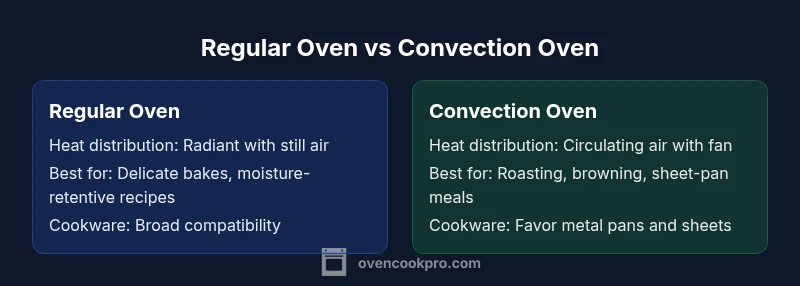
| Heat distribution | Radiant heat with still air | Circulating hot air for even browning |
| Cooking time impact | Follow standard recipe times | Often faster due to airflow |
| Temperature adjustments | Typically no adjustments | Often lower temps or shorter times |
| Best uses | Delicate bakes, moisture retention | Roasting, browning, sheet-pan meals |
| Cookware considerations | Broad compatibility with bakeware | Be mindful of airflow with some pans |
| Energy implications | Standard energy use | Potential time-based savings on many dishes |
The Good
- Faster cooking for many dishes
- More even browning and texture
- Excellent for roast meals and sheet-pan cooking
- Better results with multiple racks
Drawbacks
- Requires recipe adjustments and monitoring
- Delicate bakes may suffer if not managed carefully
- Possible cookware and rack positioning constraints
- Upfront cost and learning curve
Convection ovens offer broad benefits for roasting and multi-dish cooking, while regular ovens remain optimal for delicate baking.
If you roast or bake sheet meals frequently, convection is usually the better default. For pastries and moisture-sensitive bakes, regular ovens often deliver more reliable results, so assess your typical meals before deciding.
Questions & Answers
When should I use convection over a regular oven?
Convection is ideal for roasting, browning, and cooking many foods on multiple racks with more consistent results. Use it when you want crisp edges and faster overall cooking. For delicate pastries, a regular oven may yield more reliable moisture and rise.
Use convection for roasting and multi-dish meals; for delicate pastries, stick with regular oven.
Can I bake in a convection oven for delicate cakes?
Yes, but you may need to reduce heat or avoid full airflow settings to protect moisture and rise. If in doubt, start with regular mode for your first bake and reserve convection for sturdier cakes.
You can, but test first and consider using reduced airflow for delicate cakes.
Do I need special cookware for convection?
Convection works with most bakeware, but metal pans and sheet trays perform well due to better heat transfer and airflow. Avoid thick glassware in convection when possible since it can heat unevenly.
Metal pans and sheets are your friend in convection.
Will convection ruin pastries?
Convection can cause rapid surface drying if not monitored, which might crack or flatten delicate pastries. Use lower temperatures or shorter times, and test a small batch first.
Be mindful with delicate pastries and convection; test first.
Is convection energy efficient?
Convection can save energy in practice by shortening cooking times for many dishes, but the overall efficiency depends on usage patterns and how you adjust settings.
It can save time, which often helps with energy use.
Should I switch to convection if I only bake occasionally?
If you mostly bake, the benefits may be modest. Consider a trial period with a few favorite recipes to see if convection adds value without complicating your routine.
Try convection on a few recipes to see if it fits your routine.
Main Points
- Prioritize convection for roasting and multi-tray cooking
- Use regular mode for delicate pastries and moisture-retentive bakes
- Learn your oven’s behavior with a few control tests
- Plan adjustments to time and temperature when switching modes