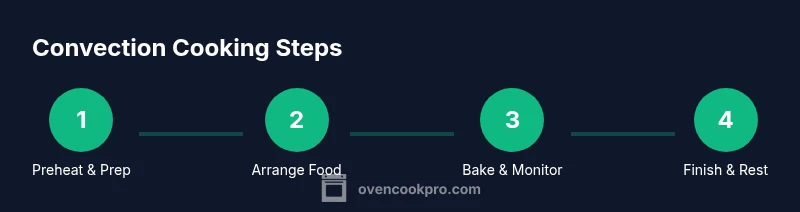
Oven When to Use Convection: A Step-by-Step Guide
Learn when to use convection in your oven, which foods benefit, and how to adjust temperature and timing for perfect browning and even cooking. This guide from Oven Cook Pro covers practical tips for home cooks.


You will learn when to use convection in your oven, which foods benefit, and how to adjust for best results. According to Oven Cook Pro, convection excels at roasting vegetables and browning meats with even heat. You'll need a convection-capable oven, an accurate oven thermometer, and awareness of dish size. We cover rack positions, timing tweaks, and common pitfalls.
What convection does in an oven
Convection ovens circulate hot air with a built-in fan and often an additional exhaust mechanism. The moving air transfers heat more efficiently than still air, which speeds cooking and promotes even browning. By consistently moving heat around the food, convection helps dishes dry out a touch faster on the surface while remaining moist inside. This is especially useful for achieving crisp edges on roasted vegetables and a golden crust on bake goods. In practice, convection can reduce the need for long simmer times and can make multi-dish meals more predictable when air flow is balanced across racks. According to Oven Cook Pro, understanding how air moves inside the oven is the first step to using convection effectively.
Benefits of convection for roasting and baking
Convection offers several practical benefits that home cooks can leverage. First, the fan-driven heat helps achieve uniform browning on large roasts and sheet-pan meals. Second, the steady air flow can shorten cooking times and improve crust formation on breads and pastries. Third, convection is ideal for reheating leftovers with less sogginess because circulating air helps evaporate excess moisture more quickly. While these benefits are compelling, they come with caveats: overcrowding slows air flow and can negate the advantages of convection. A little planning goes a long way toward reliable results.
When to reach for convection: foods and scenarios
Use convection when you want quick, even browning and crisp edges. Vegetables, potatoes, and root vegetables roast beautifully in a convection oven due to the efficient air exposure. Poultry and fish benefit from even heat distribution that reduces hot spots and preserves moisture when monitored. Sheet-pan dinners with multiple components, such as asparagus beside chicken thighs, can cook more evenly because air circulates around each piece. Breads with strong crusts and pastries that need a crisper exterior also benefit from convection. For reheating, convection helps restore texture more effectively than a standard reheat.
Foods that benefit most from convection
Convection is especially good for sturdy vegetables like carrots, potatoes, and Brussels sprouts, as well as root vegetables and potatoes that develop a crisp exterior. Meats with skin or fat layers, such as chicken thighs and pork shoulders, often brown nicely and render fats more efficiently. Breads and baked goods with open crumb structures, like baguettes and puff pastries, tend to form appealing crusts. When cooking multiple items at once, place lightweight, delicate items away from direct airflow to avoid over-browning.
Foods to avoid with convection
Delicate custards, soufflés, and some cakes can crack or weep due to the stronger air movement. Rich, custard-based fillings may separate under convection, and very pale interiors can dry out more quickly if not watched carefully. Also, crowded pans or stacked foods can obstruct air flow, producing uneven results. If you are new to convection, start with recipes that are explicitly marked for convection or use a light convection setting if your oven offers one. Understanding your oven’s hot spots will help you decide when convection is truly beneficial.
How to set up your oven for convection
Begin by verifying that your oven has convection capability and that the fan is functioning. Preheat with the convection setting if your oven offers one, and ensure you place food on proper racks to maximize air circulation. Do not overcrowd pans; leave space around each item. Choose correct bakeware that allows air to circulate, such as shallow pans instead of deep, closed vessels for items like vegetables. If using multiple racks, rotate pans halfway through to counteract any slight heat variation between shelves.
Practical cooking scenarios: vegetables, poultry, fish, pastries
Roasting vegetables: spread in a single layer on a rimmed sheet pan, use moderate oil, and monitor for even browning. Poultry: place on a rack in a shallow pan to allow air to circulate under and around the meat, ensuring crisp skin. Fish: use a shallow baking dish and monitor for a light crust without drying the flesh. Pastries and bread: use convection for crispy crusts on pastries and crusty breads; keep an eye on browning and reduce the temperature if needed to prevent over-browning.
Troubleshooting common convection issues
If you notice uneven browning, check for overcrowded pans and ensure air can move freely around each item. If edges brown too quickly, rotate the rack or move the item to a lower shelf. For very large roasts, consider using a dual-pan setup or a separate sheet pan to create a barrier that supports even cooking. Re-check your oven temperature with a thermometer to confirm it aligns with the set temperature, since oven thermostats can drift.
Oven Cook Pro insights and practical tips
Oven Cook Pro emphasizes the importance of validating convection settings with your specific oven model and using an oven thermometer for accuracy. Our analysis shows that even small improvements in airflow can yield noticeably better crust formation and texture. Start with moderate adjustments and observe how your results change with each bake. Real-world testing and consistent logging of outcomes help you tailor convection use to your kitchen setup.
Safety and maintenance while using convection
Always keep heat sources and cords away from the fan housing. Use oven mitts when handling hot trays and avoid touching metal components until the oven has fully cooled. Regularly clean the fan housing and vents to prevent grease buildup that can impede airflow. Periodically inspect seals and gaskets; replace any worn parts to maintain proper heat circulation. Proper maintenance reduces the risk of uneven cooking and helps extend appliance life.
Tools & Materials
- Oven thermometer(Use to verify actual oven temperature independent of dial readings)
- Convection-capable roasting sheets and pans(Shallow pans preferred for better air circulation)
- Racks (baking and roasting)(Use multiple racks with space between them when possible)
- Meat thermometer(Helpful for large cuts to monitor internal doneness)
- Timer or smartphone with reminders(Helps you track reduced convection times and rotates)
Steps
Estimated time: Total time: 60-90 minutes
- 1
Assess your oven’s convection capability
Before cooking, confirm that your oven can operate with a convection setting and that the fan functions properly. Review your manual if needed and run a quick test bake with a simple item to observe airflow and browning.
Tip: If the fan sounds louder or less consistent, schedule a service check before relying on convection for important meals. - 2
Preheat using convection when available
Set the oven to the recipe temperature and allow the oven to reach heat with the convection function engaged. Preheating helps ensure consistent air flow from the outset, which is essential for even browning.
Tip: Use a thermometer to confirm the chamber reaches target temperature before loading food. - 3
Prepare and arrange food with airflow in mind
Cut foods into uniform sizes and spread them in a single layer on shallow pans. Do not crowd the pan; air should be able to circulate around every piece for even cooking.
Tip: Leave space between items and consider using two pans on separate racks to maximize airflow. - 4
Adjust temperature and monitor time
Begin with the recipe’s temperature and allow the convection to handle crisping and browning. Be prepared to shorten overall cook time slightly and check progress visually and with a thermometer if available.
Tip: Trust the appearance of browning and internal temperature rather than relying solely on the timer. - 5
Rotate and monitor for even browning
Halfway through cooking, rotate pans and swap rack positions if your oven has hot spots. This helps achieve uniform browning across all items.
Tip: If you notice uneven browning early, move items to more favorable positions rather than continuing on the same path. - 6
Finish and rest as needed
Let roasted items rest briefly after removal to redistribute juices. For breads or pastries, observe crust development and remove promptly to avoid over-browning.
Tip: Carryover cooking can occur; phen your internal target temperature with a thermometer for best results.
Questions & Answers
What does convection do in an oven?
Convection uses a fan to circulate hot air around food, which speeds cooking and promotes even browning. It reduces hot spots and helps crusts form more consistently.
Convection moves hot air around food using a built-in fan, making cooking faster and more even.
Can I use convection for any recipe?
Not every recipe benefits from convection. Delicate items may brown too quickly or crack due to air movement. Look for recipes that specify convection or adjust cautiously.
Not every recipe benefits from convection; careful adjustment is often needed for delicate bakes.
Should I preheat when using convection?
Preheating is usually recommended; follow the recipe temperature and allow the oven to reach that heat with convection engaged. Some ovens auto-set convection temperatures for you.
Preheat as you would for conventional baking, using convection when your recipe calls for it.
How do I adjust time when using convection?
Convection often cooks faster; monitor progress and rely on visual cues and internal temperature rather than wall clock time alone.
Convection can shorten cooking times; watch closely and use a thermometer if possible.
Is convection safe for reheating leftovers?
Yes. Use shallow, evenly spaced containers to keep air flowing and avoid steaming foods that should be crisp.
Yes, convection works well for reheating if you keep foods in a single layer.
What accessories help with convection cooking?
Rimmed baking sheets, wire racks, and a good oven thermometer help maximize airflow and accuracy.
Use good sheets, racks, and a thermometer for best results.
Watch Video
Main Points
- Know when convection improves results and when to skip it
- Preheat and space food to maximize airflow
- Adjust temperature and monitor progress for best browning
- Rotate pans to counteract hot spots
- Use a thermometer to verify doneness and consistency