What to Do If Your Oven Smells Like Gas
Learn urgent steps to take when your oven smells like gas. This troubleshooting guide covers immediate safety actions, how to verify a leak, potential causes, and when to call professionals.


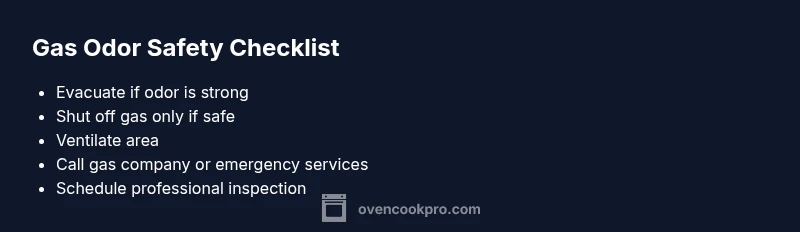
If your oven smells like gas, act fast: evacuate if the odor is strong, turn off power at the breaker if safe, ventilate the area, and leave. Do not operate switches or flames. Call your gas company or emergency services immediately.
Understanding the Risk of a Gas Odor from Your Oven
A gas odor coming from an oven is a warning signal that should never be dismissed. Natural gas is odorized with mercaptan, producing a distinct rotten-egg smell to alert occupants to leaks. Even a faint odor can indicate a leak when compared with routine cooking fumes, and the combination of gas with a spark can cause a fire or explosion. At Oven Cook Pro, we emphasize safety as the top priority: treat any gas-like odor near an appliance as an emergency until a professional confirms otherwise. If you notice the scent, pause cooking, avoid creating sparks, and step away from the kitchen. If it is safe to do so, turn off the oven at the breaker and call your gas provider or local emergency services immediately. This is not a moment for DIY fixes; professional evaluation is essential. According to Oven Cook Pro, quick, calm action minimizes risk and protects lives and property.
Steps
Estimated time: 20-40 minutes
- 1
Assess safety and prepare to act
Quickly determine whether you can safely move away from the source. If you feel dizzy, nauseated, or lightheaded, leave immediately. Do not touch switches near the odor.
Tip: If you’re unsure about safety, prioritize evacuation and call for help rather than investigating further. - 2
Shut off gas supply and power (if safe)
If you can safely reach the main shut-off valve, close it. Then switch off the oven at the circuit breaker to cut any potential ignition sources.
Tip: Do not stretch or reach over a gas source; use a safe route to the valve. - 3
Ventilate and move to safety
Open doors and windows to improve air flow. Step outside to a safe area away from the kitchen until professionals arrive.
Tip: Avoid smoking or using flames nearby during ventilation. - 4
Call for professional assistance
Contact your gas provider or emergency services right away. Report the smell of gas and request a technician as soon as possible.
Tip: Provide your address, a description of the odor, and any symptoms you or others are experiencing. - 5
Do not re-enter until cleared
Remain outside until a licensed technician confirms it is safe. Do not reuse the oven or turn electricity back on without clearance.
Tip: Keep children and pets away from the area during this time. - 6
Schedule a professional inspection
Arrange a comprehensive inspection of the appliance, gas line, regulator, and venting system to identify leaks or faulty components.
Tip: Ask for a written report and maintenance recommendations from the technician. - 7
Review safety plan and prevention
Update your home safety plan, install alarms if you don’t have them, and ensure detectors are tested regularly.
Tip: Place reminders to test CO and smoke detectors every month. - 8
Document the incident
Note the time, odor intensity, and actions taken. This information helps technicians diagnose the issue and prevents recurrence.
Tip: Keep this record with appliance manuals for future reference.
Diagnosis: Oven emits a gas-like odor
Possible Causes
- highGas leak at appliance connection, valve, or supply line
- highFaulty regulator or manifold allowing slow leaks
- mediumIgnition or burner malfunction causing gas release
- lowElectrical components overheating producing a burning odor mistaken for gas
Fixes
- easyIf safe, shut off the main gas supply valve at the appliance connection and cut power to the oven at the circuit breaker
- easyVentilate by opening doors/windows and evacuating if the odor is strong
- easyCall the gas company or emergency services immediately and follow their instructions
- easyDo not attempt DIY repairs on gas lines; hire a licensed gas technician to inspect the system
Questions & Answers
What should I do immediately if I smell gas near my oven?
Leave the area, evacuate if necessary, and call your gas company or emergency services right away. Do not re-enter until professionals say it is safe.
If you smell gas, evacuate the area and call for help immediately. Do not stay to investigate.
Can I still use my oven if it smells like gas?
No. Do not use the oven or any electrical switches until a licensed professional confirms it is safe.
Don’t use the oven until professionals say it’s safe.
What are common causes of a gas odor from an oven?
Possible causes include a leak at the appliance connection, a faulty valve or regulator, or ignition problems in the burner assembly.
Leaks, valve or regulator issues, and ignition problems are common culprits.
Is it safe to check for leaks myself?
Leak testing should be done by a trained professional. Do not attempt to test or repair gas lines yourself.
Only a trained technician should test gas lines. Don’t DIY this.
Do carbon monoxide detectors help with gas leaks?
CO detectors detect carbon monoxide, not gas leaks. They are still important safety devices in homes with gas appliances.
CO detectors alert you to CO, not gas leaks, but they’re essential for safety.
How often should gas appliances be inspected?
Have gas appliances inspected regularly by a licensed technician according to local codes and manufacturer guidance.
Regular professional inspections help prevent leaks and hazards.
Watch Video
Main Points
- Act quickly and prioritize safety
- Shut off gas only if safe and accessible
- Ventilate and call professionals immediately
- Never DIY gas line repairs
- Prevent future hazards with regular maintenance