What Oven Temp to Cook Salmon: The Definitive Guide
Learn the best oven temperatures, times, and doneness guidelines for salmon. This guide explains how temperature affects texture, offers practical step-by-step methods, and includes charts and FAQs for reliable oven cooking.


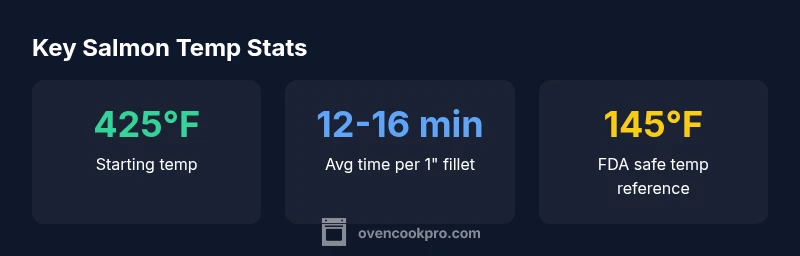
Starting point: bake salmon at 425°F (220°C). For a 1-inch fillet, expect about 12–16 minutes; thinner portions cook faster, thicker portions longer. The FDA sets a safe minimum internal temp, but many home cooks aim for 125–135°F for a tender, flaky texture. Preheat the oven and rest briefly after baking.
Why Temperature Matters for Salmon in the Oven
Oven temperature matters more than most home cooks realize. Salmon is a relatively lean, delicate protein, and how heat is delivered shapes moisture retention, texture, and flavor. Very high heat can quickly brown the surface while sealing moisture inside, but if the interior isn’t approaching doneness, you risk a pale, dry center. Conversely, too-low heat can leave the middle undercooked and the surface dull. The goal is a balance: a hot enough oven to cook rapidly and evenly, with just enough time for the surface to develop a pleasant, lightly crisp exterior while preserving moisture. The target temperature should harmonize with thickness, whether you are using a standard oven, convection, or a fan-assisted model. This section lays the foundation for precise, repeatable salmon results in your kitchen. According to Oven Cook Pro, precise temperature control is the cornerstone of dependable results. For safety and precision, consult FDA guidance for safe internal temperatures while treating doneness as your primary cue for texture.
Recommended Oven Temperatures for Salmon
Most home cooks start with a hot but not scorching oven. A widely used baseline is 425°F (220°C) for filets around 1 inch thick. This temperature provides a good balance of speed and moisture retention, producing a flaky finish with light browning. If your oven runs hot or you’re cooking thicker pieces, 400°F (204°C) offers a gentler path to doneness with less risk of drying out. For a crustier exterior or very thick steaks, 450°F (232°C) can deliver faster surface browning, though it requires closer monitoring. If you’re using a convection setting, you can shorten times by roughly 15–20%, but always verify doneness rather than relying solely on a timer. Preheating is essential for consistency, and skin-on fillets may benefit from a touch of higher heat at the end to render fat and crisp the skin. Throughout, Oven Cook Pro’s guidance emphasizes time and temperature harmony as the core of reliable results.
How Thickness and Doneness Change Time
Thickness is the primary driver of bake time. A 1-inch fillet typically finishes in about 12–16 minutes at 425°F, while thicker pieces (1.5–2 inches) can take 18–24 minutes depending on oven and whether you’re convection baking. A thinner 1/2 inch slice will cook much faster, roughly 6–9 minutes. Doneness also depends on your target texture; many chefs prefer a juicy, slightly translucent center at around 125–135°F, while conservative doneness follows a safer, fully opaque center at around 145°F. Because ovens vary, start with a conservative estimate and check early, especially near the lower end of the thickness range. Remember that residual heat will continue to cook the fish after removal, so pull it just shy of your target and let it rest for a couple minutes. In all cases, preheating and even spacing on the pan help ensure uniform results.
Step-by-Step Method for Cooking Salmon at the Right Temp
- Preheat your oven to the target temperature (425°F/220°C is a strong default). 2) Pat salmon dry with paper towels; moisture on the surface can steam rather than roast, hindering browning. 3) Lightly oil the baking sheet or parchment to prevent sticking; season with salt, pepper, and a lemon-herb blend if you like. 4) Place the fillets skin-side down on a lined sheet, giving space between pieces for even heat. 5) Bake, checking at intervals after the 10-minute mark; a 1-inch fillet typically finishes around 12–16 minutes. 6) Use a thermometer to confirm doneness (see the FAQs for exact temperatures) and remove when the center is just opaque. 7) Rest for 2–3 minutes before serving to allow juices to redistribute and flavor to settle.
How to Check Doneness Without a Thermometer
If you don’t have a thermometer, look for opaque flesh and flaking along the center. Gently press the top with a finger; the fish should spring back slightly rather than feel mushy. A slight translucence near the center can be acceptable for some doneness preferences, but the texture should be firm and flaky when pulled apart with a fork. Color alone isn’t reliable, so combine visual cues with touch. For safety, some cooks still ensure the edges are fully opaque and juices run clear when pricked. Resting briefly after cooking also helps maintain juiciness as the proteins relax.
Flavor Variations and Finishing Techniques
To keep salmon vibrant and flavorful, experiment with citrus, herbs, and fats. A simple lemon-butter finish adds brightness and moisture in the last minute under high heat or a brief broil. Try a glaze made of honey, soy, and grated ginger for an Asian-inspired profile, or a dill-garlic butter for classic flavors. If you want extra aroma, place lemon slices on the tray during baking; the steam condenses and flavors the fillet. Finishing with a quick broil for 1–2 minutes can create a crackly surface and deeper browning without overshooting the center. Convection can help achieve a crisper exterior on the surface without drying the interior.
Common Mistakes to Avoid and How to Fix Them
Common errors include not preheating, overcrowding the pan, and not patting salmon dry before baking. Overcrowding traps moisture and results in steaming rather than roasting, dulling the surface and extending cooking time. Even spacing allows heat to circulate and helps produce uniform color. Avoid cooking from frozen unless you adjust time and temperature (frozen fish often requires longer, lower-heat cooking). Also, resist the urge to baste too aggressively; this can wet the surface and hinder browning. Finally, don’t rely on a timer alone—use your senses of sight and aroma and check for the right texture.
Oven temperature and time guidelines by thickness
| Temp (F) | Time (min) | Notes |
|---|---|---|
| 425°F | 12-16 | Standard fillet ~1 inch thick |
| 400°F | 14-18 | Gentler finish, less risk of drying |
| 450°F | 8-12 | Quicker finish, more browning |
Questions & Answers
What is the best oven temperature to cook salmon?
425°F (220°C) is a reliable starting point for most fillets. Adjust by thickness and convection efficiency. Always preheat and monitor doneness as you bake.
Try 425°F to start; adjust for thickness and convection, and watch closely for doneness.
How long should I bake salmon at 425°F?
Approximately 12-16 minutes for a 1-inch fillet. Increase by a minute or two per additional 1/2 inch of thickness.
About 12-16 minutes for 1-inch fillets; adjust with thickness.
Can I cook salmon at lower temperatures?
Yes, but it takes longer and requires careful monitoring to avoid undercooking the center. Lower temps can yield very even texture.
You can cook at lower temps, but expect longer times and steady checking.
What internal temperature should salmon reach?
FDA guidance recommends 145°F (63°C). Many home cooks prefer 125-135°F for a juicier texture; use a thermometer for accuracy.
Aim for 125-135°F for juicier salmon, or 145°F for safety, depending on your preference.
Does thickness affect oven time?
Yes. Heavier cuts require more time. A thicker fillet may need 18-24 minutes at 425°F, while thin cuts finish sooner.
Thicker pieces take longer; watch and test doneness as you go.
Should I preheat the oven for salmon?
Yes. Preheating ensures consistent browning and even cooking, especially with skin-on fillets.
Always preheat for even cooking and better browning.
“Temperature precision is the single biggest lever you have for consistent salmon texture; small changes in heat produce noticeable differences in moisture and flake.”
Main Points
- Preheat to the target temp before adding fish
- Use 1 inch as a baseline; adjust for thickness
- Check doneness with internal temp or texture cues
- Convection can shorten times, but monitor closely
- Rest briefly after baking to lock in moisture