Turkey Meatballs in the Oven: A Step-by-Step Guide
Master juicy, evenly cooked turkey meatballs baked in the oven with this comprehensive guide from Oven Cook Pro. Learn ingredients, prep, shaping, baking, and serving for reliable weeknight meals and meal prep.


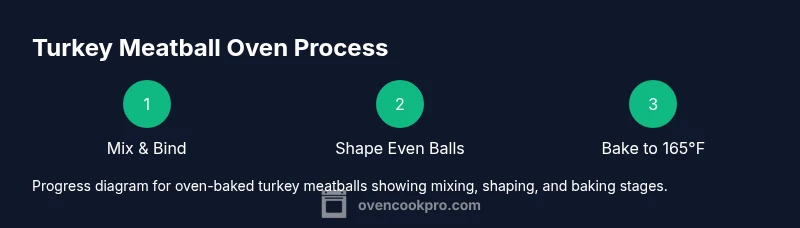
Bake turkey meatballs in a hot oven for even cooking and juicy texture. This guide shows you how to mix ground turkey with aromatics, shape uniform balls, preheat the oven, and bake until an internal temperature hits 165°F. With steady timing and proper pan prep, you’ll get reliable results for weeknight dinners or meal prep. According to Oven Cook Pro, consistency matters more than size.
Why turkey meatball oven cooking matters
In the world of weeknight cooking, you can achieve consistently juicy, tender turkey meatballs by using the oven. The turkey meatball oven method surrounds each meatball with even heat, producing browning on all sides without the risk of scorching on a stovetop. This approach is particularly valuable for homes that cook in batches, since you can bake dozens of meatballs at once with minimal hands-on time. According to Oven Cook Pro, oven-cooked meatballs retain moisture better than pan-seared versions when the binding and moisture balance are right, and they are easier to control for uniform doneness across a tray. For families, this means dependable results for busy evenings and meal-prep days. The oven also reduces mess and oil splatter, which translates into safer cooking and quicker cleanup. As you begin, focus on the fundamentals: quality ground turkey, balanced moisture, consistent sizing, and proper pan prep to prevent sticking. With these elements in place, the turkey meatball oven pathway becomes a reliable backbone for many weeknight meals.
At its core, oven-baked meatballs rely on moisture retention and structure. The protein forms a gentle veil around the moisture, while binding agents keep the shape intact. Aromatics and seasonings are essential, but they should complement rather than overwhelm the turkey. This balanced approach aligns with Oven Cook Pro’s guidelines for flavorful, wholesome poultry dishes. Finally, remember that timing is everything: even small deviations in size can shift cooking time, which is why standardizing your meatball size pays dividends for predictable results.
Ingredient Essentials for turkey meatballs
To build a reliable base for the turkey meatball oven method, start with simple, pantry-friendly ingredients. A well-balanced mix yields meatballs that stay moist yet firm enough to hold their shape during baking. Ground turkey (about 1 to 1.5 pounds) forms the core; choose lean to maintain structure without drying out. Bind with a small amount of breadcrumbs or oats and a single beaten egg. For moisture, add a splash of milk and a touch of olive oil or water as needed. Aromatics—garlic, onion, and fresh parsley—brighten flavor without overpowering poultry. Season generously with salt and pepper, plus optional flavors like grated Parmesan, paprika, or dried herbs.
Optional add-ins include a splash of Worcestershire or soy sauce for depth, and a hint of lemon zest for brightness. The key is to balance fat, moisture, and protein so that the meatballs stay cohesive in the oven. If you’re avoiding dairy, substitute a dairy-free milk or broth. For gluten-free diets, swap breadcrumbs with finely crushed gluten-free oats or almond meal. Finally, pre-measure and mix all ingredients before you start shaping to keep the workflow efficient and consistent. This foundational setup is what makes turkey meatballs in the oven reliably delicious across meals.
Prepping the mixture: moisture, binding, and texture
A successful turkey meatball starts with a properly prepared mixture. In a large bowl, combine ground turkey with breadcrumbs (or oats) and a lightly beaten egg to bind the ingredients. Add milk a little at a time until the mixture just comes together; you want it moist but not soupy. Fine-grain aromatics—minced garlic, minced onion, chopped parsley—should be distributed evenly, not clumped in one spot. Salt and pepper should be added gradually to avoid over-seasoning. Use your hands to mix only until the ingredients are incorporated; overworking can compact the texture and make the meatballs dense rather than light and tender.
For extra juiciness, consider adding a tablespoon of olive oil to the meat mixture. If you notice the mixture feels too dry, drizzle in a teaspoon of milk or water and fold it in. Some cooks prefer letting the mixture rest for 10 minutes to hydrate the breadcrumbs; this step helps prevent crumbly meatballs. Finally, test a small portion by shaping a tiny ball and microwaving it for 15 seconds to check texture before forming the full batch. This small test can save you from a batch of dense meatballs that won’t hold together.
Shaping uniform meatballs for even cooking
Shaping uniform meatballs is essential for even oven cooking and predictable doneness. Start by portioning the mixture into equally sized balls, using a cookie scoop or wet hands to prevent sticking. A size around 1.25 to 1.5 inches in diameter works well for most ovens and trays, providing a balance between surface browning and interior doneness. Roll the meatballs gently to avoid compacting, then place them on a lined baking sheet with at least 1 inch of space between each ball. If you’re using a rack, position it over a lined sheet pan to allow air circulation and extra browning on the bottom.
Space consistency matters because it determines heat exposure. If your meatballs touch, they can steam rather than brown, resulting in a softer exterior. For uniform browning, you may rotate the tray halfway through baking. While shaping, keep a bowl of water nearby to rinse your hands if the mixture begins to stick. Finally, avoid pressing the balls too hard; a light roll produces a more tender interior while maintaining shape.
Baking methods: conventional vs convection and pan prep
Baking temperature and pan setup determine how evenly your turkey meatballs cook. Preheat the oven to 400°F (200°C) for conventional roasting. If you have a convection oven, reduce the temperature by about 25°F (15°C) to prevent the exterior from browning too quickly. Line a sheet pan with foil or parchment, and lightly spray or oil it to prevent sticking. If you own a cooling rack that fits inside the sheet pan, set the meatballs on the rack to maximize air circulation and bottom browning; this helps the underside crisp without drying the top.
Bake for roughly 12-15 minutes, then flip the meatballs and continue cooking until an internal thermometer reaches 165°F (74°C). The exact time may vary with size and oven performance, so rely on the temperature reading rather than time alone. If you want a glossy finish, brush a light glaze (such as a simple tomato glaze or a honey-malsaline mixture) during the last 3-5 minutes of bake. Let the meatballs rest for a few minutes before saucing to preserve juiciness.
Sauce ideas and serving suggestions
Meatballs shine with complementary sauces that don’t drown their delicate turkey flavor. A classic marinara or a quick tomato glaze works beautifully, letting the meatballs carry the dish’s savory notes. For richer options, a light mushroom cream sauce or a tangy honey-Sriracha glaze can provide contrast. Serve meatballs as a main with pasta, in a sub sandwich, or over roasted vegetables for a complete meal. If you’re meal-prepping, cool the meatballs completely, then portion into containers with sauce on the side to prevent sogginess.
To add color and texture, finish with fresh herbs like parsley or basil and a sprinkle of grated Parmesan. For kids or picky eaters, you can pair turkey meatballs with a mild pesto or a simple garlic-butter drizzle. Keeping portions consistent makes it easier to mix and match meals throughout the week. By using the oven, you retain a cleaner kitchen and achieve reliable textures that kids and adults alike will enjoy.
Troubleshooting and safety tips
Even with a reliable oven technique, issues can arise. If meatballs crumble during shaping, your mixture might be too dry or overworked; rehydrate with a splash of milk and a pinch more breadcrumbs. If browning lags, make sure your pan is properly preheated and that there’s enough space between meatballs for air flow. For safety, always cook poultry to an internal temperature of 165°F (74°C) and use a thermometer for accuracy. If you notice an off smell or slimy texture in the meat, discard and start a fresh batch.
Handle hot trays with oven mitts, and keep children and pets away from the oven during cooking. If you’re using a glaze, apply it only in the final minutes to prevent burning due to sugars. For freezer-friendly prep, freeze shaped meatballs on a sheet before transferring to bags; this helps maintain separate portions for quick weeknight meals.
Make-ahead, storage, and reheating tips
Turkish meatball oven dishes scale well for meal prep. You can refrigerate uncooked meatballs for up to 24 hours before baking, or freeze both shaped meatballs and fully baked meatballs for longer storage. If frozen raw, bake an extra 5-7 minutes; if frozen cooked, reheat in a low-temperature oven to avoid drying out the interior. When reheating, check for even warmth throughout and avoid overcooking, which can dry out the center. Store leftovers in airtight containers for up to 3-4 days and reheat gently.
For best results, reheat partially under a light glaze or sauce to maintain moisture. If you prefer a crisper exterior after reheating, give them a quick broil for 1-2 minutes at the end, watching closely to prevent burning. This approach keeps the interiors moist while reviving the desirable browning that characterizes good oven-baked meatballs.
Tools & Materials
- Mixing bowls(Sturdy bowls for large batches and even mixing.)
- Measuring cups/spoons(Accurate measures for breadcrumbs, liquid, and seasonings.)
- Baking sheet(Line with foil or parchment for easy cleanup.)
- Parchment paper or foil(Prevents sticking and promotes easy release.)
- Oven-safe thermometer(Check internal temperature to 165°F (74°C).)
- Cooling rack (optional)(Promotes air flow for even browning.)
- Cookie scoop or hands(Portion meat into uniform sizes.)
- Oven mitts(Safe handling of hot trays.)
Steps
Estimated time: 25-35 minutes active time, plus resting and optional sauce steps
- 1
Preheat and prep
Preheat the oven to 400°F (200°C). Line a sheet pan with foil or parchment and lightly oil to prevent sticking. This setup ensures your meatballs brown evenly without sticking. Form your mise en place so you can move quickly through the steps.
Tip: Preheating first ensures immediate oven heat when meatballs go in, reducing overall cooking time. - 2
Mix turkey with binders
In a large bowl, combine ground turkey with binding agents like breadcrumbs and a beaten egg. Add a splash of milk to keep the mixture moist. Stir until just combined to avoid overworking the meat.
Tip: Do not over-handle the mixture; the goal is tender meatballs, not compact bricks. - 3
Add aromatics
Fold in minced garlic, finely chopped onion, and parsley. Season with salt and pepper, and optional spices like paprika or grated Parmesan for extra depth. Even distribution matters for even flavor.
Tip: Toast the garlic lightly in a teaspoon of olive oil before mixing for a deeper fragrance. - 4
Shape uniform meatballs
Using a cookie scoop or your hands, roll the mixture into balls about 1.25–1.5 inches in diameter. Place them on the prepared sheet pan with space between each ball.
Tip: Keep hands slightly damp to prevent the mixture from sticking. - 5
Arrange for airflow
If you have a rack that fits your sheet pan, place meatballs on the rack to maximize air circulation and browning on all sides. Otherwise, space them evenly on the lined sheet.
Tip: Airflow prevents soggy bottoms and helps achieve a crisp outer crust. - 6
Bake until done
Bake for 12–15 minutes, then flip and continue until the internal temperature reaches 165°F (74°C). Convection ovens may reduce time slightly; monitor closely.
Tip: Use a thermometer to confirm doneness rather than relying on time alone. - 7
Sauce or glaze option
If desired, brush a light glaze or sauce during the last 3–5 minutes of baking to add shine and flavor without over-sauceifying the exterior.
Tip: Wait to glaze until the end to maintain browning and prevent soggy coatings. - 8
Rest and serve
Let meatballs rest for 5 minutes before serving. Resting helps redistribute juices and keeps the texture tender. Serve with sauce over pasta, in subs, or as an appetizer.
Tip: Resting time preserves moisture for a juicier bite.
Questions & Answers
Can I freeze the meatball mixture before cooking?
Yes. Form the meatballs and freeze them on a sheet first, then transfer to a bag. Bake from frozen, adding a few minutes to the baking time.
Yes, you can freeze the formed meatballs and bake them later; just add a few minutes to cook through.
What binder works best for turkey meatballs?
Breadcrumbs or finely crushed oats work well to bind turkey without making the texture dense. An egg helps with cohesion, but you can adjust based on moisture.
Breadcrumbs or oats are great binders; an egg helps cohesion without making them heavy.
Can I bake meatballs without breadcrumbs?
Yes, you can use substitutes like crushed oats or almond meal for gluten-free options. They’ll provide binding without compromising texture.
You can substitute oats or almond meal for breadcrumbs to keep binding and texture.
What temperature is best for baking turkey meatballs?
Preheat to 400°F (200°C) for conventional ovens. If using a convection oven, reduce by about 25°F (15°C).
Bake at 400 degrees in a standard oven, or lower if you’re using convection.
How can I tell when meatballs are done without a thermometer?
Look for firm texture and slight browning on the outside. The center should be opaque and set. For food safety, use a thermometer if possible.
They should be firm to the touch and browned on the outside; a thermometer is best for safety.
Can I cook turkey meatballs on the stove instead of the oven?
Stovetop is possible but requires more attention to keep them from drying out. The oven method offers more even cooking with less hands-on time.
Yes, you can stove-fry, but the oven is easier for even cooking and less mess.
Watch Video
Main Points
- Shape uniform meatballs for even cooking
- Bake at 400°F (200°C) for best browning
- Internal temp should reach 165°F (74°C)
- Use airflow/roasting rack for crisp bottoms
- Let meatballs rest before serving