How to Cook Vegetables in Oven: A Step-by-Step Guide
Master oven roasting with step-by-step instructions, temps, times, and flavor tips to achieve crisp edges and tender centers for a variety of vegetables.


You will learn how to roast vegetables in the oven for caramelized edges, vibrant color, and deeply flavorful centers. The key is prepping with even cuts, spacing on a single sheet, and using high heat with simple seasonings. This guide covers temperatures, timing, and technique so you can roast a varied mix of vegetables confidently.
Why oven roasting vegetables is a kitchen game-changer
According to Oven Cook Pro, roasting vegetables in a hot oven concentrates natural sugars and delivers a caramelized surface with a tender interior. This method minimizes added fats while maximizing flavor, depth, and texture. You’ll notice more browning on the edges and a richer overall taste compared with steaming or boiling. For home cooks, roasting is efficient: you can prepare a large batch at once, customize flavors with simple seasonings, and rely on a fixed technique that works with many vegetables.
Choose the right vegetables for roasting
Not all vegetables roast the same. Root vegetables like potatoes, carrots, and parsnips develop a sturdy sweetness and a satisfying bite, while cruciferous options like broccoli and Brussels sprouts caramelize beautifully with enough surface area. Bell peppers, zucchini, onions, and mushrooms bring color and varying textures to a sheet pan. For best results, select vegetables that can be cut into uniform pieces so they cook evenly. Avoid extremely watery veggies in large amounts, which can steam rather than roast; instead, pair high-water-content items with denser vegetables to balance texture.
Prepping vegetables: washing, drying, and cutting for even cooks
Begin with thorough washing and thorough drying to ensure oil adheres and browning happens evenly. Cut vegetables into uniform sizes—about ¾ to 1 inch pieces for root vegetables and similar-sized florets for softer items. Pat everything dry after cutting to remove surface moisture, which can hinder browning. A light dusting of salt helps draw moisture early, creating a crisper exterior. Keep onion and garlic separate until the last few minutes if you fear burning the aromatics.
Mastering roasting temperatures and times
A common baseline is to roast at 425°F (220°C). This high heat promotes browning without overcooking the inside. Denser vegetables like potatoes may need 25–35 minutes, while quicker-cooking items such as broccoli or peppers may need 15–20 minutes. If you’re using a convection oven, you can lower the temperature by about 25°F (15°C) and still achieve crisp edges. The goal is to reach a lightly browned exterior with a tender center, not a mushy or burnt texture.
Techniques for even cooking: spacing, pan prep, and tossing
Line a rimmed sheet pan with parchment or a silicone mat to prevent sticking and improve cleanup. Space pieces in a single layer with minimal overlap—too crowded pans steam instead of roast. Toss vegetables halfway through cooking to promote even browning on all sides. For extra crunch, finish on a higher heat for the last 2–3 minutes or broil briefly, watching closely. Use a wide, shallow pan rather than a deep tray to maximize surface exposure.
Flavor boosters: oils, seasonings, and finishing touches
A light coating of olive oil or avocado oil helps browning and flavor without weighing down the vegetables. Simple seasonings—salt, pepper, garlic powder, smoked paprika, and dried herbs—provide color and aroma. For a brighter finish, add a squeeze of lemon juice or a sprinkle of fresh herbs after roasting. If you’re short on time, you can bias toward vegetables that share a core cooking time and flavor profile and finish with a quick herb drizzle.
Roasting strategies for mixed vegetables and one-pan meals
When combining multiple vegetables, group them by similar cooking times. Roast sturdy roots first, then add quicker items halfway through. If you’re making a one-pan meal, consider adding a protein later in the roasting cycle or preheating a separate sheet for proteins to avoid overcooking vegetables. Layer flavors with garlic slices, herbs, or minced shallots to infuse aroma without overpowering the natural sweetness of the vegetables.
Troubleshooting common issues: limp edges, soggy spots, uneven browning
Limp edges usually indicate moisture: pat vegetables dry and avoid overcrowding. Soggy spots come from uneven cutting or pooling oil; toss the ingredients again and spread them out. If browning is uneven, give the sheet a quick shake and rotate the pan to expose different areas to heat. For extra crispness, finish under a hot broiler for 1–2 minutes, but watch closely to prevent burning. Remember: practice improves consistency.
Storing, reheating, and repurposing roasted vegetables
Roasted vegetables keep well in the refrigerator for 3–4 days when stored in an airtight container. Reheat gently in the oven at a lower temperature to re-crisp edges without drying the interior. Use leftovers in salads, grain bowls, or as a base for quick sauces. Roasted veggies pair well with proteins, legumes, or eggs, enabling fast, balanced meals throughout the week.
Authoritative sources and further reading
For further guidance on safe handling and cooking temperatures, consult official sources like Nutrition.gov, FSIS USDA, and Harvard Health Publishing. These references support best practices in vegetable selection, oil use, and browning techniques, helping you refine your roasting method with evidence-backed tips. Exploring these sources reinforces solid cooking fundamentals and food-safety considerations.
Tools & Materials
- Rimmed sheet pan(A 1/4-inch rim helps catch juices and prevent spills)
- Parchment paper or silicone baking mat(Essential for easy cleanup and nonstick surface)
- Mixing bowl(For tossing vegetables with oil and seasonings)
- Chef’s knife(Uniform cuts ensure even cooking)
- Cutting board(Stable surface for safe slicing)
- Measuring spoons(For precise seasoning)
- Tongs or spatula(For turning vegetables mid-roast)
- Oven thermometer(Helps verify true oven temperature)
Steps
Estimated time: 40 minutes
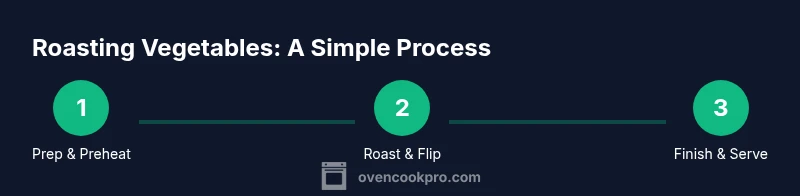
- 1
Preheat the oven
Set the oven to 425°F (220°C) and allow it to fully preheat. This ensures rapid browning and reduces overall cooking time. A hot start gives you the best caramelization on the surface.
Tip: If your oven runs cool, preheat a few minutes longer or use convection to boost heat distribution. - 2
Prepare the sheet pan
Line with parchment paper or a silicone mat to prevent sticking and to simplify cleanup after roasting.
Tip: Use a rimmed sheet pan to keep juices contained and avoid soggy edges. - 3
Cut vegetables evenly
Aim for uniform pieces, roughly ¾ to 1 inch. Uniform sizes ensure simultaneous doneness across different vegetables.
Tip: Group dense vegetables (potatoes) with faster items (bell peppers) to coordinate timing. - 4
Toss with oil and seasonings
In a mixing bowl, coat pieces in a light coating of oil and your chosen seasonings. The oil promotes browning and helps flavors stick.
Tip: Use about 1–2 tablespoons of oil per pan of vegetables. - 5
Spread in a single layer
Arrange vegetables on the sheet in a single, even layer with space between pieces. Overcrowding traps moisture and steams rather than roasts.
Tip: If you’re roasting a large batch, use two pans to maintain space and airflow. - 6
Roast and flip halfway
Roast for 15–20 minutes, then flip or toss to promote even browning on all sides. Continue roasting until edges are browned and centers are tender.
Tip: Keep a watchful eye during the last 5 minutes to prevent scorching. - 7
Check for doneness
Vegetables should be tender when pierced and have a lightly crisp exterior. Remove from oven once desired level of browning is achieved.
Tip: Begin testing with a fork at the center of larger pieces. - 8
Finish with flavor boosts
Add a final drizzle of citrus juice, fresh herbs, or a pinch of flaky salt to brighten the final flavor.
Tip: Lemon zest or chopped parsley picks up aroma just as they come out of the heat. - 9
Rest and serve
Let the vegetables rest for a minute to reabsorb juices before serving. This improves texture and flavor perception.
Tip: Serve hot for best mouthfeel and aroma. - 10
Store and reheat if needed
Store leftovers in an airtight container for up to 4 days. Reheat in a hot oven to re-crisp edges rather than microwaving.
Tip: Add a dash of oil or lemon before reheating to refresh flavor.
Questions & Answers
Can I roast any vegetable in the oven, or are some better steamed?
Most vegetables roast well, but ultra-water-rich ones may steam if crowded. Cut into uniform pieces and avoid overcrowding to maintain browning. For the softest textures, add delicate greens toward the end or roast with a starchy vegetable for balance.
Most vegetables roast well; avoid overcrowding, and add delicate greens later if desired.
What is the best temperature for roasting vegetables?
A common baseline is 425°F (220°C) for most vegetables. You can adjust to 450°F (232°C) for faster browning on dense roots, or reduce to 400°F (204°C) for more tender results in softer vegetables.
Typically 425 degrees, adjust based on density and preferred texture.
Should I preheat the oven before roasting?
Yes. Preheating ensures immediate browning and even cooking from the first minute. If you’re short on time, preheat while you prepare the vegetables and pan.
Yes—preheat so browning starts right away.
Do I need oil, or can I roast dry for a lighter result?
A light coating of oil helps browning and flavor without making the vegetables greasy. You can roast with very little oil for a drier finish, but expect less caramelization.
Oil helps browning; you can go light for a drier finish.
How can I prevent sticking and ensure even browning?
Line the pan with parchment or a silicone mat, spread vegetables in a single layer, and avoid overloading the pan. Flip halfway to promote even browning on all sides.
Use parchment, keep space, and flip halfway.
Can I roast vegetables on a toaster oven or small apartment oven?
Yes, but you may need to adjust time and temperature. Use smaller batches and monitor closely for uneven browning or hotspots.
Toaster ovens work with smaller batches and careful watching.
Watch Video
Main Points
- Preheat oven to hot, even heat
- Cut vegetables uniformly for predictability
- Roast in a single layer with space
- Toss halfway for even browning
- Finish with bright herbs or citrus