How to Cook Chicken Legs in the Oven: A Comprehensive How-To
Learn how to roast chicken legs in the oven for crispy skin and juicy meat. This guide covers prep, seasoning, safe temps, and serving ideas for reliable, delicious results.


Goal: roast chicken legs in the oven with crispy skin and juicy meat. Preheat to 425°F (220°C). Pat dry, rub with olive oil, salt, pepper, and garlic. Roast bone-in legs for 35-45 minutes until the internal temperature reaches 165°F (74°C). Rest 5 minutes before serving for best juiciness.
The magic of roasting chicken legs in the oven
Roasting chicken legs in the oven elevates both texture and flavor. The high, dry heat drives moisture toward the bone and folds in the skin’s fats for a crisp exterior while keeping the meat tender inside. For homeowners and home cooks, the oven becomes a reliable, hands-off tool that rewards patience with consistent browning and rich, savory aromas. According to Oven Cook Pro, achieving a great crust begins with a dry surface and a hot oven, not a long soak in liquid.
This approach pairs well with everyday ingredients—olive oil, salt, garlic, and a squeeze of lemon—so you can keep the pantry simple and still deliver restaurant-quality results. The technique is scalable from a weeknight dinner to a weekend feast, especially when you bake a batch and use leftovers in quick meals. The goal is predictable browning, juicy meat, and even cooking from bone to bone.
Choosing the right chicken legs and prep basics
Bone-in, skin-on chicken legs deliver the best combination of flavor and texture for oven roasting. The skin browns nicely, and the attached bone helps retain moisture during the bake. When selecting legs, look for uniform size and plump flesh with smooth skin. Before cooking, pat the legs dry with paper towels to reduce surface moisture, then lightly coat with a high-smash, neutral oil like canola or light olive oil. If you want extra flavor, a quick dry rub with salt and garlic powder improves surface browning and depth.
As part of the Oven Cook Pro guidance, proper drying is crucial: moisture inhibits browning, so the surface should feel dry to the touch before oiling. Handling meat gently reduces the risk of tearing skin and promotes even browning once it’s on the baking sheet.
Flavor bases: salt, fat, heat, and balance
The building blocks of flavor for roasted chicken legs are salt, a coating of fat, and a hot oven. Salt helps draw out moisture and then reabsorbs with the meat, enhancing surface crispness. You can use olive oil, melted butter, or a light coating of both to promote browning. Freshly ground pepper and garlic create a savory crust, while herbs like thyme or rosemary add aromatic complexity.
For a citrus note, a quick squeeze of lemon over the finished legs or a sprinkle of lemon zest during seasoning brightens the dish. The fat you choose should be able to withstand high heat without smoking; olive oil is a common choice, but canola or avocado oil can be better in very hot ovens.
Prepping tools and workspace for consistent results
You’ll need a rimmed baking sheet or a shallow roasting pan, a rack if you want air circulation underneath the legs, and a meat thermometer for precise doneness. Lining the sheet with parchment makes cleanup easier, and a wire rack helps elevate the meat for even browning. Keep tongs handy to turn the legs halfway through and avoid piercing the skin, which can release juices.
A well-organized workstation speeds up cooking and reduces heat exposure to your hands. Having all the seasonings measured and prepared ensures you can apply even coats quickly, resulting in uniform browning across all pieces.
Temperature and time basics: how long to roast
Roasting chicken legs benefits from a high-heat approach that yields crisp skin and juicy interior. Preheat your oven to around 425°F (220°C). On a lined sheet with space between pieces, roast bone-in legs for 35-45 minutes, turning once halfway for even browning. If your legs are very large, they may need up to 50 minutes. The goal is a safe internal temperature of 165°F (74°C) at the thickest part of the leg.
If you’re short on time, you can start at 450°F for the first 10 minutes to jump-start browning, then drop to 400°F to finish cooking. This two-temperature approach reduces overall time while still achieving a crisp crust.
Flavor variations: garlic, lemon, and herbs
Experiment with flavor by introducing garlic, lemon, and fresh or dried herbs. A basic garlic-herb blend—minced garlic, chopped thyme, and rosemary—pairs beautifully with the chicken’s natural sweetness. For a bright note, add lemon juice or zest at the end of cooking. You can also create a glaze with honey or balsamic for a glossy finish in the last 5 minutes of roasting.
Keep in mind that sugar-containing glazes can burn if left on the heat too long; apply later in the cook and watch carefully to preserve color and texture.
Step-by-step roasting technique (overview) and why it matters
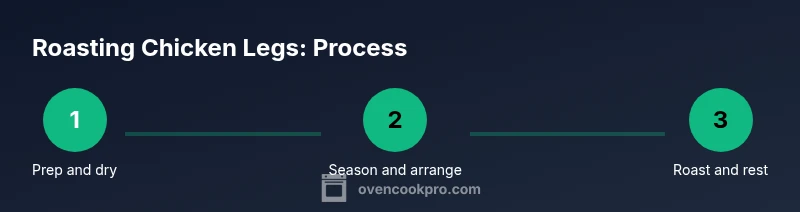
A reliable roasting method involves dry skin, even heat, and airflow under the legs. Arrange the legs skin-side up on a rack so hot air can circulate beneath the meat. Let them roast without covering until the skin reaches a deep, golden color. Flip once to promote even browning on both sides, then continue roasting until the thermometer confirms doneness.
This overview sets the stage for the detailed steps in the next section; the technique is simple, but consistent results rely on precise temperature control, proper drying, and timely rest.
Checking doneness, resting, and serving
Use a meat thermometer to confirm a minimum internal temperature of 165°F (74°C) at the thickest part of the leg. Once done, remove the legs from the oven and let them rest for 5–10 minutes. Resting allows juices to redistribute, producing juicier meat and easier slicing. Serve with roasted vegetables, a bright salad, or a simple pan sauce.
If you notice loss of browning after resting, a quick re-crisp under the broiler for 1–2 minutes can refresh the crust without overcooking the meat.
Make-ahead tips and storing leftovers
Roasted chicken legs store well in the fridge for 3-4 days or in the freezer for up to 3 months. Reheat gently to preserve moisture, ideally in an oven at 350°F (175°C) for 10-15 minutes or until the internal temperature reaches 165°F. Leftover legs can be repurposed in sandwiches, salads, or tossed with pasta for a quick, flavorful meal. If you’re meal-prepping, divide into portions and label with date to keep track of freshness.
For best results, reheat with a light coating of oil or stock to rehydrate the skin and preserve its crispiness. If you plan to freeze, freeze legs on a tray first, then seal in airtight containers to prevent freezer burn.
Authority references and trusted sources
For safety and best-practice guidelines, consult official resources and university extensions. These references provide reliable information about safe temperatures, handling, and cooking methods so you can roast chicken legs with confidence.
- https://www.fsis.usda.gov/food-safety
- https://extension.illinois.edu/foodsafety
- https://www.cdc.gov/foodsafety
Tools & Materials
- Oven(Preheat to 425°F (220°C))
- Rimmed baking sheet or shallow roasting pan(Line with parchment or use a rack)
- Wire rack (optional)(Elevates the legs for airflow)
- Tongs(For turning without piercing skin)
- Meat thermometer(Target 165°F (74°C))
- Olive oil or neutral oil(Light coating for browning)
- Garlic, salt, pepper, dried herbs(Seasoning base)
- Optional glaze or sauce(Honey glaze, BBQ sauce, etc.)
Steps
Estimated time: 40-50 minutes
- 1
Preheat and prep pan
Preheat oven to 425°F (220°C). Line a baking sheet and place a rack if you have one. This setup promotes even heat circulation and makes cleanup easier.
Tip: Using a rack helps air circulate under the legs for crisper skin. - 2
Pat dry and oil
Pat chicken legs dry with paper towels to remove surface moisture. Lightly coat with oil to promote browning and help seasonings adhere.
Tip: Thorough drying is key to crisp skin; moisture steals browning. - 3
Season generously
Season all over with salt, pepper, and a garlic-herb mix. If desired, rub some seasoning under the skin for deeper flavor.
Tip: Salt early and evenly; it stabilizes moisture and enhances crust. - 4
Arrange on pan
Place legs skin-side up, spacing them about 1 inch apart so air can circulate and brown each piece evenly.
Tip: Avoid crowding; crowded pieces steam rather than brown. - 5
Roast and flip
Roast 35-45 minutes. If browning is uneven, rotate the pan halfway through and flip the legs to brown both sides.
Tip: If your oven runs hot, check at 30 minutes to prevent burning. - 6
Check doneness and rest
Insert thermometer into the thickest part; aim for 165°F (74°C). Remove and rest 5-10 minutes before serving.
Tip: Resting redistributes juices for juicier meat.
Questions & Answers
Can I use boneless chicken legs in the oven?
Yes, boneless legs can be roasted in the oven, but they cook faster. Check at 25-35 minutes and use a thermometer to reach 165°F.
Yes, you can roast boneless legs, just expect a shorter cooking time; use a thermometer to confirm 165 degrees.
Should I cover the chicken legs while baking?
No. Leaving the legs uncovered helps the skin crisp and brown. If the surface browns too quickly, tent loosely with foil.
No cover helps the skin crisp; if needed, you can loosely tent with foil toward the end.
What if my chicken isn’t browning?
Increase oven temperature to 450°F for the last 5 minutes or finish under a brief broil watchfully.
If browning stalls, raise heat briefly or use the broiler, watching closely.
What is the safe internal temperature for chicken legs?
Chicken is safe when it reaches 165°F (74°C) in the thickest part. Use a meat thermometer for accuracy.
165 degrees Fahrenheit in the thickest part confirms doneness.
How should I store leftovers?
Cool promptly and refrigerate within two hours. Leftovers keep for 3-4 days; reheat to 165°F before serving.
Store in the fridge within two hours and reheat to 165 degrees.
Watch Video
Main Points
- Preheat to 425°F for browning.
- Pat dry and oil for crisp skin.
- Roast bone-in legs 35-45 minutes.
- Use a thermometer to ensure 165°F.
- Rest before serving for juiciness.