Can You Bake Bacon From Frozen? A Practical Oven Guide
Learn how to bake bacon from frozen in the oven with a step-by-step approach. Discover temps, times, safety tips, and cleanup for perfectly crispy bacon every time.


Yes. You can bake bacon from frozen in a preheated oven with reliable results. Use a wire rack on a parchment-lined sheet pan, bake at about 400°F (200°C), and check with a thermometer until the internal temperature reaches 165°F. Expect a longer cook time than thawed bacon, and rotate the pan halfway for even crisping.
can you bake bacon when frozen
If you’re asking can you bake bacon when frozen, the short answer is yes, and it’s a dependable method in a busy home kitchen. According to Oven Cook Pro, frozen bacon can crisp up evenly with the right setup: a rimmed sheet pan, a cooling rack, and steady heat. The secret is giving each slice space so fat can render and the meat cooks through without steaming. You don’t need to thaw the whole package; small separations between slices are enough, and you can bake blocks of slices as long as you monitor closely. This approach minimizes waste and keeps meal prep predictable, especially when you’re stocking up ahead of time. The texture you get will depend on thickness and your time in the oven, but a consistent 400°F (200°C) is a solid starting point for most cuts. Safety remains important—always verify doneness with a meat thermometer and aim for 165°F internal temperature before serving.
Preheating and equipment you need
Before you nestle frozen bacon into the oven, assemble a few simple tools and set your oven to a reliable baseline temperature. A rimmed baking sheet prevents grease from sliding off, while a metal cooling rack lifts the bacon so fat can drip away and the surface can crisp evenly. Line the sheet with parchment paper or foil for easier cleanup; you’ll thank yourself later when the pan slides in and out without fights. You’ll also want tongs for turning slices, a digital thermometer to check internal doneness, and a few paper towels to blot excess fat once the bacon is done. If you routinely cook bacon this way, consider multiple racks and rotate your pans to keep cooking uniform across batches. The key is stable heat, an unobstructed path for fat to escape, and a clean, dry surface for best texture.
Thawing vs baking from frozen
Many home cooks debate whether to thaw bacon before cooking. When you bake from frozen, you reduce prep time and keep more of the meat’s juices sealed inside, which can yield a juicier center with a crisper edge if done right. Thawing first can shorten overall cook time, but it risks uneven texture if some parts thaw while others stay solid. In practice, freezing can be an ally: you can portion the package before freezing, so you only bake what you need. Oven Cook Pro notes that the decision often comes down to timing and the thickness of the bacon; thin-cut slices are forgiving when baked from frozen, while thicker cuts benefit from a longer, steadier cook. Regardless of approach, you’ll want to monitor closely toward the end, as frozen meat cooks differently from thawed meat and may buckle or curl if heat is too aggressive.
How to arrange bacon for even cooking
Even cooking starts with spacing. Lay each slice on the rack or directly on parchment with a light gap between pieces so fat can render and air can circulate. If you’re using a frozen block, try to separate portions where possible, but don’t force the pieces apart to the point of tearing, which can cause uneven edges. Avoid overlapping; bacon needs space to crisp rather than steam. If you notice a few pieces curling, give them a gentle nudge with tongs as you rotate the tray halfway through the bake. For extra flat, uniform slices, you can cover the pan loosely with a sheet of foil for the first half of the bake, then remove to finish crisping, but this is optional and depends on your oven’s heat distribution.
Temperature and timing guidelines
Bake frozen bacon at a steady temperature—400°F (200°C) works for most varieties. Regular-thin slices often reach desired crispness in about 14–18 minutes, while thicker or center-cut options may require 18–25 minutes. Plan to rotate the pan halfway through to promote even browning. As you approach the end, start checking more frequently to avoid over-crisping; if you see the edges darkening too quickly, reduce heat slightly or switch to a lower rack. Always use a thermometer to confirm doneness: aim for an internal temperature of 165°F (74°C) as a safety threshold. If your bacon still looks pale but smells done, give it a few more minutes, then test again. The goal is crisp, not burnt, and the timing will vary with oven accuracy and bacon thickness.
Practical technique: from frozen to crisp
Set up your workspace with the rack in place and a ready supply of tongs and towels. Remove the bacon from the freezer and, if practical, separate the slices just enough to fit on the rack. Slide the tray into the preheated oven and bake, keeping a careful eye on the first few batches. Turn the tray and flip slices if needed to ensure both sides crisp. When the bacon is browned and firm to the touch, remove it and drain on paper towels before serving. If you like extra crisp, return the tray to the oven for 30–60 seconds under the broiler, watching closely to prevent scorching. This technique yields consistent texture and reduces the risk of chewy centers, which is a common problem with frozen bacon.
Common mistakes and how to fix them
One frequent mistake is overcrowding the pan, which traps steam and yields soggy bacon. Another is forgetting to preheat, which slows rendering and can leave the center underdone. Curling is common with irregular cuts or very lean bacon; keeping space and giving a mid-cook flip helps. Using parchment without a rack can still work, but fat will accumulate, potentially softening the surface. If your oven runs hot, you may see quick browning on the edges while centers stay pale—offset by lowering heat slightly or moving to a lower rack. Finally, relying on time alone without checking internal temperature can be unsafe; always verify 165°F to ensure safety.
Variations: flavors and thickness
Frozen bacon comes in various thicknesses and flavors. For standard strips, a simple salt and pepper approach works, while maple, peppered, or smoky varieties pair well with a quick glaze after cooking. If you prefer extra smoky flavor, a brief hit of broiling at the end can help, but stay vigilant to prevent burning. When working with thick-cut bacon, give it a few extra minutes and consider finishing on a lower rack to balance browning. For a leaner result, place slices on the rack without glazing; for a richer finish, brush with a light maple glaze during the last 2–3 minutes. The flexibility of the method makes it suitable for weeknight meals or batch cooking for the week ahead.
Cleanup and storage
Grease management is easier when you line pans and use racks because fat drains away as the bacon cooks. After removing the tray, carefully pour or dab away excess grease into a heat-safe container; never pour hot fat down the drain. Let the tray cool before washing—avoid soaking hot metal in water, which can warp rims. Store the cooled bacon in an airtight container in the refrigerator for up to four days or freeze portions for later use. Reheating is quick: a few minutes in the oven or microwave revives crispness, though the texture may vary slightly due to cooling. Proper cleanup and storage help preserve flavor and prevent lingering odors in your kitchen.
Putting it all together: a quick workflow
Plan your bake around your schedule by preheating early and lining pans in advance. Decide on rack use, whether to separate frozen slices, and how many trays you’ll run in parallel. Keep a thermometer handy and check the internal temperature at increasing intervals as the slices near doneness. For consistent results, rotate trays and adjust times based on thickness. With a little practice, you’ll be able to produce even, crisp bacon from frozen in under a half hour, with leftovers that reheat quickly for future meals.
Tools & Materials
- Oven(Preheat to 400°F (200°C) for even cooking.)
- Rimmed baking sheet(Prevents grease from spilling over during cooking.)
- Cooling rack(Elevates bacon for even fat rendering and crisp edges.)
- Parchment paper or aluminum foil(For easier cleanup.)
- Tongs(Flip and handle hot slices safely.)
- Digital thermometer(Check internal doneness at 165°F (74°C).)
- Paper towels(Drain excess fat after cooking.)
- Oven mitts(Protect hands when handling hot pans.)
- Optional: extra foil for tenting(Can help with initial heat management on very fatty batches.)
Steps
Estimated time: 25-40 minutes
- 1
Preheat and prepare
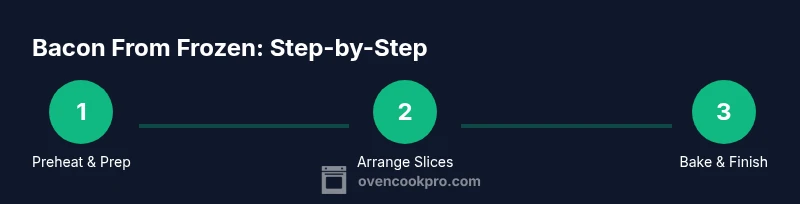
Preheat your oven to 400°F (200°C). Line a rimmed baking sheet with parchment and place a cooling rack on top to promote crisping. This initial setup ensures even heat distribution and easy cleanup.
Tip: Starting with a hot oven helps render fat quickly for crispy bacon. - 2
Prepare frozen slices
Remove the bacon from the freezer and separate slices as much as possible. If slices cling together, gently insert the back of a butter knife to pry them apart without tearing. Do not thaw fully; the goal is to maximize air flow around each piece.
Tip: Separated slices cook more evenly and reduce curling. - 3
Arrange on rack
Lay slices in a single layer on the rack, giving each piece at least 0.25 inches of space. Avoid overlapping; fat needs to escape and air must circulate to crisp the surface.
Tip: If you see a cluster, gently reposition with tongs mid-bake. - 4
Bake and rotate
Place the tray in the oven and bake for 14–18 minutes for regular slices, longer for thicker cuts. Rotate the tray halfway to ensure even browning across the batch.
Tip: Keep an eye on the bacon’s edges; they can go from golden to burnt quickly. - 5
Check doneness
Use a digital thermometer to confirm an internal temperature of 165°F (74°C) for safety. If you’re targeting extra crisp, continue in 1–2 minute increments, checking frequently.
Tip: Avoid relying solely on appearance—temperature is the best safety check. - 6
Rest and drain
Remove the bacon with tongs and drain on paper towels for 1–2 minutes. This step finishes crisping and reduces greasy texture before serving.
Tip: Pat dry lightly to remove surface oil while retaining crispness. - 7
Optional finish
For extra crispness, you can place the tray under a brief broil for 30–60 seconds, watching closely to prevent burning. This is optional and depends on oven performance.
Tip: Broiling adds rapid browning; monitor closely to avoid scorching. - 8
Storage or reuse
Store cooled bacon in an airtight container in the fridge for up to four days, or freeze portions for longer storage. Reheat gently in the oven to preserve texture.
Tip: Reheating in the oven helps retain crispness better than the microwave.
Questions & Answers
Can you bake bacon from frozen in the oven?
Yes. Baking bacon from frozen works well in a standard oven when you use a rack, keep space between slices, and monitor until it reaches a safe internal temperature of 165°F. The approach yields good texture with slightly longer cook times.
Yes, you can bake bacon from frozen using a rack and steady heat; aim for 165 degrees inside.
Should I thaw bacon before baking?
Thawing is optional. Baking from frozen saves time and often yields good texture, but you may need a few extra minutes. If you thaw, do so quickly and separate slices to promote even cooking.
Thawing isn’t required; you can bake from frozen, but separate the slices if possible.
What temperature is best for frozen bacon?
A steady 400°F (200°C) works well for most bacon types. You can adjust by thickness: thin slices finish sooner, thicker cuts need more time.
Use 400 degrees as a reliable starting point for frozen bacon.
How do I prevent bacon from curling?
Give each slice space, use a rack, and rotate the tray. If curling occurs, a quick flip mid-bake helps flatten edges.
Space and a mid-cook flip reduce curling.
How do I know when frozen bacon is done?
Aim for an internal temperature of 165°F and crisp edges. Visual cues help, but temperature confirms safety.
Check the temperature to confirm safety and crispness.
Can I reuse bacon grease safely?
Yes, you can strain and store cooled grease for future cooking. Do not pour hot grease down the drain.
You can reuse cooled bacon grease after straining.
Watch Video
Main Points
- Preheat to 400°F (200°C) for best results.
- Space slices to ensure even fat rendering and crisp edges.
- Verify doneness with a thermometer to 165°F.