Can You Put Oven Liners on the Bottom of the Oven? A Practical Guide
Learn whether oven liners can safely sit on the bottom, common risks, safer alternatives, and step-by-step guidance for keeping your oven clean without compromising safety.


Can you put oven liners on the bottom of an oven? In most cases, no. Lining the oven floor with foil or silicone mats can block airflow, reflect heat strangely, melt, or cause a fire, especially near heating elements. Use manufacturer-approved crumb trays or liners on racks instead, and avoid bottom liners unless the manual explicitly allows it.
Can You Put Oven Liners on the Bottom? What You Need to Know
If you’re wondering can you put oven liners on the bottom of an oven, the short answer is usually no. Oven liners come in foil shields, silicone mats, and parchment-style papers designed to catch spills. But the oven floor is a heat-exchange surface that relies on air flow, radiant heat, and uniform temperature. Blocking it with a liner can change heat distribution and create risk. According to Oven Cook Pro, many liners introduce more hazards than benefits when placed directly on the bottom of a standard oven. For spills, prefer a removable crumb tray or a liner placed on a rack or in a baking pan that sits above the bottom, not on the floor. If your manual explicitly permits bottom liners, follow the exact instructions from the manufacturer and monitor carefully during the first uses. This guidance helps home cooks protect the oven while avoiding common mistakes that lead to hotspots or flare-ups.
Understanding Oven Liners: Types and Purpose
Oven liners come in several forms, each with a different level of safety and practicality. Foil shields are inexpensive and disposable, silicone mats are reusable, and parchment liners are commonly used for baking but not as a bottom liner. The main purpose of a liner is to catch drips, crumbs, and spills, making cleanup easier. However, the bottom of modern ovens is designed for heat transfer and airflow; placing a liner there can disrupt these systems. The Oven Cook Pro team emphasizes that while liners can reduce post-bake cleanup, they should never replace a properly designed crumb tray or the built-in safety features of the oven. When used incorrectly, liners can warp, melt, or even ignite, especially near heating elements. If you must use a liner, ensure it never comes into contact with the bake or broil elements.
How Bottom Liners Affect Heat, Airflow, and Safety
The bottom surface of an oven is part of the heat cycling that cooks food evenly. A liner on the floor can alter heat distribution by acting as an insulator or a reflector, which may create hot spots or cause uneven browning. More importantly, many liners are not rated to withstand prolonged contact with direct oven heat, particularly during broiling or self-cleaning cycles. Melting silicone or foil can leak into the heating coil or fan area, posing fire and damage risks. The result is not just messy cleanup; it can affect appliance longevity and safety. If you operate a convection model, the risk of obstructing airflow is even higher because vents depend on clear, unobstructed pathways. In short, a bottom liner often creates more problems than it solves.
Manufacturer Guidance: What the Experts Recommend
Manufacturer guidance varies by model, but a strong consensus exists: do not place liners on the oven floor unless explicitly approved. The Oven Cook Pro Team notes that most oven manuals discourage any material directly on the bottom that could restrict airflow or melt. If a liner is deemed acceptable, it should be used on a rack or in a dedicated tray that does not touch the bake element and is removed before self-clean cycles. This approach keeps the bottom clean while preserving heat circulation. When in doubt, opt for the simplest protective strategy—using a crumb tray, a rimmed baking sheet, or a removable enamel tray—rather than an improvised liner.
When a Liner Might Be Acceptable (Manufacturer Approved Usage)
There are scenarios where liners are considered acceptable, but only under strict conditions. Some ovens have a dedicated, removable bottom tray or a translucent sheet designed for spill protection. If your manual confirms compatibility with a bottom liner, choose a product specifically labeled as oven-safe for your model and use it strictly as directed. Avoid thin foil that can flutter or catch in vents, and never place a liner that covers or blocks the bake element or convection fan. In all cases, start with a small test run to verify even cooking and monitor for any unusual signs—smoke, strange odors, or heat hotspots warrant immediate removal of the liner.
Safer Alternatives to Protect the Bottom
A more reliable way to keep the bottom clean is to rely on a removable crumb tray, a shallow rimmed baking sheet, or a dedicated fat-collection pan placed above the bottom surface. These options minimize interference with heat flow while still catching spills. If you prefer to cook on a tray, ensure there is ample space around the tray and between the tray and heating elements. Parchment paper should not touch the oven’s bottom and is best used on a rack so it doesn’t fold or trap heat. Regular cleaning of the interior and periodic inspection of seals and gaskets can reduce the need for any liner altogether.
If You Use a Liner: Step-by-Step Safe Use
If your oven manual approves a bottom liner for a specific situation, follow this mindful approach to minimize risk:
- Assess model guidance and confirm compatibility with a bottom liner.
- Select a sturdy, oven-rated liner that won’t shed fibers or melt.
- Place the liner on a rack or shallow tray, ensuring it does not touch the heating elements.
- Leave at least 1 inch of clearance around the liner for air circulation.
- Monitor the first use for signs of overheating or smoke.
- Remove the liner after use and clean the tray thoroughly before reusing.
Cleaning, Maintenance, and Long-Term Care
Whether you use a liner or not, regular interior cleaning is essential. Wipe away spills promptly after cooling, and avoid abrasive cleaners that could damage enamel. If you choose a liner, inspect it after each use for signs of warping, melting, or discoloration. Damaged liners should be discarded. For self-cleaning ovens, do not use liners at all, since the high temperatures can degrade liners and create hazardous residues. This careful approach helps preserve oven performance while keeping cleanup manageable.
Real-World Scenarios and Recommendations
In many kitchens, cooks resolve messes by using a rimmed baking sheet on the rack below the food, which catches drips without compromising heat. If you bake frequently with sauces or oils, this method can be a practical balance between cleanliness and safety. Ovens with hidden bake elements or complex convection systems demand extra caution as liners can interfere with air movement or sensor feedback. When you’re unsure, lean toward conservative options recommended by the brand and trusted sources. Oven Cook Pro’s verdict is to prioritize safety and bake quality over convenience when it comes to bottom liners.
Tools & Materials
- Oven-safe crumb tray or shallow baking pan(Fits bottom rack and can catch drips without blocking airflow)
- Parchment paper (uncoated) or parchment liners(Use only on a rack or tray, not directly on the oven floor)
- Silicone oven liner mat(Only if approved for your model; do not block vents)
- Heat-resistant gloves(For safe handling when placing or removing liners or trays)
- Soft cloth or sponge(For wiping spills and cleaning trays after use)
- Mild cleaning solution(For routine interior cleanup)
Steps
Estimated time: Total time: 25-40 minutes
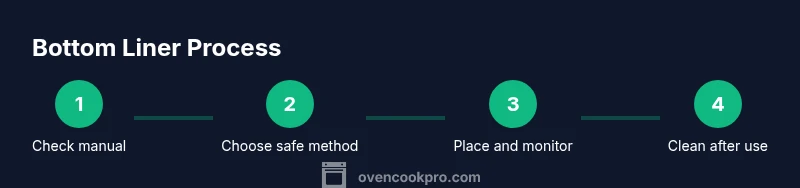
- 1
Check the oven manual
Review the manufacturer’s guidance to see if a bottom liner is permitted for your model. If it isn’t, stop here and use safer alternatives. This step prevents accidental damage or safety hazards.
Tip: If the manual forbids bottom liners, clearly document the policy and avoid any liner on the floor. - 2
Choose an approved method
Select a liner option that sits on a rack or a dedicated tray rather than directly on the oven floor. Ensure the liner covers only the intended area and leaves clearance for airflow.
Tip: Avoid very thin foil that can crumple and block vents. - 3
Prepare the liner properly
Set up the liner on the rack or tray, trim edges if needed to avoid touching the heating elements, and verify there is space around it for air circulation.
Tip: Always wear heat-resistant gloves when handling hot racks or liners. - 4
Install with caution
Slide the liner-supported tray into the oven with the tray below the bake element and away from the broil element. Maintain at least 1 inch of clearance to prevent heat buildup.
Tip: Never place a liner on the direct bottom where it can contact the heating elements. - 5
Monitor on first use
Observe during the first bake for smoke, unusual odors, or discoloration. If anything looks off, turn off the oven and remove the liner.
Tip: If your oven runs hotter or cooler than expected, readjust cooking times accordingly. - 6
Clean and inspect after use
Allow the oven to cool, then remove and clean the liner or tray. Check for melted spots or warping, and replace if damaged.
Tip: Regularly inspect gaskets and seals to maintain efficiency and safety.
Questions & Answers
Is it safe to put oven liners on the bottom?
Not typically. Liners on the bottom can block heat, disrupt airflow, and pose fire risks. Always follow the oven’s manual.
Usually not safe to put liners on the bottom; check your manual and use safer alternatives.
What types of liners are safe for oven bottoms?
Only liners explicitly approved by the oven manufacturer should be used on the bottom, and only if the manual allows it. Prefer liners on racks or trays instead.
Only use manufacturer-approved liners on the bottom if the manual says so.
Will a liner affect baking results?
Yes, liners can alter heat distribution and airflow, leading to uneven browning or longer bake times. This risk is higher with self-cleaning cycles.
Liners can change how evenly your food bakes.
What should I do if a spill happens with a liner?
Cool the oven, carefully remove the liner, and clean the tray. Do not pry melted liner off with force; replace if damaged.
Let it cool, remove the liner, and clean the tray.
Are there safe alternatives to bottom liners?
Yes—use a rimmed baking sheet on a rack, or a removable crumb tray designed for your model. These options reduce heat interference while protecting the bottom.
Try a rack-based tray or crumb tray instead of a bottom liner.
Do self-cleaning ovens have special rules about liners?
Most manufacturers advise against liners during self-cleaning cycles; liners can burn or damage seals. Remove any liner before cleaning.
Don’t use liners during self-clean cycles.
Watch Video
Main Points
- Avoid bottom liners unless approved by the manual
- Use a rack-based liner or a removable crumb tray instead
- Ensure airflow clearance around any liner
- Monitor during first uses for safety signals
- Rely on brand guidance to protect oven performance