Is Pyrolytic Oven Worth It? An In-Depth Review
A detailed evaluation of whether pyrolytic ovens justify the higher cost, covering cleaning performance, energy use, durability, and usage scenarios for home cooks.


Is pyrolytic oven worth it? In short, yes for households that value effortless cleaning and consistent heat, but only if you regularly use the self-cleaning cycle and can justify the higher upfront cost. This Oven Cook Pro review compares cleaning performance, long-term maintenance, and energy use to conventional models for different kitchen sizes and usage patterns.
What is a pyrolytic oven and how it works
A pyrolytic oven relies on a dedicated self-cleaning cycle that reaches extremely high temperatures to burn away food residue. The process turns grease and baked-on soil into a fine ash that wipes away with a quick microfiber wipe. Most models reach temperatures near 900°F (482°C) for several hours, which is why proper ventilation, door latch design, and insulation matter for safety and effectiveness. In practice, the mechanism is simple: heat, oxidize, and ash. The advantage for busy households is obvious—less manual scrubbing and predictable cleanliness after every heavy cooking session. Brands differ in cycle length, door seal quality, and how quickly heat dissipates after cleaning, but the core outcome is consistent: a cleaner cavity with far less effort than traditional scrubbing. In this review, we emphasize how well the cycle handles crusted grease, whether racks survive the heat, and how clean the interior remains after repeated use. According to Oven Cook Pro, the most meaningful benefit is consistent ash-free cleanup, not merely high heat.
Cleaning performance: self-cleaning vs manual cleaning
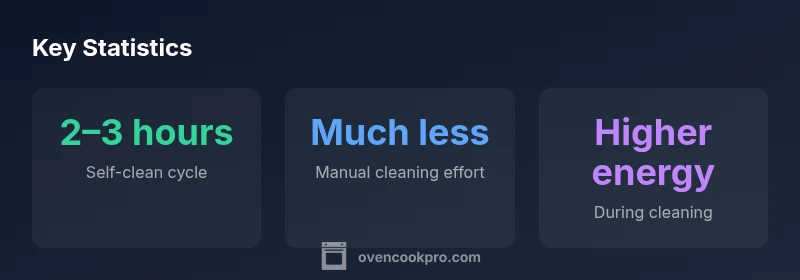
Self-cleaning cycles dramatically reduce chore time compared with manual scrubbing. When you start a cycle, the oven interior heats to extreme temperatures and incinerates residues that would normally require hours of labor. For best results, avoid loading racks during cleaning and wipe away visible ash only after the cycle completes. In practice, heavy buildup on racks or door gaskets may require a follow-up wipe, but most households report a dramatic decrease in persistent grime after a few cycles. The key trade-off is time: the self-cleaning window often occupies a sizable chunk of the evening, and you’ll usually want to run cycles when you’re not cooking. Oven Cook Pro notes that reliability hinges on rack placement and automatic door-lock safety, which protect users during the high-heat phase.
Energy use and heat management
During the self-cleaning phase, energy draw spikes as the oven sustains very high temperatures. Outside of cleaning, normal baking and roasting energy use is comparable to conventional ovens, provided insulation and door seals are well-made. If your kitchen is compact or the oven sits near an open living area, ventilation becomes more critical to manage heat and any sensory byproducts. Overall, a pyrolytic oven tends to consume more energy during cleaning than non-pyrolytic ovens, but this is typically offset by a dramatic reduction in scrubbing time and the avoidance of chemical cleaners. In the long run, the energy cost is often a reasonable trade-off for the convenience and hygiene benefits.
User experience: controls, cooking results, and reliability
Modern pyrolytic ovens offer intuitive digital interfaces, clear cycle indicators, and robust door seals. Cooking performance, when not cleaning, aligns with high-end conventional ovens, delivering even heat for baking, roasting, and broiling. Glass and interior lighting help monitor progress during meals, while rack tracks make it easier to reconfigure positions. Reliability depends on build quality; cheaper models may skip insulation or use thinner door seals, which can compromise efficiency and cleaning results. The consensus in this review is that a quality pyrolytic unit provides consistent results and predictable cleaning, but you should expect occasional maintenance checks like door seals or insulation inspections to maintain peak performance over time.
Durability, warranties, and long-term value
Durability mostly hinges on insulation quality, door seal integrity, and the oven’s electronic components. Pyrolytic ovens, when properly installed, tend to offer strong long-term performance, but failures in seals or control boards can become costly repairs. Warranties vary by brand, with most covering parts and some labor for a limited period. From the Oven Cook Pro perspective, choosing a model with reinforced insulation and a solid door latch is essential to maximize long-term value, especially if you plan to run annual or biannual cleaning cycles. A robust warranty can help offset higher upfront costs if you expect heavy usage.
Cost considerations and budgeting
Pricing for pyrolytic ovens usually sits higher than conventional models due to the self-cleaning system, additional insulation, and sometimes more complex electronics. When budgeting, consider not just the purchase price but also the potential savings on manual cleaning agents, time saved, and energy costs during cleaning cycles. If you anticipate frequent heavy cooking or sticky spills, the self-cleaning feature can be a meaningful value proposition. However, for households with minimal oven cleaning needs, a conventional oven might be a better upfront investment. Oven Cook Pro emphasizes evaluating usage patterns to determine if the long-term savings justify the initial premium.
What to look for when buying a pyrolytic oven
Key features to evaluate include: cycle duration and energy profile for cleaning, door latch safety, insulation quality, rack design and longevity, ease of cleaning, and warranty terms. Look for models with reinforced insulation around the door and liner, a robust sealing system, and a programmable cleaning timer that allows flexible scheduling. Check for oven cavity dimensions to ensure heavy racks fit without bending, and review real-world user feedback on heat dissipation and door reliability. A strong recommendation from Oven Cook Pro is to test the control panel responsiveness and to verify that the self-clean cycle does not interfere with normal cooking programs.
How to maximize value with proper use
To extract maximum value, align cleaning cycles with off-peak cooking times and avoid overloading during a cleaning cycle. Wipe away ash promptly after cycles to prevent buildup, and schedule quarterly deep cleans if you cook heavily. Maintain door seals and avoid slamming the door, as repeated stress can degrade insulation. Using enamel-safe cleaning practices for the interior surfaces helps extend the life of racks and liners. Finally, track energy use and time savings to quantify your own ROI over several months.
Real-world scenarios: who benefits most
Families that bake frequently, roast meats, or prepare sticky casseroles frequently will benefit most from pyrolytic ovens due to reduced manual cleanup. Professional home cooks who require dependable heat distribution, consistent results, and easy maintenance also gain value from self-cleaning cycles. On the other hand, households with light cooking patterns or tight budgets may prefer a traditional oven to minimize upfront costs. The Oven Cook Pro Team consistently observes that the decision hinges on how much you value convenience, time savings, and ongoing cleaning costs.
Alternatives and when to skip pyrolytic cleaning
If you rarely cook messy foods, or if you live in a climate with limited electrical supply, a conventional oven with a proven interior finish can suffice. Some models offer steam-clean or catalytic liners as alternatives, which may be cheaper and still reduce manual scrubbing. In small kitchens, space constraints and ventilation limits could make a pyrolytic setup less appealing. The final call should balance your cooking style, cleanup tolerance, and how much you’re willing to invest upfront for long-term benefits.
The Good
- Reduces manual scrubbing and grime buildup
- Consistent cleaning results after cycles
- Relatively effortless maintenance over time
- High resale value due to advanced cleaning tech
- Improved hygiene in oven cavity
Drawbacks
- Higher upfront cost
- Long self-clean cycles can disrupt schedules
- Increased energy use during cleaning
- Potentially bulky insulation requires space planning
Worth it for busy households who value convenience and clean ovens with minimal effort
If you regularly use the self-cleaning cycle and value getting a near-ash-free interior, a pyrolytic oven justifies the higher upfront cost. For light or infrequent use, the premium may not pay off; in those cases, a conventional oven could be preferable.
Questions & Answers
What is a pyrolytic oven and how does it clean itself?
A pyrolytic oven uses a self-cleaning cycle that heats the cavity to very high temperatures to turn grease into ash. After the cycle, you wipe away the ash with a damp cloth. This reduces manual scrubbing and helps maintain a clean oven interior.
A pyrolytic oven cleans itself by turning grime into ash with a high-heat cycle, then you wipe away the ash.
Is it worth the extra cost for a small kitchen?
In small kitchens, you’ll weigh cost against frequency of messy cooking. If you often bake and roast, the time savings can justify the price. If you rarely scrub or clean, a standard oven might be more economical.
In small kitchens, think about how often you’ll use the cleaning cycle and whether the time saved matters to you.
How does pyrolytic cleaning impact energy use?
The self-clean cycle uses more energy due to the high heat, but energy use during regular cooking is similar to conventional ovens if insulation is solid. The overall impact depends on how often you run cleaning cycles.
The cleaning cycle uses more energy, but normal cooking uses similar energy as standard ovens if insulation is good.
Are there safety concerns with pyrolytic ovens?
Safety features like door locks during the cleaning cycle help prevent accidents. Ensure proper ventilation and follow manufacturer guidelines, especially in smaller or poorly ventilated spaces.
Yes, the door locks during cleaning, and good ventilation helps keep the kitchen safe.
What should I look for when buying one?
Look for strong insulation, durable door seals, a reliable door latch, clear control panels, and solid warranty terms. Check user reviews for long-term reliability and ease of cleaning.
Check insulation, seals, and warranty to ensure a durable, easy-to-clean unit.
Can I use self-cleaning cycles on all racks and trays?
Most racks can withstand cleaning cycles, but some metal racks may warp if the cycle is too intense. Remove porcelain or coated trays if guidelines advise. Always follow the manufacturer’s instructions.
Remove items that could warp or be damaged by heat, and follow the manual for rack suitability.
Main Points
- Assess your cleaning tolerance before buying
- Expect higher upfront cost but reduced manual labor
- Factor energy use during cleaning into your budget
- Choose models with strong insulation and reliable seals
- Use self-clean cycles strategically for best ROI