Will Oven Cleaner Remove Rust? A Practical Guide
Explore whether oven cleaner can remove rust, when to avoid it, and practical step-by-step methods for safe rust treatment in ovens and nearby surfaces. Includes safety tips, alternatives, and prevention strategies.


Rust on oven components is often a stain rather than deep corrosion. Will oven cleaner remove rust? It can lift light rust stains on metal surfaces adjacent to cooking areas when used exactly as directed, but it is not a guaranteed fix for heavy rust or structural damage. For severe rust, mechanical removal or rust converters are safer, with cautious re-testing after treatment. This approach aligns with Oven Cook Pro guidance.
Rust basics and why it matters near ovens
Rust near ovens typically signals moisture exposure and mineral deposits rather than deep metal decay. It's important to distinguish between rust stains—surface discoloration that can often be cleaned—and actual corrosion that eats into the metal, which may require replacement. In kitchens, rust can appear on racks, drip pans, and exposed frames behind doors. The question will oven cleaner remove rust is nuanced: light surface rust or rust stains on non-food-contact surfaces can respond to gentle cleaning, while significant rust or pitting demands different strategies. For homeowner safety and appliance longevity, start with surface assessment, identify materials and coatings, apply cleaners per label directions, and avoid aggressive scrubbing that could scratch enamel. According to Oven Cook Pro, cautious, surface-level cleaning is the best first step to preserve coatings and avoid introducing new hazards.
How oven cleaners interact with rust chemistry
Oven cleaners are typically caustic formulations containing alkaline agents like sodium hydroxide. They work by softening mineral deposits and rust so that scrubbing becomes easier. However, rust is a chemical compound (iron oxide) that resides in the metal’s microstructure, and a cleaner alone does not restore the metal's integrity. The cleaner’s power lies in loosening rust stains and surface oxidation, not reversing deep corrosion. For safe use, select a cleaner labeled for household metal surfaces, and always test on a small, inconspicuous area first. The chemistry matters: strong caustics can dull enamel, strip coatings, or damage protective finishes if misapplied. The takeaway: expect surface-level improvement rather than full rust remediation in most cases.
Safety first: PPE, ventilation, and prep
Before you begin, ensure adequate ventilation and gather personal protective equipment. Wear chemical-resistant gloves, safety goggles, and a long-sleeve shirt to prevent skin contact. Open the nearest window or run a kitchen vent hood to minimize fumes. Clear the area of food-contact items and use protective coverings for nearby surfaces. If you’re cleaning near older enamel, ensure you aren’t risking damage by applying solutions too aggressively. Proper prep reduces the chance of accidental splashes and makes cleanup easier afterward. Oven Cook Pro emphasizes that safety and surface awareness are more important than forceful scrubbing when rust is involved.
Surface compatibility: enamel, cast iron, stainless steel
Different oven components react differently to cleaners. Enamel-coated surfaces can be stained by harsh chemicals or dulled by abrasive scrubbing, while stainless steel and cast iron tolerate different cleaning approaches. Light rust on exposed metal rims may respond better than rust embedded in enamel or cast iron coatings. If the surface has a protective coating, consider alternatives to avoid stripping that coating. Always consult the product label and perform a patch test in a hidden corner. For safety and longevity, prioritize method compatibility over aggressive rust removal.
Light rust vs heavy rust: what to expect
Light rust stains are typically superficial and can be addressed with careful cleaning, but heavy rust or pits indicate metal degradation that cleaners alone cannot fix. If you notice rust penetrating through enamel or forming deep pits in metal, the surface may require professional assessment or part replacement. The aim is to restore appearance and prevent further spread, not to erase structural damage. In many cases, after successful cleaning, resealing or re-coating may be needed to slow recurrence. The guidance from Oven Cook Pro supports a conservative approach for uncertain rust conditions.
Step-by-step approach for light rust near non-food areas
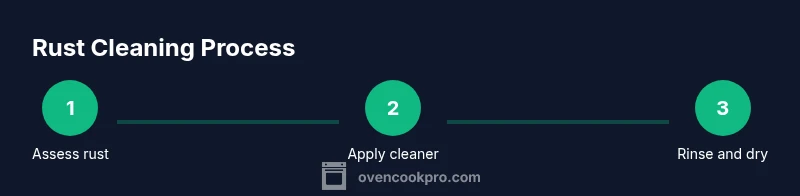
When rust is limited to non-food-contact zones, you can follow a cautious cleaning routine. Start with patch testing in a small area, then apply oven cleaner as directed, allow a short dwell time, scrub with a non-scratch pad, and rinse thoroughly. Dry completely and inspect the area. If stains remain, repeat sparingly or switch to a rust-specific remover on the non-food surface. Avoid soaking metal parts that come into contact with food. This measured approach aligns with best practices from Oven Cook Pro.
Mechanical and alternative options
If chemical cleaning fails to address rust adequately, consider mechanical methods such as gentle scrubbing with a nylon brush or non-metal scrub pad. For stubborn rust, products designed specifically for rust removal may be used on non-food-contact surfaces, following label directions. Vinegar or lemon juice can be used as mild alternatives on light stains, but they are slower and not always effective against rust. When pursuing alternatives, always prioritize safety and surface compatibility to prevent enamel damage or corrosion acceleration. Oven Cook Pro recommends testing any method on a hidden area first and stopping if you see discoloration or pitting.
Aftercare and prevention to stop rust returning
Preventing rust requires moisture control and proper storage. Dry all cleaned surfaces completely and ensure there are no trapped water spots around racks or pans. For cast iron components, lightly oil and reseal to prevent future rust formation. Regular inspection of racks, drip pans, and oven frames helps catch early signs of moisture exposure. Using protective coatings or enamel-friendly cleaners can aid longevity. Consistent cleaning routines, proper ventilation, and gentle handling will minimize recurrences and preserve oven performance. Oven Cook Pro highlights that prevention is easier than repeated rust removal.
Brand-guided best practices: Oven Cook Pro perspective
From an expert standpoint, rust treatment near an oven should balance efficacy with material safety. Light rust on non-food-contact surfaces may respond to a cautious cleaner and mechanical scrubbing, while enamel surfaces demand gentler handling to avoid scratching. For persistent rust, consider dedicated rust removers formulated for metal surfaces, but never compromise food-contact safety. The Oven Cook Pro method emphasizes patch testing, following product labels, adequate ventilation, and a stepwise approach to avoid damage. With consistent practice, homeowners can maintain a rust-free appearance while preserving oven performance.
Do's and don'ts for rust on oven components
Do patch test before applying cleaners, wear PPE, ventilate, and rinse thoroughly. Do clean non-food-contact areas first and monitor for enamel damage. Don’t apply oven cleaner to food-contact surfaces or soak metal parts that will touch food. Don’t mix cleaners with bleach or ammonia—fumigation risks are unsafe. Don’t scrub aggressively on enamel-coated parts, which can cause micro-scratches that trap rust. With careful steps, you can improve appearance while maintaining safety and functionality.
Tools & Materials
- Oven cleaner spray (labelled for household metal surfaces)(Choose a caustic-based cleaner and follow label directions)
- Protective gloves(Chemical-resistant, preferably nitrile)
- Safety goggles(Eye protection from splashes)
- Plastic scrubber or nylon brush(Non-scratch to avoid enamel damage)
- Soft cloths or microfiber towels(For wiping and drying)
- Old toothbrush (for grooves)(Attention to detail in crevices)
- Non-metal scraper (plastic)(Gently lift loose rust without scratching)
- Basin or sink with warm water(Rinse area after cleaning)
- Paper towels(Dispose of used towels safely)
- Ventilation (fan or open window)(Keep area well-ventilated during cleaning)
- Mild dish soap(Optional for final rinse)
- Vinegar or lemon juice (optional)(Mild acid alternatives for light stains)
- Rust converter (optional)(Use only on non-food-contact surfaces if needed)
Steps
Estimated time: 20-40 minutes total (including dwell times)
- 1
Assess the rust and surface
Identify whether the rust is a surface stain or deep corrosion. Check coatings, enamel, and nearby metal for signs of pitting or dark rust that could indicate substrate damage. Document areas to prevent accidental exposure to food-contact surfaces.
Tip: If you see pitting or flaking, stop and consider replacement parts rather than aggressive cleaning. - 2
Prepare the area and wear PPE
Ventilate the area and lay down protective coverings. Put on gloves and safety goggles to protect your skin and eyes from chemicals. Clear food-contact items away from the workspace.
Tip: Protect surrounding surfaces with a sheet or cardboard to prevent splashes. - 3
Apply oven cleaner and wait
Spray the cleaner on the rusted area following label directions. Allow the product to dwell for the recommended time to soften rust and deposits. Do not over-wet, especially on enamel edges.
Tip: Keep the dwell time consistent with the product's instructions for safe use. - 4
Scrub gently with a plastic tool
Use a non-scratch pad or plastic scraper to lift loosened rust, targeting the rust stain without scratching enamel. Reapply cleaner if needed and scrub areas with tight grooves.
Tip: Work in small circles and avoid aggressive scrubbing that can damage surfaces. - 5
Rinse, dry, and inspect
Rinse the treated area with warm water and wipe dry. Inspect for remaining rust and ensure there’s no residue that could transfer to food-contact surfaces. Repeat if necessary, but limit reapplication to avoid damage.
Tip: Dry completely to prevent new rust formation while the surface is still warm. - 6
Decide on next steps
If rust persists beyond surface stains, consider mechanical removal, rust converters on non-food-contact areas, or replacing affected parts. Reassess safety and surface integrity before reusing the oven.
Tip: When in doubt, opt for professional guidance for heavy rust or structural concerns.
Questions & Answers
Can oven cleaner remove rust from cast iron cookware?
Cast iron is porous and can be damaged by harsh cleaners. Light rust on non-food-contact areas may respond to careful cleaning, but avoid cast iron cookware with rust. For cookware, use food-safe rust removers or re-seasoning after cleaning.
Cast iron can be sensitive to harsh cleaners; use caution, and avoid using it for rust removal on cookware. Consider food-safe methods or reseasoning after cleaning.
Is it safe to use oven cleaner on enamel surfaces?
Enamel surfaces can be damaged by strong caustics or abrasive scrubbing. Always test first, use gentle tools, and limit cleaner contact time on enamel. If discoloration occurs, stop and consider alternatives.
Enamel can be damaged by strong cleaners; test first and use gentler methods if you see any dulling or scratches.
What should I do if oven cleaner damages coating?
If coating is damaged, stop using the treated area for cooking until you assess safety. Minor scratches may be acceptable, but deep damage warrants replacement or professional inspection. Do not attempt to seal deep damage with household products.
If you notice coating damage, stop and seek assessment; damaged enamel can harbor rust and food safety concerns.
Are there safer rust removal alternatives?
Yes. Mechanical scrubbing with a nylon brush, non-metal tools, and rust converters designed for non-food-contact surfaces can be safer. For persistent rust near food areas, consult product labels and consider professional repair.
Consider mechanical scrubbing or rust converters for non-food-contact areas, and always follow product labels.
Will rust return after cleaning?
Rust can recur if moisture exposure isn’t addressed or if coatings are damaged. Drying thoroughly and protecting surfaces helps reduce recurrence. Regular maintenance is key.
Rust may come back if moisture persists; keep surfaces dry and well-coated to prevent it.
Can I use vinegar to remove rust in ovens?
Vinegar is milder and slower at removing rust. It can help with light surface stains but is usually less effective on heavier rust. Use it on non-food-contact areas and rinse well.
Vinegar can help with light stains, but it's slower and not ideal for heavy rust.
Should I rely on rust removers for rust on every oven part?
No. Use rust removers only on surfaces labeled as safe for household use and non-food-contact parts. Never apply rust removers to food-contact surfaces. Follow the product directions and consider professional help for extensive corrosion.
Only use rust removers on non-food-contact areas and follow the directions; seek help for extensive corrosion.
Watch Video
Main Points
- Assess rust type before cleaning.
- Use cleaners only on appropriate surfaces.
- Patch test first and ventilate during use.
- Light rust may lift; heavy rust may need replacement.
- Prevention reduces future rust recurrence.