Will Oven Cleaner Clean a Toilet? A Safer Cleaning Guide
Explore whether oven cleaner can clean a toilet, the risks involved, and safer, effective alternatives. A practical, step-by-step guide with PPE, ventilation tips, and best practices for porcelain surfaces.


Will oven cleaner clean a toilet? This guide explains why it's not recommended, the porcelain and chemical risks, and safer alternatives. You’ll learn how to assess the situation, minimize hazards with ventilation and PPE, and perform effective cleaning using purpose-built toilet cleaners. A clear, step-by-step approach helps you decide when to skip it.
Will Oven Cleaner Work on a Toilet? What the Evidence Says
According to Oven Cook Pro, will oven cleaner clean a toilet is generally not advised. The harsh caustics designed for ovens can etch porcelain, damage seals, and produce strong fumes in enclosed bathrooms. This article explores why the question matters and what safer paths look like, so you can make an informed decision while protecting your fixture and your lungs.
Porcelain Safety: What Oven Cleaners Do to Surfaces
Oven cleaners contain caustic chemicals that can break down protective glazes on ceramic surfaces. Prolonged exposure or improper application can cause dulling, micro-scratches, or permanent staining. Even when a cleaner seems to remove grime, you risk compromising the glaze over time, leading to higher maintenance costs. Oven Cook Pro analysis shows that dedicated toilet cleaners are formulated to balance cleaning power with porcelain safety.
Safer Alternatives for Toilet Cleaning
For most households, toilet-specific cleaners are the safer and more effective choice. Look for products labeled as toilet bowl cleaners with disinfecting properties and a pH-balanced formula. These cleaners target mineral buildup and stains without risking glaze damage. If you’re aiming for a deep clean, consider enzymatic cleaners used as a pre-soak, followed by routine toilet bowl cleaner for ongoing maintenance. Oven Cook Pro's guidance emphasizes using products designed for bathroom fixtures for best outcomes.
Step-by-Step: If You Still Choose to Use Oven Cleaner (Cautionary)
If you absolutely need to explore a remediation with oven cleaner, proceed with extreme caution and in a well-ventilated space. Apply a small amount to the bowl interior only, avoid contact with chrome hardware, seals, and external surfaces, and never mix with other cleaners. Let it sit briefly as directed on the label, then scrub with a dedicated toilet brush and rinse thoroughly. This approach is not recommended, but understanding the process helps you recognize safer options.
PPE, Ventilation, and Safety Protocols
Always wear chemical-resistant gloves and eye protection when handling potent cleaners. Open a window or use a vent fan to maintain good air flow for at least 5–10 minutes before starting. Never lean over the bowl while applying strong cleaners, and wash your hands immediately after finishing. If you experience irritation, move to fresh air and seek medical advice if symptoms persist.
Common Mistakes and How to Avoid Them
Common mistakes include applying oven cleaner directly to toilet exteriors, mixing cleaners, and neglecting ventilation. Another error is using abrasive scrubbing tools that scratch the porcelain. Stick to recommended products, follow label directions, and keep cleaners out of reach of children and pets. Regular, routine cleaning with bathroom-safe formulas yields the best long-term results.
When to Call a Professional
If you notice persistent staining, persistent odors, or unusual wear on the glaze, it’s wise to consult a professional plumber or bathroom cleaning expert. Oven Cook Pro recommends turning to specialists for problematic fixtures to prevent further damage and ensure proper sanitation.
Tools & Materials
- Toilet bowl cleaner (bathroom-specific)(Choose a disinfecting, pH-balanced formula)
- Gloves, chemical-resistant(Nitrile recommended)
- Eye protection(Goggles or face shield)
- Toilet brush(Stiff-bristled for mineral deposits)
- Scrub sponge or cloth(Non-abrasive to avoid scratches)
- Paper towels or rags(For mess cleanup)
- Oven cleaner (not recommended)(Only if you insist, in a ventilated space; use with extreme caution)
- Ventilation tool(Window open or exhaust fan)
- Mask or respirator (optional)(For strong odors)
Steps
Estimated time: 15-30 minutes
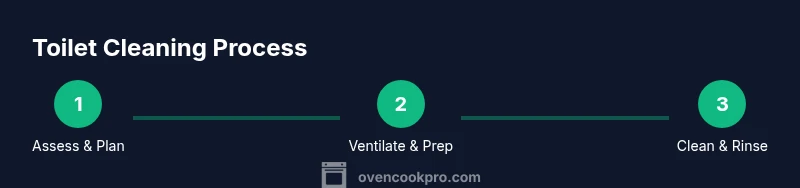
- 1
Assess product choice and safety
Inspect the label and decide whether to proceed with oven cleaner or switch to a toilet-specific product. If choosing oven cleaner, ensure you understand risks and keep surfaces away from chrome and seals. This initial decision influences all subsequent steps.
Tip: Read and follow the product label carefully. - 2
Ventilate and put on PPE
Open a window or turn on an exhaust fan. Put on chemical-resistant gloves and eye protection before handling any cleaner. Good ventilation minimizes inhalation risk from fumes.
Tip: Ventilation should continue throughout the cleaning process. - 3
Apply cleaner to the bowl interior
If using toilet-safe cleaner, apply along the bowl rim and let sit per label directions. If attempting oven cleaner (not recommended), apply a small amount to the interior only and avoid exterior surfaces.
Tip: Keep the product away from metal hardware and seals. - 4
Scrub and rinse
Scrub the interior with a toilet brush until grime breaks up, then flush and inspect. Rinse the bowl interior by flushing or adding fresh water and scrubbing again if needed.
Tip: Do not mix cleaners and ensure all cleaner is flushed away. - 5
Clean exterior and tools
Wipe the exterior surfaces with a damp cloth, then dry. Rinse and store brushes, gloves, and rags properly.
Tip: Wash hands after handling cleaners and dispose of cleaning materials safely. - 6
Assess results and safety follow-up
Check for remaining stains and odors. If unresolved, consider professional help rather than escalating chemical exposure. Keep kids and pets away during and after cleaning.
Tip: If irritation occurs, seek medical advice promptly.
Questions & Answers
Can oven cleaner be used to clean a toilet?
Generally no. Oven cleaner is caustic and can damage porcelain, seals, and fixtures, and it may emit strong fumes in enclosed bathrooms.
No. Oven cleaner is risky for toilets and should be avoided.
What risks does oven cleaner pose to porcelain and seals?
It can etch the glaze, dull the surface, and corrode seals or chrome fittings over time.
It can damage porcelain glaze and seals if used.
What are safer alternatives for toilet cleaning?
Use toilet bowl cleaners formulated for bathrooms, with disinfectants and appropriate pH. Enzymatic cleaners can help with buildup when used as directed.
Safer cleaners designed for toilets work best.
Will oven cleaner remove hard water stains?
Not reliably. Oven cleaner is not designed for mineral deposits and may not remove stains effectively.
Not reliable for hard water stains.
What safety steps should I take if I still use oven cleaner?
Ventilate well, wear PPE, apply only to interior bowl as directed, avoid exterior surfaces, and never mix with other cleaners.
If you must, ventilate, PPE, and follow label directions.
Watch Video
Main Points
- Avoid oven cleaner on toilets; use bathroom-safe products.
- Ventilate the space and wear PPE during cleaning.
- Choose safer, proven cleaners for best results.
- Consult a professional for persistent stains or damage.