Bake Perfect Sweet Potato Fries in the Oven: A Step-by-Step Guide
Learn how to bake crispy sweet potato fries in the oven with even browning, ideal crust, and reliable results. This step-by-step guide covers prep, seasoning, technique, troubleshooting, and serving ideas for flawless oven-baked fries every time.


This guide shows how to bake crispy, even-browning fries by focusing on proper cutting, thorough drying, a light oil coating, and a hot, single-layer bake. It answers how to achieve the signature tenderness inside with a crisp exterior when baking sweet potato fries in the oven.
What makes oven-baked fries work
Baking sweet potato fries in the oven works because heat penetrates the fry while the surface dries and browns. The goal is a crispy exterior with a tender center. A few simple physics ideas help: a hot oven drives surface moisture off quickly, a light oil coat conducts heat and creates browning without greasing the fries, and spacing on the pan prevents steam from softening edges. Mashed textures or soggy centers usually come from too much moisture or overcrowding, not from the potato itself. When you start with uniform sticks, a dry surface, and a hot, evenly heated sheet, you maximize Maillard browning and achieve predictable texture. This approach also minimizes added fat while delivering a satisfying bite and rich color, which is why many home cooks prefer oven-baked fries to deep-frying for a healthier, still-crisp result.
Prep: selecting potatoes and cutting evenly
Choose firm sweet potatoes with smooth skin. Wash thoroughly and decide whether to peel; the skin adds texture and nutrients for a rustic fry. Cut the potatoes into sticks that are roughly uniform in thickness, ideally 1/4 to 1/2 inch wide. Consistent size ensures simultaneous cooking. A quick tip is to align slices on the cutting board so you make all cuts with the same angle. If some pieces are slightly thicker, trim them to match the others. After cutting, you can proceed with a soak (optional) to remove excess starch, which can aid in crisper results.
Oil, seasonings, and coating for crispness
A light coating of oil helps conduct heat and carries seasonings to the surface for better browning. Use 1–2 tablespoons of neutral oil per pound of potatoes, or just enough to lightly coat. Mix in spices like paprika, garlic powder, cumin, salt, and pepper, or keep it simple with salt and pepper. For extra crunch without adding fat, you can dust in a teaspoon of cornstarch or rice flour with the oil. Avoid heavy/oily coatings that pool on the pan. The goal is even coverage, not soggy pockets, so toss thoroughly and let the sticks glide apart when you spread them on the sheet.
Preheating and sheet setup for even browning
Preheat your oven to 425°F (220°C). The hot sheet is essential for immediate browning when the fries land on it. Line a baking sheet with parchment paper or a silicone liner to prevent sticking and to ease cleanup. Arrange fries in a single layer with space between pieces; crowded fries steam rather than crisp. If needed, use a second sheet or a wire rack set over a sheet to boost air circulation. The key is airflow: fries that touch or are stacked will not brown evenly and may end up undercooked in the center.
Cooking method: oven placement, convection, and pan management
Place the sheet toward the middle of the oven to ensure even heat exposure. If you have a convection setting, you can reduce the bake time slightly (about 3–5 minutes) and keep an eye on the color. Flip or shake the pan halfway through to promote uniform browning on all sides. Keep a close watch toward the end of the bake; you want the tips to turn a deep amber and the centers to be tender. For extra crispness, you can place the fries under a brief broil for 1–2 minutes, watching carefully to prevent burning. This step is optional but can yield exceptional texture.
Testing for doneness and crispness
Crispiness is a balance between surface moisture loss and interior tenderness. When the edges look dark amber and the centers feel tender when pierced with a fork, they are close to done. Total bake times typically range from 20–25 minutes, plus 5–10 minutes for browning depending on thickness and oven performance. Remove from the oven, give them a final toss, and let them rest on the pan for 2–3 minutes. Resting helps set the crust and finalize the texture while still staying hot enough to retain crunch.
Common mistakes and fixes
Common issues include soggy fries, uneven browning, and underseasoning. Fix soggy fries by drying thoroughly after any soak and ensuring they cook in a single layer with space between pieces. If browning is uneven, rotate the pan and switch shelves if your oven has hotspots. For flat, bland fries, boost flavor with a more assertive seasoning blend or finish with a light dusting of salt immediately after removal. If fries taste greasy, reduce the oil slightly or switch to a higher-smoke-point oil.
Variations and serving ideas
Sweet potato fries take well to various flavor directions. Try smoked paprika and garlic for a savory profile, cinnamon and a touch of brown sugar for a sweet heat, or chili powder for a kick. Dips such as garlic aioli, chipotle mayo, yogurt herb dip, or a simple ketchup pair nicely with the baked fries. A squeeze of lime or a drizzle of lemon juice adds brightness. For meal-prep or make-ahead meals, bake in batches and re-crisp in a hot oven before serving.
Tools & Materials
- Large sharp knife(For even sticks; use a chef's knife)
- Cutting board(Stable surface)
- Baking sheet(Half-sheet or jelly-roll size)
- Parchment paper or silicone liner(Prevents sticking and makes cleanup easy)
- Mixing bowl(For oil and seasonings)
- Kitchen towel or clean cloth(Dry potatoes thoroughly)
- Optional: wire rack(Supports air circulation if used)
- Measuring spoons(To measure spices precisely)
Steps
Estimated time: 30-40 minutes active + 5-10 minutes rest
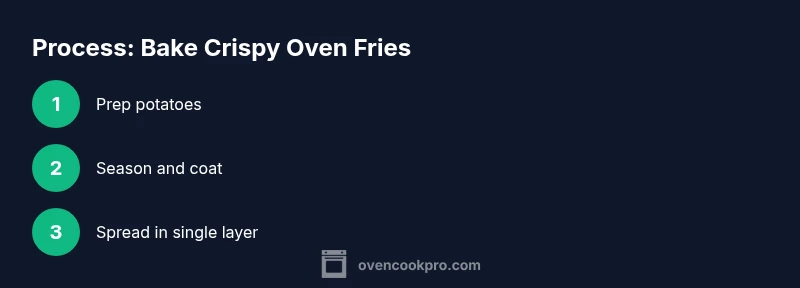
- 1
Prep the potatoes
Rinse and dry the potatoes. Trim ends and cut into uniform sticks about 1/4 to 1/2 inch thick to ensure even cooking. Consistent size helps all pieces finish together.
Tip: Aim for a consistent width to prevent undercooked centers. - 2
Soak and dry
Soak the cut potatoes in cold water for 15–30 minutes to remove surface starch. Drain well and pat completely dry with a clean towel before oiling; moisture on the surface steams rather than crisps.
Tip: Even a short soak helps reduce soggy fries. - 3
Toss with oil and seasonings
Toss the dried sticks with 1–2 tablespoons neutral oil and your chosen seasonings. A light coating is enough; too much oil can lead to greasy fries.
Tip: For extra crispness, add 1 teaspoon of cornstarch or rice flour to the coating. - 4
Spread in a single layer
Arrange the fries on a parchment-lined sheet in a single layer, with at least 0.5 inch between pieces. Overcrowding traps steam and prevents browning.
Tip: Use a second sheet if needed to avoid crowding. - 5
Bake and flip
Preheat to 425°F (220°C). Bake 15–20 minutes, then flip the fries and rotate the pan for even browning. Continue baking 5–10 more minutes until edges are crisp and centers are tender.
Tip: Convection ovens may finish a little faster; monitor and reduce time by 3–5 minutes if using convection. - 6
Finish and serve
Remove from oven and let rest for 2–3 minutes. Serve immediately with your favorite dip; they lose crispness as they cool.
Tip: Best when hot; re-crisp in a hot oven for a quick redo.
Questions & Answers
Can I skip soaking the potatoes?
Soaking helps remove surface starch, reducing sogginess and helping crisp browning. You can skip, but expect softer edges.
Soaking helps crispness; skip if you're short on time, but your fries may be softer.
What temperature is best for baking?
A hot oven around 425°F (220°C) promotes browning and crispness without burning. Lower temps reduce browning.
Use a hot oven around 425 degrees to get crispy edges without burning.
How can I fix soggy fries?
Ensure fries are dry, cook on a single layer, and avoid overcrowding. If needed, finish under a brief broil for extra color.
Dry fries, let air, and use broil briefly to finish crisping.
Is parchment paper essential?
Parchment paper prevents sticking and makes cleanup easier, but you can oil a sheet directly if needed.
Parchment helps with nonstick and cleanup, but you can oil a sheet if you must.
Can I freeze baked fries?
Yes. Cool completely, freeze on a tray, then transfer to a bag. Reheat in a hot oven to regain crispness.
You can freeze and re-crisp them later in a hot oven.
What dips pair well?
Aioli, garlic yogurt, maple mayo, or simple ketchup pair nicely with baked fries. Add spices to the dip to mirror fry seasonings.
Try aioli or spicy ketchup for a tasty match.
Watch Video
Main Points
- Cut fries to uniform thickness.
- Dry thoroughly before oiling.
- Space pieces apart; avoid overlapping.
- Flip halfway and monitor for crisp edges.
- Serve immediately for best texture.