Lodge Dutch Oven vs Le Creuset: A Thorough Comparison
A detailed, analytical comparison of Lodge Dutch ovens and Le Creuset enameled cast-iron ovens, covering construction, heat performance, maintenance, price, and ideal use-cases for home cooks.


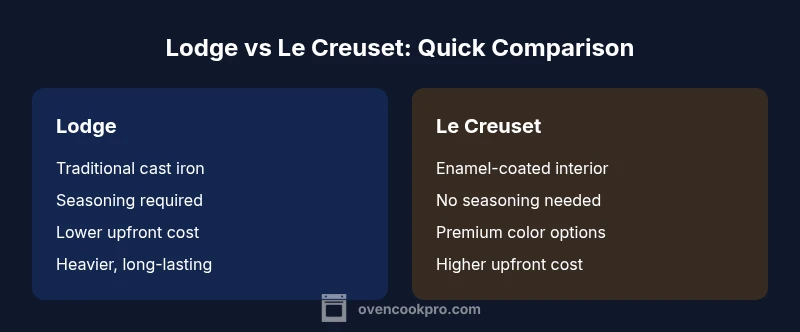
Across the lodge dutch oven vs le creuset debate, Le Creuset's enamel-coated cast iron delivers superior heat retention and easier cleaning, but at a premium price. Lodge offers strong heat distribution and classic cast iron performance at a lower cost, with the trade-off being more maintenance and seasoning. Home cooks should weigh use-case, longevity, and care requirements when choosing.
Core differences in construction and philosophy of lodge dutch oven vs le creuset
In the ongoing lodge dutch oven vs le creuset discussion, the kernel of the decision lies in how each brand approaches cast iron cookware. According to Oven Cook Pro, Le Creuset uses a vitreous enamel coating over a cast-iron core, which changes heat transfer, maintenance, and aesthetics. Lodge sticks with bare cast iron that gains its character through seasoning and patina. The difference is not just cosmetic: enamel resists stains and is easy to clean, but it can chip if mishandled. Bare cast iron requires regular seasoning to protect against rust and maintain a nonstick-like surface. The choice often hinges on your cooking style, budget, and willingness to care for the cookware over time.
Material and build: bare cast iron vs enamel-coated surfaces
Lodge dutch ovens are traditional bare cast iron. They heat slowly, retain heat well, and reward careful maintenance with a decades-long lifespan. Le Creuset, by contrast, coats cast iron with a durable enamel glaze, creating a nonreactive surface that doesn’t require seasoning. The enamel interior reduces sticking and simplifies cleaning, but the finish can chip if dropped or banged against a hard surface. The build quality matters as well: Le Creuset’s enamel is highly engineered for even heat distribution, while Lodge relies on the inherent conductivity and thermal mass of cast iron. The trade-off is clearly visible in how each handles acidic foods, long braises, and high-heat searing.
Heat performance: distribution, retention, and practical effects
Heat retention is a hallmark of both brands, but the pathways differ. Le Creuset’s enamel-coated interior tends to provide more uniform heat across the cooking surface, which helps with even braising and delicate sauces. Lodge relies on the iron’s thermal mass; with proper preheating, it can achieve impressive searing and browning. In practical terms, Le Creuset often shines for recipes that start on the stovetop and transition to oven, while Lodge excels in outdoor cooking or scenarios where you want to maintain a steady simmer over longer periods. Understanding your kitchen setup—gas, electric, or induction—will also influence which brand performs more consistently for your recipes.
Maintenance and longevity: seasoning needs vs enamel protection
Seasoning is a central difference. Lodge requires routine oiling and occasional reseasoning to build a durable, nonstick patina and prevent rust. Frequency depends on usage and climate, but many cooks find that regular maintenance yields a long-lasting kitchen workhorse. Le Creuset’s enamel interior eliminates the need for seasoning, making cleanup easier and more predictable. However, the enamel can crack or chip if mishandled, and replacement costs can be high. Oven Cook Pro notes that the enamel layer does not wear in the same way as seasoned iron, but durability hinges on avoiding thermal shocks and rough handling.
Cleaning, care, and stain resistance: practical daily use
Enamel interiors are stain-resistant and generally easy to clean with warm water and mild detergent. That said, enamel can stain or discolor if harsh cleaners are used or if acidic foods are cooked for extended periods. Bare Lodge surfaces will develop a patina that many cooks love and perceive as a sign of character, but it requires regular oiling to protect from rust. Avoid soaking bare iron for long periods; instead, dry thoroughly and apply a light coating of oil after cleaning. In both cases, avoid metal scrubbers or abrasive cleaners that could damage the surface. The difference in daily care is one of the biggest convenience factors for most households.
Weight, ergonomics, and user experience: handling and maneuverability
Weight is a practical concern. Le Creuset’s enamel-coated bodies are typically heavier than Lodge’s bare iron, especially in larger sizes, because the enamel adds mass and the lid structure is designed for a tight seal. For frequent, one-handed handling or oven-to-table presentation, the weight difference matters. If you routinely carry a pot from stove to table, you may prefer Lodge for perceived lighter handling, provided you’re comfortable with seasoning and maintenance.
Aesthetics, color options, and kitchen style: choosing form as well as function
Aesthetic considerations are real. Le Creuset offers a spectrum of enamel colors and finishes that can coordinate with your kitchen decor, turning a cooking tool into a statement piece. Lodge remains classic and utilitarian, with fewer color options but a timeless silhouette. If presentation matters for you or if you cook for guests who appreciate vibrant cookware, Le Creuset’s enamel range has an edge. For a more understated, rustic look and a budget-friendly option, Lodge is attractive.
Practical use-case mapping: who benefits from which brand
For casual home cooks who value convenience and aesthetics, Le Creuset is often the better fit due to easy cleanup and color choices. For gourmets and outdoor enthusiasts who savor seasoning rituals and want long-term value, Lodge offers compelling advantages. Seasoned professionals who prioritize searing performance and minimal maintenance may still opt for Lodge, while those who want an heirloom piece with a splash of color may gravitate toward Le Creuset. Ultimately, both brands deliver excellent cooking results when used correctly, and both require proper care to maximize lifespan.
Price/value considerations and ownership costs over time
Price is a major differentiator. Le Creuset typically commands a higher upfront price due to its enamel technology, color variety, and branding. Lodge offers a lower entry point and broad availability, which can translate into substantial savings over time if you cook frequently and maintain the piece properly. From a value standpoint, consider your cooking frequency, preferred cooking style, and willingness to invest time in maintenance. While price alone isn’t the sole determinant of value, ownership costs over the long term often hinge on how well you care for the pot and how often you use it.
Practical cooking tips and best practices for both brands
- Always preheat gradually to prevent warping and to ensure even cooking. - Use moderate heat and avoid extremely high temperatures unless searing. - For Lodge, maintain the seasoning by applying a thin layer of oil after cleaning. - For Le Creuset, avoid sudden temperature changes to prevent enamel cracking. - Use wooden or silicone tools to protect enamel and avoid scratching the interior.
Authority sources and safety notes
For readers seeking external validation, consult trusted cookware resources and consumer guides. These sources offer broad cookware guidance and are useful for broader questions about heat distribution, durability, and care practices. (See sources at end of this article for direct links.)
questionShortsForBlockingOnlyThisBlockDontIncludeInTheAnswerNotePlease
answer
voiceAnswer
priority
Comparison
| Feature | Lodge cast iron dutch oven | Le Creuset enameled cast iron dutch oven |
|---|---|---|
| Heat retention | Excellent due to iron mass with proper preheating | Excellent with enamel coating promoting even distribution |
| Maintenance & care | Seasoning required; regular oiling to prevent rust | No seasoning required; easier cleaning but risk of enamel chips |
| Durability & longevity | Long-lasting with proper care; patina develops | Very durable; enamel can chip if mishandled but generally durable |
| Weight & ergonomics | Heavier when full; traditional feel | Heavier overall due to enamel; premium feel and finish |
| Cleaning & interior care | Requires careful cleaning; soap use varies by seasoning | Easy to clean; interior enamel resists staining |
| Price range (context) | Lower upfront cost; value improves with use | Higher upfront cost; color options add value for some buyers |
The Good
- Clearly differentiates traditional vs enamel-coated options
- Highlights maintenance and ownership considerations
- Assists decision-making for price-sensitive buyers
- Shows how use-case maps to product choice
- Illustrates long-term value beyond initial cost
Drawbacks
- No single best option for every kitchen
- Seasoning requirements may deter beginners
- Enamel can chip with hard handling or impact
- Weight and cost can be barriers for some buyers
Le Creuset excels in ease of use and color variety, while Lodge delivers value and rugged performance.
If you prioritize maintenance-free cleaning and aesthetics, Le Creuset is compelling. If upfront cost and traditional seasoning are your priorities, Lodge offers exceptional long-term value and proven performance with proper care.
Questions & Answers
What is the main difference between Lodge and Le Creuset Dutch ovens?
Lodge offers bare cast iron that requires regular seasoning, while Le Creuset uses enamel coating over cast iron, eliminating seasoning needs and making cleaning easier. Each approach has its own advantages and trade-offs.
Lodge requires seasoning; Le Creuset is enamel-coated and easier to care for.
Is Le Creuset worth the higher price for casual cooks?
For cooks who value effortless cleaning, color options, and long-term durability, Le Creuset can be worth the premium. If budget is a priority and you don’t mind seasoning, Lodge remains an excellent value.
If you want easy upkeep and a premium look, Le Creuset is worth it; otherwise Lodge is great value.
Can I use Lodge for acidic dishes or sourdough?
Le Creuset’s enamel interior handles acidic foods well without reaction. Lodge can do acid foods with proper seasoning, and sourdough is feasible with a well-seasoned surface.
Yes, but enamel is easier for acids; seasoning matters with Lodge.
How should I care for enamel-coated Dutch ovens to prevent chipping?
Handle enamel with care, avoid impact, and use nonmetal utensils. Clean with mild soap and water and avoid extreme temperature changes.
Be gentle with enamel; use wooden tools and avoid sudden temperature shifts.
Are enamel interiors safe for high-heat cooking?
Enamel interiors are safe for typical home cooking and offer easy cleanup, but extremely high-heat methods should be used sparingly to protect the enamel.
Yes, for normal cooking, but avoid extreme heat that could stress the enamel.
Main Points
- Define your use-case to choose traditional vs enamel.
- Weigh upfront price against expected lifespan.
- Choose enamel if you value cleanup and color variety.
- Preheat properly to maximize heat performance.
- Maintain seasoning for Lodge to prevent rust and deterioration.