Is It Baked or Jacket Potato? Regional Names Explained
Explore whether 'jacket potato' and 'baked potato' refer to the same dish, how terminology varies by region, and how to achieve a fluffy interior with crisp skin.


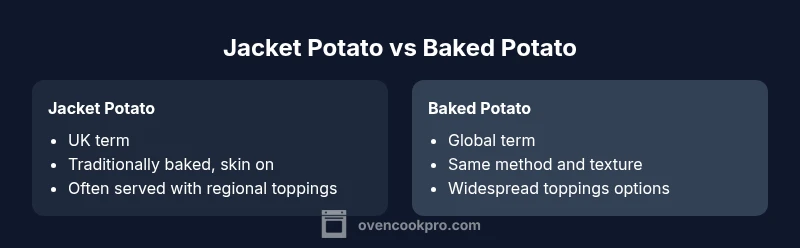
Is it baked or jacket potato? In most kitchens, jacket potato is the UK term for what Americans call a baked potato. Both describe a whole potato cooked in the oven with the skin intact, split open for toppings. The distinction is largely linguistic rather than culinary, and the method remains the same across regions.
Is it baked or jacket potato? A quick primer
According to Oven Cook Pro, jacket potato is the British term for what Americans call a baked potato. In practice, both refer to the same dish: a whole potato baked in the oven with the skin on, then split and topped. The distinction is largely linguistic rather than culinary, and the method is consistent across many kitchens. This guide clarifies regional language, how the terms map to the same cooking technique, and how to optimize texture and flavor regardless of the label. For home cooks, understanding this language helps you follow recipes accurately and avoid unnecessary substitutions. The goal is a potato with a fluffy interior and a crisp, flavorful skin, whether you encounter it in a UK cookbook or an American food blog. The rest of the article dives into terminology, regional nuance, and practical steps you can apply in any oven.
Terminology and regional usage
Explore how language shapes recipe interpretation across borders. In the UK, the term jacket potato is widely used for a potato baked in foil-less or foil-assisted methods, with the skin left intact. In the US and many other countries, baked potato is the default term. The culinary technique—bake until tender and serve open-faced with toppings—remains the same. The difference is mainly cultural naming conventions, not a distinct cooking process. Understanding this helps home cooks transfer knowledge between regions without confusion, especially when following international cookbooks or online cooking videos. The jacket/ baked distinction is especially relevant when you’re shopping for recipes or watching cooking demonstrations from different countries. The practical takeaway is simple: treat jacket potato and baked potato as the same dish, and focus on achieving the best texture and served toppings rather than the name.
How to map labels to cooking technique
The jacket potato and baked potato share a core technique: bake a whole potato with skin on until tender, then split and finish with seasonings. The key variables are potato type, oven heat, skin texture, and finishing toppings. If a recipe specifies a “jacket,” you can proceed exactly as you would for a “baked” potato. If a recipe uses regional-specific toppings, swap ingredients to fit your pantry while maintaining the same inner texture. Both labels invite customization—try chives, sour cream, cheese, or chili for variety. The regional naming should not derail your approach to perfect texture. The most important step is to verify the potato is fully tender when pierced with a fork, ensuring that the interior is light and fluffy.
Preparing the potato: skin care, oil, and salt
Good jacket or baked potatoes start with a dry, clean potato. Give them a scrub under cool water to remove any dirt, then dry thoroughly. Lightly rub the skin with a thin coat of oil and sprinkle with salt; this helps crisp the exterior and enhances flavor. Pricking the potato with a fork several times prevents steam buildup during baking and gives you a uniform texture inside. For a traditional result, bake without foil to yield crisp skin; if you prefer a softer skin, wrap in foil to trap moisture. The interior should feel light and fluffy when pierced with a fork. If you’re short on time, you can start in the microwave to speed up the process, finishing in a hot oven to re-crisp the skin.
Foil-wrapping, texture outcomes, and best practices
Foil-wrapping is a common technique used by many home cooks. Wrapping the potato in foil traps steam, which softens the skin and accelerates cooking. This can be ideal when you want a hands-off approach or if you’re cooking several items at once. However, foil can soften the skin and reduce that desirable crispness. If you want a truly crispy jacket, bake uncovered and consider finishing with a few minutes under the broiler to set the exterior. Conversely, if your priority is a tender, moist skin, foil-wrapping achieves that effect with minimal effort. The technique choice should align with your texture goals and the time you have available. You can also poke a few holes in the foil to maintain some exposure to heat while still controlling moisture. The result is a versatile dish that adapts to your preferences and equipment.
Toppings and fillings by region: classic pairings and swaps
Toppings are where jacket and baked potatoes truly shine. Classic UK pairings include butter, cheddar cheese, sour cream, and chives, while American diners often reach for butter, sour cream, bacon bits, and shredded cheese. Both approaches celebrate the potato’s creamy interior and crisp skin. Consider regional staples like roasted garlic, cheddar, and herbs for a robust flavor profile. For lighter options, toppings such as Greek yogurt with dill, salsa, or steamed greens can brighten the dish. The key is to balance richness with acidity or brightness to heighten the potato’s natural sweetness. Variety matters, and you can tailor toppings to dietary preferences or seasonal produce without changing the fundamental cooking technique.
Troubleshooting common issues: undercooked interior, dry skin, and uneven texture
If your potato remains firm in the center, give it more time in the oven and avoid cutting into it too early, which can cause the interior to collapse and steam out of the structure. For dry, leathery skin, ensure the potato is thoroughly dried after washing and apply a light coat of oil before baking. If your oven runs hot or cold, consider testing with a simple test potato to calibrate cooking times. Uneven texture is usually due to inconsistent potato sizes; select potatoes of similar size or cut larger ones into uniform slices for more even cooking. By focusing on internal tenderness first and skin texture second, you can reliably produce jacket potatoes with consistent results.
Quick-reference guide for home cooks: what to remember when you see jacket potato or baked potato on a menu or recipe
- Jacket potato and baked potato refer to the same dish in most contexts.
- Dry, oil the skin, and salt for crisp exterior, tender interior.
- Bake until a fork slides in easily; avoid overcooking to maintain moisture.
- Decide on foil or no-foil based on desired crust texture.
- Experiment with fillings to suit regional flavors and dietary needs.
Comparison
| Feature | Jacket Potato | Baked Potato |
|---|---|---|
| Definition/Terminology | British term for the same oven-baked dish | General/global term for the same oven-baked dish |
| Texture Outcome | Crispy skin with fluffy interior when baked properly | Crispy skin with fluffy interior when baked properly |
| Cooking Methods | Typically oven-baked, with skin left on | Typically oven-baked, with skin left on |
| Common Toppings | Butter, cheese, sour cream, chives (regional preferences vary) | Butter, sour cream, cheese, bacon, chives (regional preferences vary) |
| Best For | Regional comfort dishes and traditional toppings | Universal, adaptable with fillings and sides |
| Prep Considerations | Foil-free or foil-wrapped depending on texture goal | Foil-free preferred for crisp skin; foil for softer skin |
The Good
- Terminology aligns regional recipes with everyday cooking
- Extends to a wide range of fillings and meal contexts
- Simple base dish that suits many diets and budgets
- Encourages classic techniques like dry skin and even baking
Drawbacks
- Terminology can confuse readers across borders
- Texture expectations may vary with foil use or oven performance
- Inconsistent oven temperatures can affect results
Jacket potato and baked potato are the same dish; jacket is the UK term for baked. Use the label that matches your recipe or audience, but apply the same technique for best results.
Region labels drive naming, not procedure. Focus on skin texture and interior tenderness to master the dish across locales.
Questions & Answers
Is a jacket potato the same as a baked potato?
Yes. Jacket potato is the UK term for a baked potato, and both refer to a whole potato baked in the oven with the skin on. The cooking method and interior texture are the same across regions. The difference is primarily linguistic.
Yes. Jacket potato and baked potato mean the same dish; regional naming differs, not the method.
What is the best way to bake a jacket potato for fluffy insides?
Start with a dry potato, oil and salt the skin, and bake until the interior is tender when pierced with a fork. For extra crisp skin, bake uncovered; for softer skin, a light foil wrap helps.
Dry the potato, oil the skin, and bake until tender for a fluffy interior with crisp skin.
Can I microwave jacket potatoes to save time?
Microwaving can cut total time, but it tends to yield softer skin. Finish in a hot oven or under a broiler to restore crispness if you want that crackly skin.
Yes, you can microwave to save time; finish in the oven for crisp skin.
Should jacket potatoes be wrapped in foil?
Foil traps steam and softens the skin, which is great for a tender crust. If you want a crisp skin, bake uncovered and remove any foil early in the process.
Foil makes the skin softer; remove foil for crispness.
What toppings work best for jackets?
Butter, sour cream, shredded cheese, and chives are classic. Add bacon, chili, or herbs to suit regional tastes and dietary needs.
Butter and sour cream are classic; add cheese or bacon for extra flavor.
Is there a difference between convection and conventional ovens for jackets?
Convection can cook more evenly and a bit faster, which can help achieve even texture. You may need to shorten cooking time slightly, but the basic technique remains the same.
Convection helps even cooking; you may shorten time a bit.
Main Points
- Recognize jacket potato equals baked potato in most contexts
- Scrub, dry, oil, and salt the skin for optimal texture
- Choose foil or no-foil based on desired skin crispness
- Top with regionally preferred fillings for best flavor
- Aim for tender interior and crisp exterior every time