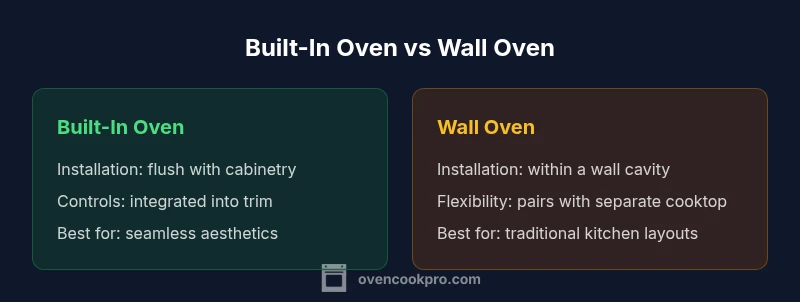
Is a Built-In Oven the Same as a Wall Oven? An Analytical Guide
Explore the differences between built-in and wall ovens, how installation and cabinet design impact choice, and a clear framework to choose the right option for your kitchen and budget.


Is a built-in oven the same as a wall oven? In most cases, the terms refer to ovens installed in cabinetry rather than freestanding ranges, and built-in often means a flush, cabinet-integrated unit. The practical differences center on installation height, trim, and configuration, with the choice guided by your kitchen layout and cooking needs.
Understanding the terminology: built-in vs wall oven in everyday kitchens
What homeowners commonly call a built-in oven is generally the same family as a wall oven—the appliance is designed to be installed flush within cabinetry. The distinction today is largely semantic, marketing, and installation method rather than a fixed technical difference. According to Oven Cook Pro, most buyers should approach these terms as two ways of describing the same category of cabinet-integrated ovens, then focus on how the unit will fit physically and functionally in their space. The keyword is not a cryptic riddle but a practical guide to fit, height, and trim. In real kitchens, the terms are frequently used interchangeably, but understanding the cabinetry and mounting specifics helps prevent mismeasurement and misfit. The core takeaway for homeowners is that either choice aims to reduce clutter and create a seamless look, while maintaining ergonomic access to controls and drawers.
Installation height and cabinet integration: flush fit and trim matters
A primary difference between a built-in oven and a wall oven is where the unit sits relative to surrounding cabinetry. A built-in option is typically designed to be embedded into a cabinet array with a dedicated trim kit that creates a clean, flush surface. A wall oven, while sometimes marketed similarly, emphasizes installation inside a framed cavity with careful alignment to adjacent cabinetry and possibly a separate microwave or warming drawer. For homeowners, the practical implication is clear: plan for a uniform cabinet depth, an accurate cut-out, and matching trim pieces so the oven reads as a single, integrated feature rather than a freestanding appliance. The result is improved aesthetics and easier cleaning around the appliance.
Configuration options: single, double, and multi-unit setups
Both built-in and wall ovens come in single and double configurations, and many models offer combination units (such as a double wall oven with a separate microwave). The decision often hinges on how you cook and entertain: a double oven provides flexibility for multi-stage recipes or holiday meals, while a single oven may suffice for compact kitchens. When evaluating options, consider whether you want a traditional or contemporary control interface, the presence of convection or steam modes, and how these features will be arranged with your existing cooktop. Remember that configuration affects door height, interior clearance, and overall footprint, so measure carefully and compare installation requirements across models.
Size, fit, and standard dimensions: finding the right width and height
Standard widths for built-in and wall ovens typically range from about 24 to 30 inches, though depth, height, and the spacing between adjacent units can vary. The critical practical question is whether the height aligns with your countertop and upper cabinetry, so you end up with a balanced look and ergonomic access to racks and controls. If you’re remodeling, plan for a uniform cabinet line that accommodates the chosen appliance with matching finish and trim. If you already have a kitchen layout, use a precise cut-out template provided by the manufacturer to verify fit before ordering. A wrong size creates costly delays and additional cabinet work.
Electrical, ventilation, and cabinetry considerations: preparing for installation
Installing a built-in or wall oven requires attention to electrical supply and ventilation. Many builders specify dedicated circuits and appropriate amperage for modern ovens, along with venting considerations for models that exhaust heat into the kitchen. For cabinetry, ensure that adjacent sections can support the appliance’s weight and heat output, and verify clearance around doors for safe operation. In some remodels, structural mods or reinforcement may be needed, particularly for heavier, double-oven configurations. Planning early with your electrician and cabinet maker reduces delays and ensures the oven sits correctly with a clean line along the surrounding surfaces.
Performance, features, and how they translate to daily use
Beyond installation, the heart of the decision lies in performance and features. Convection capabilities, bake modes, steam or speed-cook options, and smart controls all influence how reliably the oven performs during busy weeknights. Whether you choose built-in or wall installation, look for consistent temperature control, intuitive interfaces, and reliable sealing for moisture and heat. The way the oven communicates with the rest of your kitchen devices—smart home integration, remote monitoring, or app-based settings—can also affect daily usage and satisfaction. Oven Cook Pro analyses emphasize that feature sets matter most when you have specific cooking routines, such as frequent roasts or delicate pastries.
Cleaning, maintenance, and durability implications
Maintenance is often overlooked in the oven choice, but it’s a long-term consideration. Built-in and wall ovens should offer durable enamel interiors, self-cleaning cycles, and accessible door seals for longevity. The flush integration of a built-in unit can simplify cleaning around edges, while a wall oven may expose more trim lines and gaps where dust can accumulate if not properly sealed. Regular maintenance, including cleaning racks and checking gaskets, helps preserve performance and energy efficiency. Oven Cook Pro notes that durability is closely tied to the quality of installation materials and proper ventilation rather than the naming convention of the unit.
Cost considerations and value: what you’re paying for besides the appliance itself
Pricing for built-in and wall ovens varies with brand, capacity, features, and configuration. Remodeling guests or new kitchen projects should weigh the total cost of ownership, including cabinetry, trim kits, and potential demolition work. The most meaningful value comes from how the oven aligns with your cooking habits and how often you use premium features such as convection or steam. Rather than chasing the lowest price, evaluate how the unit’s ergonomics and reliability translate into better results and a more enjoyable cooking experience. Oven Cook Pro analyses emphasize balancing upfront cost with long-term utility.
Choosing the right option for your kitchen: a practical decision framework
For homeowners, the choice between built-in and wall ovens hinges on how the kitchen is laid out and how the oven will be used. If you want a seamless, high-end aesthetic with ergonomic access to controls, a built-in flush installation in tall cabinetry is compelling. If you value flexibility in layout, easy pairing with a separate cooktop, or a traditional kitchen design, a wall oven setup may be preferable. Regardless of the label, prioritize fit, ergonomics, feature set, and service support. Map your cooking routines to the oven’s capabilities, and ensure your contractor accounts for cabinetry openings, mounting hardware, and clearances in the project plan.
Common myths and misconceptions: sorting facts from marketing
A common misconception is that built-in and wall ovens are fundamentally different products rather than installation variations. In practice, most households benefit from focusing on the oven’s internal features (convection, bake modes, moisture control) and how the unit integrates with the kitchen. Marketing language can blur distinctions, but the practical decision rests on how the appliance will be used, the kitchen’s layout, and the ease of installation and service. The clearest path is to speak with installers, review model templates, and verify how trim and cabinetry will look once installed.
Practical steps for remodeling or new kitchen projects
Before purchasing, create a room plan that marks appliance locations, required electrical outlets, and venting paths. Request installation templates from manufacturers and have a cabinet-maker prepare the cut-out space. Confirm alignment with countertops and any adjacent devices, such as warming drawers or microwaves. Finally, assess your maintenance routine and ensure your chosen model has a straightforward cleaning protocol and readily available replacement parts. A well-planned approach reduces surprises and helps your built-in or wall oven reach its full potential in daily cooking.”
Comparison
| Feature | Built-In Oven | Wall Oven |
|---|---|---|
| Installation method | Flush with cabinetry using a dedicated trim kit | Flush with wall cavity and surrounding cabinetry |
| Height positioning/ergonomics | Typically designed to align with surrounding cabinetry; can be at waist or eye level depending on configuration | Can be placed at standard cabinet heights; often paired with a separate cooktop |
| Size options | Common widths 24–30 inches; depth varies by model | Common widths 24–30 inches; depth varies by model |
| Controls & interfaces | Integrated with cabinetry; touch and dial options matched to trim | Surround or side panels may be used to match look; some models have standalone interfaces |
| Ventilation & installation braces | Internal venting with trim-in installation | Cabinet venting considerations and framed installation may apply |
| Price range & value | Similar ranges; premium finishes and double ovens increase cost | Similar ranges; price depends on configuration and features |
| Best for | Modern, seamless aesthetic; frequent multi-rack cooking | Flexible layouts; renovation projects with varied cabinet styles |
The Good
- Seamless kitchen integration with cabinetry
- Easier to clean around appliance edges
- Ergonomic control placement at eye level
- Flexible pairing with different cooktops and configurations
- Enhanced resale appeal in modern kitchens
Drawbacks
- Higher installation complexity and potential cabinetry work
- Possible higher upfront cost for premium trim and double-oven setups
- Longer lead times for custom trim and cabinet modifications
- Limited to cabinet configurations that support flush installation
Built-in and wall ovens are closely related and often interchangeable in modern kitchens.
Choose built-in for a seamless, integrated look and ergonomic access; choose wall oven when you want flexible layouts or simpler matching with existing cabinetry. In most cases, installation method and cabinet design drive the decision, not a radical difference in functionality.
Questions & Answers
What is the basic difference between a built-in oven and a wall oven?
The terms describe ovens installed in cabinetry rather than freestanding ranges. A built-in oven emphasizes cabinet integration and trim, while a wall oven focuses on flush installation within a wall cavity. In practice, they’re often part of the same family and used interchangeably.
Built-in and wall ovens are the same family; the difference is mostly in how they’re installed in cabinetry.
Can I install a built-in oven high in a cabinet?
Yes, installation height is adjustable within the cabinet layout as long as there’s proper support, ventilation, and heat clearance. Work with your cabinetmaker and electrician to ensure structural support and safe wiring.
Yes, but make sure the space can support the oven and keep it at a comfortable height.
Are built-in ovens more expensive than wall ovens?
Costs vary by model and features, but price differences are often driven by installation requirements, trim quality, and the number of ovens. Expect higher upfront costs for premium, multi-oven configurations and cabinetry work.
Costs depend on features; installation and trim quality can push up prices.
Is a wall oven the same as a range with a built-in oven?
No. A range combines a cooktop with an oven in one freestanding unit. A wall oven is separate from the cooktop and installed within cabinetry. You can pair a wall oven with a separate cooktop for flexibility.
A wall oven is separate from the cooktop; a range combines both in one unit.
What should I check before remodeling my kitchen for an oven?
Check electrical requirements, plan for proper ventilation, verify cabinet clearance, and confirm trim compatibility. Getting templates from manufacturers early helps prevent surprises during installation.
Plan wiring, ventilation, and cabinet space first, then pick a model that fits.
Do built-in ovens require special maintenance?
Maintenance basics apply to both types: regular cleaning, gasket checks, and periodic service. Self-cleaning options simplify upkeep, but check the model’s manual for any cleaning restrictions.
Keep it clean and check gaskets; some models have easier self-cleaning options.
Main Points
- Opt for flush installation for a sleek kitchen look
- Plan cabinet depth and trim before buying
- Consider double ovens for busy cooking schedules
- Prioritize convection/steam features based on cooking needs
- Balance upfront costs with long-term usability and maintenance