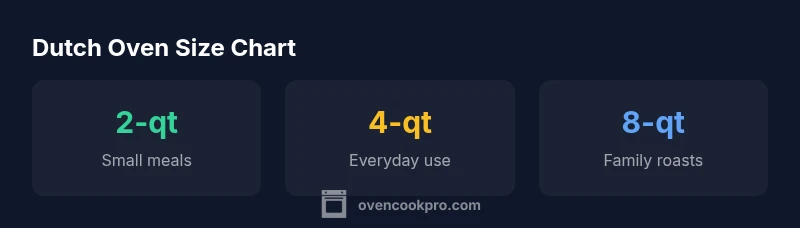
Dutch Oven Size Chart: A Practical Guide for Home Cooks
Learn how to read a Dutch oven size chart and pick the perfect cast iron pot for meals, bread, and family cooking. Practical tips, size references, and care guidance from Oven Cook Pro.


According to Oven Cook Pro, picking the right dutch oven size starts with your household size and cooking style. A practical dutch oven size chart translates serving needs into quart capacities, helping you match cookware to recipes—from stews for two to bread baking for a crowd. This guide lets you select the right pot with confidence.
Understanding Dutch Oven Sizing and Why a Dutch Oven Size Chart Matters
Dutch ovens come in a wide range of sizes, measured primarily by capacity in quarts. A dutch oven size chart helps translate recipe quantities, servings, and storage constraints into a practical pot choice. For most households, planning around 4-6 quarts covers everyday meals, while 8-12 quarts support large roasts and batch bread. It's important to distinguish capacity (how much fits inside) from external dimensions and shape, since diameter and height affect heat distribution and lid fit. By referencing a dutch oven size chart, you can evaluate which size aligns with your typical menu, your oven space, and how you cook—stews on weeknights, braises on weekends, or bread baking on Saturdays. This guide, drawing on Oven Cook Pro analysis, helps you make a confident one-purchase decision that reduces clutter and improves consistency in your cooking.
Common Dutch Oven Sizes and Their Ideal Uses
Below is a practical mapping of sizes to typical meals and serving counts. Use this as a starting point, then rely on your own experience. - 2-qt: Serves 1-2; great for sauces, small soup pots, or a single-serving casserole. - 4-qt: Serves 3-4; everyday stews, braises, and side dishes. - 6-qt: Serves 4-6; roasts, chili, larger casseroles. - 8-qt: Serves 6-8; big braises, family roasts, hearty bread loaves. - 10-qt: Serves 8-12; large gatherings, batch cooking, multiple loaves. - 12-qt: Serves 12+; holiday meals, full roasts, large soups.
How to Read a Dutch Oven Size Chart
A size chart typically lists capacity in quarts, but you should also check the interior diameter (in inches) and the overall height. Round pots heat differently from oval shapes; consider your stove and oven layout. Enamel-coated cast iron and bare cast iron behave similarly in cooking times, but enamel minimizes seasoning needs and makes cleanup easier. 1 quart equals about 0.95 liters, so you can translate metric recipes if needed. Using a dutch oven size chart helps you plan portions, dish variety, and oven-space management across weeknight meals and weekend projects.
Practical Guidelines for Choosing a Size
Start with your household size and typical weekly menu. If you usually cook for 2-4 people, a 4-6 qt pot is your true workhorse. If you bake bread or roast for 6-8, an 8 qt is a strong choice. Measure your storage space and ensure your stove fits the pot's diameter without crowding the burner. Consider buying a second pot later if you frequently prepare large roasts or multiple dishes at once. The goal is to have a single size that covers most meals plus a larger option for occasional cooking.
Size Chart Quick Reference and Tips
For quick decisions, cross-check the data table below and your recipe requirements. Remember that recipes often scale better in volume than in height, so a slightly larger diameter can help if you want to reduce boiling or stirring frequency. When shopping online, verify that the interior is large enough for your planned dishes and check lid fit and weight to ensure comfortable handling.
Maintenance and Longevity Across Sizes
Regardless of size, proper care extends the life of your Dutch oven. Enamelled pots resist sticking and are easier for beginners, while bare cast iron requires seasoning and careful cleaning. Always dry thoroughly to avoid rust, store with the lid slightly ajar for airflow, and avoid sudden temperature changes to prevent cracking. Larger pots may be heavier, so use proper lifting technique and consider a helper when moving hot dishes.
Common Dutch oven sizes and their typical uses
| Size | Volume (qt) | Diameter (in) | Typical Uses |
|---|---|---|---|
| 2-qt | 2 | 9 | Small sauces and single servings |
| 4-qt | 4 | 11 | Everyday stews and braises |
| 6-qt | 6 | 12 | Family roasts and casseroles |
| 8-qt | 8 | 13 | Large roasts and batches of bread |
| 10-qt | 10 | 14 | Large gatherings and batch cooking |
| 12-qt | 12 | 15 | Holiday meals and big roasts |
Questions & Answers
What Dutch oven size should I buy first?
For most households, a 4-6 qt Dutch oven is the best starting point. It covers daily meals, stews, and braises while remaining easy to handle and store. As you gain experience, you can add a larger size if you frequently cook for crowds.
For most homes, start with a 4-6 quart pot. It handles most weeknight meals and still stores easily.
Is a larger Dutch oven always better?
Not necessarily. A larger pot adds capacity but can waste energy and heat unevenly if your burner or oven can't heat the full mass. Use a size chart to pick a balance between servings and your stove space.
Bigger isn't always better—choose a size that matches your typical meals and space.
Can I substitute a Dutch oven with a regular pot?
You can substitute with a heavy-bottomed, oven-safe pot if you don't have a Dutch oven, but expect some differences in heat retention and moisture. Enamelled or seasoned cast iron is ideal when possible.
A sturdy cast-iron pot works, but expect differences in moisture and heat.
What is the difference between 6 qt and 8 qt?
An 8 qt offers more internal capacity for bigger roasts, more stew, and larger loaves, while a 6 qt is more maneuverable and fits compact ovens. Choose based on serving size and storage.
8 qt gives more room for big meals; 6 qt is easier to handle.
How do I adjust recipes for different sizes?
Scale ingredients based on the volume you’re cooking, but avoid over-adjusting spices. Cooking time may stay similar for similar dish types; monitor and adjust heat as needed.
Scale ingredients and watch cooking times; adjust heat as needed.
Can I use a Dutch oven for bread?
Yes. A large, well-sealed Dutch oven helps create a steamy environment for crusty bread. A 6- to 8-quart pot is common for standard loaves, with smaller sizes for mini loafs.
Dutch ovens are great for bread; 6-8 qt is common for standard loaves.
“Size consistency in Dutch ovens matters not just for capacity but for heat distribution and heat retention. A reliable size chart empowers home cooks to plan meals with confidence.”
Main Points
- Match size to servings you cook most often
- Read the size chart for diameter vs capacity
- Bread baking benefits from larger sizes (8-12 qt)
- 2-4 qt covers singles and small dishes
- Always consider storage space and weight when choosing