Does Oven Work Without Gas? An Expert Guide
Explore whether ovens can operate without gas, how electric ovens function, ignition differences, power-outage considerations, and practical tips for homeowners planning without a gas supply.


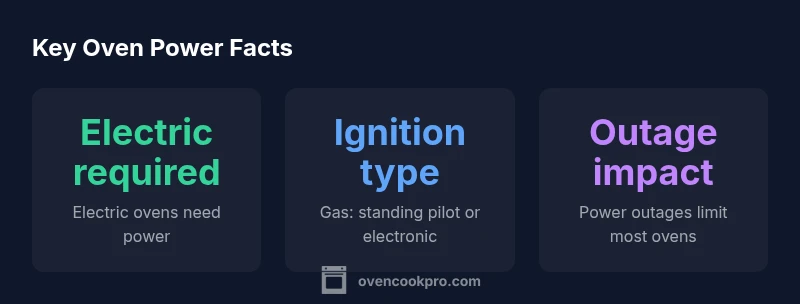
Yes, ovens can operate without gas, but it depends on the model and the power supply. Electric ovens heat with coils or other electric elements and do not rely on gas lines, while gas ovens may still need electricity for ignition or safety systems. If the power is out, gas ovens with a standing pilot may still burn, but many modern units require power to function. According to Oven Cook Pro, understanding your oven’s ignition and heating method is key to knowing whether it will work without gas in your home.
Does oven work without gas: basics for homeowners
When evaluating whether a particular oven can operate without a gas supply, the first distinction is between electric ovens and gas ovens. Electric ovens rely on heating elements powered by your home electricity and control electronics to regulate temperature. Gas ovens, on the other hand, use gas for the heat source, but many models also rely on electricity for ignition, safety controls, and display panels. The question does not have a single yes-or-no answer; it depends on the oven's type and the availability of power. According to Oven Cook Pro, the most reliable way to determine compatibility is to check the product manual for ignition and power requirements. Does oven work without gas? In practical terms, electric ovens will generally operate without gas if power is available, whereas gas ovens may struggle or fail to heat if power is out or if their ignition system requires electricity. This nuance matters for households facing unreliable gas service or blackouts.
Key takeaway: knowing your oven’s power needs helps you plan around outages and gas-limited situations. The Oven Cook Pro team notes that many home cooks underestimate how critical electricity is to modern gas ranges, even when the heat source is gas.
Electric ovens: how they heat without gas
Electric ovens function by circulating heat through coils or electric elements controlled by a thermostat and a relay system. When you set a temperature, the oven’s control board sends signals to the heating elements, cycling them on and off to maintain a steady temperature. Convection models add a fan to circulate air for more even cooking, which can influence cooking times and temperature accuracy. Because these ovens depend on electricity for both heat and control, any interruption in power stops the heating process and leaves you unable to bake. In contrast to gas ovens, electric units do not require gas lines or a flame, making them a practical option for households without a gas supply. For home cooks, this means you can rely on consistent heating if electricity is available, and you should plan for outages with backup options.
Practical note: keep a small crafting plan for power interruptions—an unplugged shade could mislead timers, and a portable generator may help if you live in an area with frequent outages.
Gas ovens and power: ignition, pilots, and outages
Gas ovens come in two broad ignition families: standing pilot systems and electronic igniters. A standing pilot is a tiny flame that remains lit at all times and can, in some cases, heat without a powered igniter. Electronic ignition requires a spark to light the burner and typically relies on the oven’s electrical system to operate. If power goes out, a standing pilot may still allow heat generation, but electronic ignition gas ovens usually cannot ignite without electricity. Modern safety systems also depend on power to monitor burner safety and to shut off gas if a fault is detected. This means that in a power outage, many gas ovens will not heat unless they have a standing pilot and no other electrical requirements. The exact behavior varies by model, so it’s essential to consult the user manual to confirm how your specific oven behaves when gas is not available and electricity is limited.
Safety considerations and best practices
Whether you’re relying on an electric oven or a gas oven with limited power, safety should guide every decision. If you suspect a gas line is unsafe or if you don’t have a reliable gas supply, do not attempt to force-ignite a burner. Ensure proper ventilation to avoid carbon monoxide buildup, especially if you’re using gas appliances during outages. Install a battery-powered CO detector near the kitchen and ensure detectors are tested regularly. For electric ovens, make sure your home’s electrical system can handle the load, and avoid using multiple high-draw appliances simultaneously on the same circuit. If you’re unsure about your unit’s behavior without gas, contact the manufacturer or a qualified service technician for a precise assessment. The Oven Cook Pro Team emphasizes that understanding your appliance’s specific ignition and power requirements is the safest approach to using it without gas.
Practical steps to verify your oven’s power needs
- Locate the user manual and search for “ignition,” “pilot,” and “power requirements.” 2) Check the model’s labeling on the back or inside the oven door for electrical specs and ignition type. 3) Test the oven while connected to power to confirm heat generation and control response. 4) If you’re considering running a gas oven without power, confirm whether the unit uses a standing pilot or an electronic ignition, and verify safety shutoffs and CO monitoring. 5) Plan for outages with a backup power source and ensure your CO detectors are functioning properly. The best practice is to verify model-specific guidance rather than relying on general assumptions.
Alternatives and practical back-ups
If you’re uncertain about relying on a gas oven without gas or you’re faced with an extended outage, consider alternatives like an electric toaster oven or portable induction cooktop for heating small portions. For larger baking needs, an outdoor grill or ovenless cooking options can help while electricity or gas supplies are being restored. On some occasions, a generator may restore essential power to a gas oven’s ignition controls, but only with proper installation and safety precautions. The key is to avoid unsafe improvisations and to follow the manufacturer’s guidance for your specific oven model.
Power and ignition differences across common oven types
| Oven Type | Power Dependency | Notes |
|---|---|---|
| Electric oven | Requires electricity to heat and operate controls | Does not rely on gas lines |
| Gas oven (standing pilot) | Ignition may not require electricity, but heat and safety systems often do | May operate during outages if pilot stays lit |
| Gas oven (electronic ignition) | Requires electricity for ignition and controls | Usually non-functional during power outages |
Questions & Answers
Do electric ovens work during a power outage?
Electric ovens require electricity to heat the elements and operate the controls. During a power outage, most electric ovens will not heat. If you’re planning for outages, consider a back-up power source or alternative cooking methods.
Electric ovens won’t heat during a power outage unless you have a backup power source.
Can a gas oven operate without electricity?
Some gas ovens with a standing pilot can operate without a continuous electricity supply for ignition, but many modern gas ovens rely on electricity for ignition and safety features. Check your model’s manual to confirm.
Some gas ovens can operate without power if they have a standing pilot, but many need electricity for ignition.
Will a standing-pilot gas oven light during a blackout?
A standing-pilot gas oven has a flame that stays lit and may work during a blackout for heat, but safety systems and modern electronic igniters often require power. Verify with your model’s documentation.
Standing pilots may work in a blackout, but you should verify your oven’s specific behavior.
What should I check before relying on my oven without gas?
Review your oven’s ignition type, verify power requirements in the manual, and assess safety features. If in doubt, contact the manufacturer or a technician to prevent unsafe operation.
Check ignition type and power needs in the manual before using without gas.
Are there safer alternatives for cooking when gas is unavailable?
Yes. Consider electric appliances like a toaster oven or portable induction cooktop, or outdoor grilling as alternatives while gas or power is restored. Always follow safety guidelines.
Use electric or outdoor options while gas or power is down, following safety guidelines.
“Oven reliability hinges on power availability and the ignition system; understanding your model’s specific requirements prevents outages from becoming kitchen surprises.”
Main Points
- Know your oven’s power and ignition type before relying on it without gas
- Electric ovens function as long as power is available
- Gas ovens may still operate with standing pilots but often need power for ignition
- Always prioritize safety and verify model-specific guidance
- Plan backups for outages with appropriate equipment