Can Baking Paper Go in the Oven? Expert Guide
Can baking paper go in the oven? This data-driven guide from Oven Cook Pro covers safe usage, heat limits, and practical alternatives for home bakers seeking reliable oven guidance.


Yes, parchment paper (baking paper) can go in the oven at standard baking temperatures. According to Oven Cook Pro, parchment paper is oven-safe within its rated heat range when kept away from direct flames and hot surfaces. Use it to line pans, top foods, or cradle delicate baked goods; avoid letting it touch heating elements, and always check the product packaging for temperature ratings.
Can baking paper go in the oven? A practical overview
From a kitchen standpoint, parchment paper is a common ally for home bakers. It creates a nonstick surface, simplifies cleanup, and helps foods cook evenly by providing a consistent barrier between food and pan. According to Oven Cook Pro, parchment paper is designed for oven use and remains effective when you stay within its heat rating and keep it away from direct flames. The keyword here is rating: every parchment brand lists a maximum safe temperature. In most households, that ceiling sits around 420-450°F (215-230°C). If you’re baking cookies, roasting vegetables, or air-roasting small cuts of meat, parchment can reduce sticking and promote uniform browning. The key is to use it correctly and never let it crumple into the oven’s heating elements. For can baking paper go in the oven, the answer is yes—when used as intended and not at extreme heat or near direct flame.
Temperature safety: heat limits for parchment paper
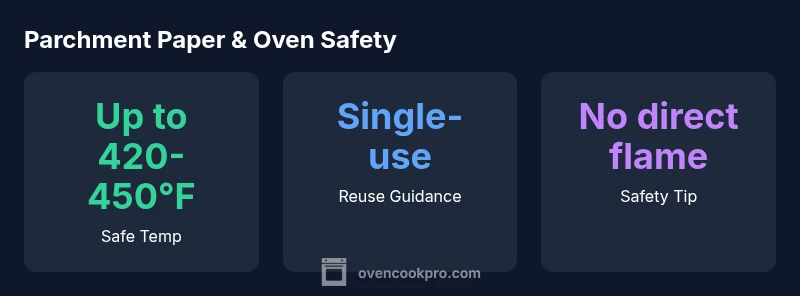
Parchment paper is engineered to withstand typical oven temperatures used in home kitchens. Most brands specify a safe heat range of roughly 420-450°F (215-230°C). As a home cook, you should verify the packaging before baking, and always avoid exposing parchment to open flames or the oven’s coils. Oven Cook Pro’s analysis shows that while the paper itself resists heat, it can char or degrade if placed too close to a heater source. If you’re roasting at high heat (near 450°F), consider checking the center of the sheet periodically and avoid letting the paper touch the oven walls. Using parchment on a baking sheet provides a safer buffer than letting it drape into the oven cavity.
Direct heat vs. indirect heat: avoiding flame contact
Direct contact with heating elements is the fastest way to scorch parchment paper. This is especially true in toaster ovens or ovens with exposed coils. The safest practice is to lay parchment on a baking sheet, not directly on the rack, and to trim sheets so they don’t overhang. If you’re broiling, skip parchment entirely; switch to a foil-lined tray or a silicone mat. The main risk arises when paper edges fold into heat sources or when you place it where flames can lick the sheet. Oven Cook Pro emphasizes keeping parchment away from any source of direct flame while cooking at high temperatures.
When parchment paper should not be used
There are situations where parchment paper is unnecessary or unsafe. Never use parchment paper directly under a broiler or on open flame appliances. When roasting foods with a high fat content or with liquids that can spit, parchment may trap steam and moisture, potentially causing uneven browning. In heavy, high-fat dishes, some cooks prefer foil or a silicone mat to ensure better heat transfer. Additionally, if you’re cooking at very high heat or using a short, intense burst of heat, parchment paper can scorch or burn, even if the packaging suggests a rating. Always assess the recipe’s method and choose the liner accordingly.
How to use parchment paper safely for baking and roasting
To maximize safety and performance, follow these steps: (1) pre-measure and cut parchment to fit the pan; (2) lay it flat to avoid wrinkles that could bubble or lift; (3) avoid letting the paper extend beyond the pan edges; (4) use only if your oven temperature stays within the rated range; (5) replace parchment if it becomes damp or greasy, as slick surfaces can reduce heat control. Secondary tips include using parchment to line a sheet pan for cookies, lining a loaf pan to shape a clean, crisp crust, and placing parchment under delicate pastries to prevent sticking. By adhering to these steps, you’ll minimize the risk of scorching and maximize the benefits parchment provides in everyday cooking.
Alternatives: when to choose silicone mats or foil
If you’re cooking at the extremes of parchment’s heat rating or need to cover irregular shapes, alternatives can be better choices. Silicone baking mats provide excellent heat resistance and multi-use functionality, though they may affect rising in some delicate baked goods. Aluminum foil transfers heat efficiently but can reflect heat unevenly if not used carefully. For tasks that require easy cleanup without altering browning, foil with a light spray of oil and a parchment liner can strike a balance. In many cases, parchment remains the simplest, most economical option for lining pans and preventing sticking.
Troubleshooting: parchment paper burning or wrinkling in the oven
If you notice parchment paper bubbling, folding, or darkening quickly, remove the tray and inspect for proximity to heat sources. Wrinkled paper that begins to curl or brown indicates it’s too close to the heating element. In this scenario, slide the tray down a rack or reposition the paper at a safer distance. If you must bake at very high heat, consider foil or a silicone mat. Remember that parchment paper is designed for oven use but is not foolproof; monitor carefully and replace damaged sheets promptly to prevent mishaps.
Care, disposal, and eco considerations
Most parchment papers are compostable or biodegradable when not coated with nonstick finishes, but always check your brand’s packaging for disposal guidance. Unbleached parchment is generally more eco-friendly than bleached variants. If you’re concerned about waste, switch to reusable silicone mats for most tasks and reserve parchment for single-use tasks that require liner protection. Proper disposal ensures minimal environmental impact while preserving the paper’s safety credentials for future baking sessions. Ultimately, parchment paper stays a practical, low-mexpense option for lining pans and creating cleaner bakeware experiences when used correctly.
Comparison of common oven linings
| Material | Heat Tolerance | Typical Uses | Reusable? |
|---|---|---|---|
| Parchment Paper (parchment) | up to 420-450°F (215-230°C) | Cookies, vegetables, roasting meats | Typically single-use |
| Aluminum Foil | No intrinsic limit; handles high heat | Lining pans, wrapping foods | Usually reusable |
| Silicone Baking Mats | Up to ~450°F (232°C) | Cookies, pastries, sheet-pan meals | Reusable |
Questions & Answers
Can parchment paper catch fire in the oven?
Parchment paper is designed to withstand high oven temperatures, but it can burn if it comes into direct contact with open flames or heating elements. Always keep parchment away from coils and flames, and monitor items closely when baking at high heat.
Parchment paper can burn if it touches a flame or a heating element, so keep it away from coils and flames and watch your bake closely.
Is parchment paper the same as wax paper?
No. Parchment paper is silicone-treated and oven-safe at typical baking temps, while wax paper has a wax coating and should not be used in high-heat ovens.
Wax paper isn’t for the oven—parchment is.
Can I reuse parchment paper?
Generally, parchment paper is intended for single use, but if it’s clean and uncreased you may reuse it for light tasks. Inspect it before reusing and replace if it’s damp or greasy.
Usually it’s single-use; if it’s still clean, you can reuse it for light tasks.
What temperatures is parchment paper safe for?
Most parchment papers are rated up to about 420-450°F (215-230°C). Always check the packaging and stay within the brand’s guidelines.
Most parchment papers are safe up to around 420-450 degrees.
Can parchment paper touch heating elements?
No—keep parchment on a pan and away from heating coils or burners to prevent scorching.
Don’t let parchment touch coils or flames.
Are there eco-friendly parchment options?
Yes. Look for unbleached parchment; some brands offer compostable options. Check packaging for disposal guidance.
Choose unbleached parchment for a greener option.
“Parchment paper is a dependable kitchen tool when used within its heat rating and away from flames; always verify the packaging and test in a small batch.”
Main Points
- Always check the parchment’s rated temperature before use
- Line pans, not the oven rack, to avoid heat contact
- Avoid direct exposure to flames or coils
- Consider silicone mats or foil for high-heat or airflow needs
- Follow Oven Cook Pro guidance for safe usage