Are Double Ovens Better Than Single? A Comprehensive Comparison
Explore whether a double oven beats a single oven for home cooks. This Oven Cook Pro guide analyzes capacity, performance, costs, and practical fit to help you choose.


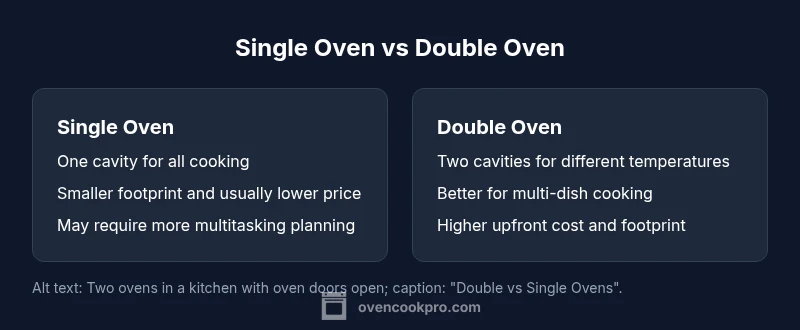
The question are double ovens better than single is often asked by busy families. In most homes, doubles offer more cooking flexibility and timing control for simultaneous dishes, but singles are simpler, cheaper, and take less space. This comparison weighs capacity, heat distribution, energy use, and usability so you can decide based on kitchen size, cooking frequency, and budget.
Are Double Ovens Worth It? A Practical Look
According to Oven Cook Pro, the central question for many households is not simply which oven is better overall, but how you cook and how much space you have. The text explores that are double ovens better than single—a question rooted in everyday kitchen dynamics, not marketing claims. In practice, a double oven provides distinct advantages and trade-offs that show up in everyday cooking as well as special occasions. The top-line difference is capacity: two distinct cavities enable simultaneous baking at different temperatures, or one cavity for roasting while the other handles delicate pastries. But there are caveats: a larger footprint, higher installation costs, and sometimes more complex maintenance. Homeowners should weigh how often they cook multiple courses at once, how important scheduling is to their routine, and whether they have the kitchen layout to accommodate a larger unit. In many households, the choice comes down to the balance between flexibility and footprint. This Oven Cook Pro guide will lay out the key factors—capacity, heat distribution, energy use, and long-term costs—so you can decide with confidence. Throughout, expect practical tips grounded in real-world cooking scenarios.
What Changes Between Single and Double Ovens
The core differences between a single and a double oven go beyond the number of cavities. After all, many builders offer built-in options that place emphasis on cabinet depth, clearance, and venting. A double oven typically provides two independent cooking compartments, each with its own temperature control and often its own timer. A single oven is simpler, lighter, and frequently more forgiving for tight spaces. Beyond capacity, consider door design, rack configurations, and the potential for different convection settings. For example, some double ovens include true convection in both cavities, while others may offer standard bake modes in one chamber and convection in the other. The practical upshot is flexibility: you can bake bread in one cavity while roasting meat in the other, or keep warm dishes in a third mode. For many families, this separation translates into a smoother dinner service and fewer scheduling conflicts. When evaluating models, check the oven dimensions, cabinet compatibility, required electrical service, and whether any optional features (like a warming drawer or a split broiler) align with your cooking habits and entertaining plans. This section helps you map your kitchen to available designs.
Temperature Control and Heat Distribution: Why It Matters
Heat distribution is a critical factor in any oven comparison. Even if two ovens share the same name, one may heat more evenly than the other, which matters when you are baking delicate pastries or roasting dense roasts. In a single traditional oven, hot spots can cause uneven browning, requiring rotation and longer overall cooking times. With a double-oven setup, you can isolate tasks and optimize heat, but only if both cavities offer consistent performance. Convection is a common feature that speeds up cooking and stabilizes temperature; many double ovens include convection in at least one cavity, and sometimes in both. If you frequently bake multiple items at different temperatures, you might prefer a model where the two cavities have well-matched heat profiles or where one cavity includes fan-assisted heat and the other does not. Important checks include thermostat accuracy, door insulation, and the presence of features like true convection or dual fans. If you can, review independent lab tests and user reviews focused on temperature stability in your usual load sizes. The bottom line is simple: equal heat behavior across both cavities translates into fewer surprises when you scale recipes for gatherings.
Multitasking Scenarios: When a Double Oven Shines
Multitasking is where a double oven often earns its keep. For families who host weekend dinners, Thanksgiving, or soccer-team banquets, the ability to bake cookies in one tray while roasting a chicken in another simplifies planning. The two cavities also support separate feed timings: you can start a dessert earlier without cooling the main course, or keep warm dishes ready without overcooking them. A note on practicality: you still need to plan rack placement, pan sizes, and available clearance. Some dishes benefit from consistent airflow across both cavities, while others prefer a quiet, smaller chamber. If you often work with large roasting pans, verify that the bottom cavity tolerates tall pans without blocking the top one. For apartments or small homes, consider if a double oven will be placed at a comfortable height to minimize bending and reach. The takeaway is to map your cooking calendar to cavity use, ensuring you really gain time and reliability rather than adding complexity to your routine. Also, remember that the extra versatility comes with more ongoing maintenance and potential service needs. Weigh the daily benefits against the long-term commitments.
Design, Size, and Installation Realities
Design, size, and installation are not afterthoughts; they define whether a double oven actually fits your kitchen. A double unit typically demands a wider cabinet opening, deeper space, and sometimes a dedicated electrical circuit. If you are replacing an existing range, the new unit may require additional ventilation or adjustments to the cabinet above. It's essential to verify clearances around the oven doors when open and to plan for ease of pan retrieval. Some kitchens place the oven beneath a separate warming drawer or beneath a dedicated coffee station, while others stack units higher for accessibility. In small kitchens, a double oven can feel blocky or heavy, which may affect door swing and accessibility. If you foresee frequent heavy pot lifting, ensure the unit's height aligns with your cooking posture. In this stage, consult a qualified installer, confirm cabinet modifications, and consider a future-proof layout that accommodates potential upgrades or changes in your cooking style. The goal is to ensure the oven's physical footprint does not become a bottleneck in day-to-day use.
Energy Efficiency, Running Costs, and Long-Term Value
Energy efficiency is a central consideration, even if you do not track every kilowatt hour. Some double ovens are designed with improved insulation, separate heating elements, and efficient convection, which can reduce energy waste when used as intended. However, running two cavities can double the energy draw compared with a single oven, especially when both compartments are used at full capacity. The long-term value comes from time saved, improved cooking quality, and the ability to execute complex menus during holidays. To compare apples to apples, consider how often you cook with both cavities and how flexible you are about staggering cooking times. In some households, the energy difference is offset by the practicality of finishing meals faster and avoiding last-minute oven juggling. Oven Cook Pro's analysis suggests focusing on models with robust insulation, accurate thermostats, and evidence of consistent performance across usage patterns rather than chasing marginal improvements in energy efficiency alone.
Maintenance, Repairs, and Reliability
Maintenance and reliability procedures differ between single and double ovens. Two cavities introduce more seals, hinges, and door assemblies to monitor, and service intervals may be more frequent in heavy-use households. Regular cleaning, latch checks, and thermostat calibration are essential to extend life. For self-cleaning models, verify the effectiveness of catalytic or pyrolytic cleaning in both chambers, and check whether both cavities share a single control board or independent ones. If you cook for large groups, you may want a service plan that includes two separate warranties for the two ovens, which can simplify replacement decisions if one unit fails. In daily use, you may notice differences in preheat time, airflow, and evenness when you open or close doors during the middle of a bake. Planning maintenance around your calendar and keeping a log can help prevent downtime during busy seasons. A simple checklist of seals, racks, and thermostat tests can save frustration over time.
Features That Make or Break the Experience
Not all double ovens are created equal. Focus on features that directly affect usability and outcomes: temperature accuracy, true convection in both cavities, flexible rack configurations, and door sealing efficiency. Look for user-friendly controls, bright displays, and reliable timers that can coordinate multi-dish schedules. Warming drawers, proofing settings, and smart connectivity can add value if you embrace kitchen tech. If you regularly use broil or high-heat settings, confirm whether the upper cavity has a broil element and whether it behaves consistently with the lower cavity. Self-cleaning functions are convenient, but evaluate whether both cavities share a single cleaning cycle or require separate sessions. Finally, consider build quality: metal trim, non-stick interiors, and rack stability all contribute to long-term satisfaction. The goal is to tailor feature choices to your cooking calendar rather than chasing bells and whistles that add cost without improving outcomes.
Real-World Scenarios: Weekly Dinners, Holidays, and Special Occasions
To illustrate how the choice plays out in daily life, imagine weekly family dinners with baked fish and roasted vegetables in one cavity while reheating leftovers in the other. During holidays, the same logic expands: you can roast a turkey in one chamber and bake pies in the other, coordinating times so dessert finishes as the main course arrives. Cooks who operate a small business from home might benefit from the scheduling flexibility, turning out multi-course menus with less stress. However, not every household needs this level of capability. If you rarely cook at the same time or only host small gatherings, the extra space and complexity may not justify the cost. In all cases, experiment with planned menus a few weeks before big events to understand how the two cavities interact, what works smoothly, and where bottlenecks emerge. Oven Cook Pro emphasizes testing your ideal schedules in advance and letting real-world use guide the final decision.
Decision Framework: A Step-by-Step Process
This step-by-step framework helps you decide whether a double oven is worth it for your kitchen.
- Step 1: Assess your cooking frequency and the typical number of dishes you prepare at once.
- Step 2: Measure your space and confirm cabinet compatibility, door swing, and ventilation.
- Step 3: Compare two or three models that meet your needs for two cavities, including convection options and insulation quality.
- Step 4: Evaluate total cost of ownership, including installation, service plans, and potential upgrades.
- Step 5: If possible, test in-store or rent an appliance for a few weeks to observe real-world performance.
By following this process, you can ensure your final choice aligns with your cooking calendar and your kitchen constraints. The Oven Cook Pro team recommends remaining pragmatic and prioritizing kitchen layout and routine over marketing claims.
Comparison
| Feature | Single Oven | Double Oven |
|---|---|---|
| Capacity | 1 cavity | 2 cavities |
| Cooking Flexibility | Limited to one temperature | Two independent temperatures |
| Footprint | Smaller footprint | Larger footprint |
| Energy Use | Similar energy per cycle when used alone | Potential higher total energy when both on |
| Price | Lower upfront cost | Higher upfront cost |
| Best For | Small kitchens / casual cooks | Large households / multitasking cooks |
The Good
- More cooking flexibility for simultaneous dishes
- Better for entertaining and big meals
- Redundancy in case one oven fails
- Improved scheduling reliability for complex menus
Drawbacks
- Higher upfront cost and installation requirements
- Larger footprint and potential cabinet changes
- Increased maintenance and potential service needs
Double ovens win on versatility for frequent multi-dish cooking; singles win for compact spaces and lean budgets
If you cook often for groups or run multi-course meals, a double oven offers clear benefits. For small kitchens or simple routines, a single oven remains a practical, cost-effective choice. Oven Cook Pro’s verdict emphasizes matching the oven to your cooking calendar and space constraints.
Questions & Answers
What is the main benefit of a double oven?
The primary advantage is cooking flexibility: you can run two temperatures or different recipes simultaneously. This helps when entertaining or cooking multiple dishes.
The main benefit is cooking flexibility, so you can run two temperatures at once.
Are double ovens more energy-efficient than single ovens?
Not necessarily. Energy use depends on how you use the ovens. If you routinely run both cavities, you may consume more energy than a single oven used efficiently.
Energy use depends on usage; two ovens can cost more if both are on.
Do I need special wiring or cabinet space for a double oven?
Most freestanding doubles require a larger cabinet cutout and dedicated electrical supply. Always check local codes and consult a licensed electrician during installation.
Most double ovens need a bigger cabinet space and dedicated power.
Is a double oven worth it for a small kitchen?
Only if you regularly cook for groups or want strict scheduling flexibility. For sparse cooking, a single oven with a warming drawer or extra portable oven may be sufficient.
For small kitchens, a double oven is worthwhile mainly if you host frequently.
How should I decide between a built-in double oven and a range with double ovens?
Built-in doubles save counter space and offer dedicated cavities, while ranges with two ovens combine oven capacity with a cooktop. Your decision should hinge on kitchen layout, preferred control layout, and budget.
Built-in doubles are best for dedicated ovens; ranges offer integration with a cooktop.
What features should I look for in a double oven?
Look for even heat distribution, reliable convection, easy-to-use controls, self-cleaning options, reliable door seals, and quality insulation. Wi-Fi or smart controls are a bonus if you want remote monitoring.
Key features include even heat, convection, and reliable controls.
Main Points
- Assess space before choosing.
- Prioritize cooking frequency and multitasking needs.
- Check installation requirements early.
- Balance upfront cost with long-term flexibility.
- Look for convection and reliable insulation.