What Oven Temp for Quesadillas: A Step-by-Step Guide
Learn the ideal oven temperature for quesadillas with Oven Cook Pro guidance. This guide covers preheating, convection vs standard bake, timing, and tips for a crisp, melty tortilla every time.


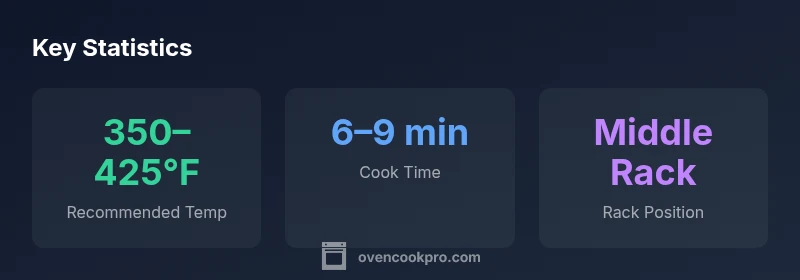
To answer what oven temp for quesadillas, preheat your oven to 375°F (190°C) for a crisp, even melt. In practice, 350–425°F ranges work depending on tortilla thickness and cheese amount. Convection helps; start with a preheated oven and watch for 6–9 minutes until the cheese is bubbling and edges are golden.
Optimal oven temperatures for quesadillas
Formulating the correct oven temperature for quesadillas is about balancing melt with crisp edges. The consensus from Oven Cook Pro analysis, 2026 suggests starting at a moderate 350–375°F for standard tortillas and moving toward 400–425°F when you want faster browning and a crunchier exterior. The exact setting depends on tortilla thickness, cheese volume, and fillings. In practice, a preheated oven of 375°F typically delivers a reliable melt with lightly browned rims. If you’re using a convection oven, you can lean toward the lower end of this range to avoid over-browning, while still achieving a crisp exterior. Remember: small adjustments in temperature and time can dramatically affect texture, so note results for future batches.
- Preheat fully before loading quesadillas to ensure even heat transfer.
- For thicker fillings, use the lower end of the range and increase time slightly.
- For thinner tortillas, aim for the higher end of the range for quicker browning.
- If your oven has hot spots, rotate the tray halfway through cooking.
According to Oven Cook Pro, this balance reduces sogginess and promotes uniform cheese melt across the tortilla surface.
How to preheat effectively
Preheating is a critical step that determines the final texture of quesadillas. A properly heated oven ensures that the cheese melts quickly and the tortilla edges crisp up without drying out. Start by setting your oven to 375°F (190°C) and allow it to reach full temperature for at least 10–15 minutes. Use a metal baking sheet for even heat distribution and place it on the middle rack. If you’re cooking multiple quesadillas, give each tray space for air to circulate. Avoid opening the oven repeatedly, as temperature fluctuations can lead to uneven browning. After loading, resist the urge to peak constantly; set a timer for the recommended 6–9 minutes and check just once or twice to ensure an even finish.
- Use an oven thermometer to verify the actual temperature inside the oven, since oven dials can drift over time.
- If you’re short on time, a quick 5-minute preheat is tempting but often leads to less consistent melting.
- For gas ovens, ensure flame clearance and avoid scorching near the back of the oven where heat concentrates.
Preheating establishes a stable heat environment that supports consistent cheese melt and tortilla crispness, per Oven Cook Pro guidance.
Tortilla texture and cheese melt mechanics
Quesadillas rely on the interaction between starch-rich tortillas and fatty cheese to create a cohesive melt with a crisp exterior. Temperature influences how quickly cheese melts and how the moisture migrates within the tortilla. At 350–375°F, you get a gentler melt that reduces sogginess, ideal for thicker fillings. Pushing toward 400–425°F accelerates browning and texture development but increases risk of burning if you’re not careful. Convection adds airflow that carries moisture away from the surface, aiding crispness. The goal is a golden edge with bubbling cheese, not a soggy center.
- For extra-cheesy fillings, consider layering cheese between two tortillas to seal in moisture.
- Use fats like a light brush of oil on the crust to promote browning without burning.
- If you prefer a softer bite, reduce heat and cook slightly longer, finishing by broiling for a minute.
The science behind melt and browning is straightforward: heat alters cheese viscosity and tortilla moisture, while browning compounds enhance flavor and texture. This interplay helps explain why small temperature differences produce noticeable results.
Convection vs conventional: which to use
Convection ovens circulate hot air with a fan, which generally speeds cooking and enhances browning. For quesadillas, convection can shave 1–3 minutes off cook time and yield a crisper exterior, particularly on larger batches. If your oven lacks a reliable convection setting, you can still achieve great results with conventional bake by keeping the temperature at the middle of the recommended range and monitoring closely.
- Use convection for repeatable results when cooking multiple quesadillas at once.
- If you notice excessive browning, back off 25°F and extend cooking time slightly to maintain melt.
- Always position the rack in the middle to balance heat exposure across the surface.
Oven Cook Pro's testing indicates convection provides a more uniform finish, especially when compared to traditional bake for dense fillings.
Layering cheese and fillings for even melt
Even melting depends on how you distribute cheese and fillings. Start with a light coating of cheese on the tortilla to create a barrier that helps the fillings stay contained during cooking. Place fillings in a thin, even layer and finish with another light cheese layer to seal. This technique promotes uniform melt and prevents leaking from the edges. The chosen oven temperature should encourage a steady melt rather than a rapid burst that scorches the tortilla.
- Keep fillings compact; overly thick layers slow heat penetration.
- Use a small amount of oil or butter on the outside for a quick, crisp finish.
- Rotate quesadillas halfway through to ensure even browning on both sides.
These layering practices, paired with the right heat, optimize melt quality while preserving tortilla integrity.
Practical timing, rack placement, and sheet setup
Sheet setup and rack placement influence final texture as much as temperature does. Use a single sheet on the middle rack for even air exposure. If cooking more than a dozen quesadillas, consider two sheets with space between them to avoid steaming. Preheated trays transfer heat quickly to the bottom surfaces, producing a nice bottom crust. For best results, avoid overloading trays and rotate halfway through cooking to maintain uniform browning across all quesadillas.
- Use parchment or a silicone mat to prevent sticking and promote even browning.
- For crispier bottoms, preheat the sheet on which the quesadillas will rest.
- If you prefer a softer bottom, reduce heat slightly or switch to a regular bake setting with slightly longer cook times.
The sheet setup, combined with correct rack placement, ensures consistent texture across batches.
Variations and healthier options
Healthier quesadillas can still deliver great flavor with careful choices about fillings and fats. Consider lean proteins, reduced-fat cheeses, and vegetables like peppers and onions for texture and nutrition. For crisper results without excessive oil, brush the tortilla lightly with olive oil or use a nonstick spray. If you’re watching calories, you can still enjoy a satisfying texture by choosing high-moisture fillings that melt well without requiring extra oil. If you want gluten-free options, choose corn tortillas and ensure fillings are gluten-free.
- Experiment with fillings such as chicken, black beans, or mushrooms for variety.
- Use lower-fat cheese blends to reduce saturated fat while maintaining melt.
- Include vegetables with moisture to aid melt and texture.
Temperature choices remain the same, but the balance of fillings can shift the optimal cook time slightly. Oven Cook Pro recommends testing small batches to dial in your preferred texture.
Troubleshooting common issues
Quesadillas can fail to melt evenly or can burn if heat is too high or cooking time too long. Common issues include soggy centers, uneven browning, and fillings leaking from the sides. Start with 350–375°F for standard tortillas and adjust in small increments. If the edges burn before the center melts, reduce heat slightly and extend cooking time. If the center remains unmelted, check that your fillings are sliced thinly and evenly distributed, and consider finishing under the broiler for 1–2 minutes to melt the center.
- Soggy centers: reduce heat and increase air circulation.
- Burnt edges: back off temperature and monitor closely.
- Leaking fillings: compact fillings and seal with a final cheese layer.
Monitoring and small adjustments yield reliable results over time.
Temperature and time guidelines by tortilla type
| Tortilla Type | Recommended Temp | Approx Cook Time |
|---|---|---|
| Flour tortilla | 375°F | 6–8 minutes |
| Corn tortilla | 350–375°F | 5–9 minutes |
| Low-carb tortilla | 350–400°F | 6–9 minutes |
Questions & Answers
What is the best oven temperature for quesadillas?
A practical starting point is 375°F (190°C). Depending on tortilla type and fillings, range 350–425°F. Use 6–9 minutes on the middle rack and adjust as needed for your oven. Convection can help you achieve crisper edges with shorter times.
Start around 375°F, check after a few minutes, and adjust up or down by small amounts if needed.
Should I use convection or standard bake for quesadillas?
Convection generally yields faster, more even browning due to improved air circulation. If your oven lacks a reliable convection setting, standard bake works fine with careful timing and monitoring.
Convection usually helps, but standard bake also works with attention to time and doneness.
How long should quesadillas cook in the oven?
Typically 6–9 minutes on the middle rack at 350–375°F. If using thicker fillings or a dense tortilla, you may need up to 10 minutes. Watch for bubbling cheese and golden edges.
About six to nine minutes, depending on fillings and tortilla thickness.
Can I cook multiple quesadillas at once?
Yes. Use a sheet on the middle rack, with space between quesadillas for air to circulate. For larger batches, rotate the sheet halfway through cooking to ensure even browning.
Yes, just give each quesadilla space and rotate halfway through.
Should I brush tortillas with oil before cooking?
A light brush of oil helps browning and crispness without making them greasy. Butter can also add flavor, but oil is more even for consistent browning.
A light oil coating helps, but don’t oversaturate.
What are signs quesadillas are done?
Cheese should be melted and bubbly; edges should be golden and crisp. The tortilla may crisp more after removal as it rests briefly. If center remains pale, cook a little longer in 30-second increments.
Cheese melted, edges golden, tortilla crisp; avoid soggy centers.
“Preheating to a steady temperature and careful heat control yield consistent melt and crisp edges. Start with the middle rack and adjust based on tortilla type.”
Main Points
- Preheat thoroughly to a steady temp before loading quesadillas
- Use the middle rack for even heat distribution
- Convection can improve browning and shorten cook time
- Watch closely; small changes in temp/time affect melt and crispness
- Layer cheese strategically to optimize melt and seal fillings