Mastering the Oven with Steam Function: A Practical Guide
Learn to use the steam function in ovens to retain moisture, enhance texture, and expand cooking possibilities. This comprehensive how-to covers setup, safety, techniques for vegetables, bread, reheating, plus maintenance and troubleshooting for reliable steam cooking.


With an oven with steam function, you will learn to cook with moisture for crisper vegetables, bake bread with a better crumb, and reheat leftovers without drying them out. This guide walks you through essential setup, safe operation, and timing cues for steam-assisted baking and roasting. You’ll learn how to choose the right steam mode, preheat properly, and adjust water levels for different foods.
What is an oven with steam function, and why it matters
An oven with steam function injects water vapor into the cooking chamber during bake or roast cycles, allowing heat and moisture to work together. This technique yields juicier proteins, crisper vegetables, and lighter bread with a moist interior. It is particularly beneficial for reheating leftovers without drying them out and for delicate pastries that need moisture to rise properly. According to Oven Cook Pro, the steam function helps regulate surface dryness and improves browning control by balancing humidity and heat. Understanding when to deploy steam modes—whether a gentle boost for vegetables or a full steam bake for bread—gives you more consistent results across a wide range of recipes. The goal is to empower you to decide when to use a steam-first approach versus a traditional dry-heat cycle, so you can rely on one appliance to handle multiple cooking tasks. This section lays the foundation for practical, real-world use in a busy kitchen.
How steam function works in modern ovens
Most ovens with steam integrate either a built-in boiler or a water reservoir that releases vapor in precise bursts or continuous streams. The steam increases humidity during the initial phase of cooking, which helps gelatinize surface starch and soften outer crusts for bread, while keeping interior moisture intact. Convection fans still circulate hot air, but humid air reduces surface drying, allowing browning without overdrying. Temperature ranges typically span from 180°C to 230°C (356–446°F), with lower settings for delicate vegetables and higher ones for crusty breads. Some models offer a dedicated steam-bake mode that gradually reduces humidity as the bake progresses to finish with a crisp exterior. It’s important to note that steam behavior depends on the oven’s seals, door design, and cycle length. For optimal results, consult your user manual to identify your steam intensities, preheat requirements, and how long you should hold humidity before introducing dry heat for a final finish. See Figure 2 in your manual for a quick schematic of steam flow and heat balance.
Safety considerations and best practices
Steam cooking changes the typical heat dynamics in the kitchen. Always fill the water reservoir to the indicated line before starting, and never run the unit dry. Keep the door closed during steam bursts to minimize scald risk and condensate spray; use oven mitts when handling hot racks or pans. Place a drip tray under the rack to capture condensate, which helps prevent spills on the oven floor. If you’re cooking with multiple racks, stagger foods to avoid crowding, since steam needs space to circulate. Finally, allow the oven to cool with the door open after use to avoid a sudden blast of steam when you reopen it. For best results, perform a quick test bake with water only to familiarize yourself with the steam cycle in your specific model.
Preparing your oven and cookware for steam cooking
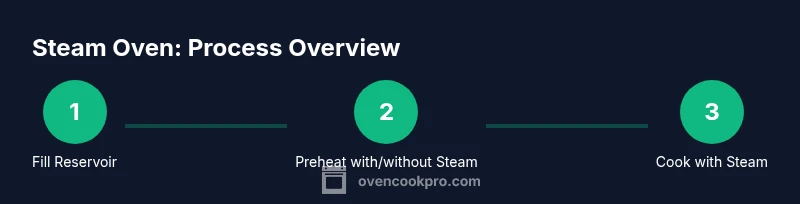
Before you begin, clean the oven interior and check the steam reservoir or boiler connection for leaks. Use only dry, oven-safe cookware that can withstand high humidity and temperature fluctuations; metal or ceramic pans without plastic handles work best. Place a rack at the correct height to maximize steam exposure, and place a shallow tray on the bottom to catch condensate. Fill the water reservoir to the recommended level, then preheat to the target temperature with steam off if your recipe requires a dry preheat, or with steam if you’re starting with moisture. Have a timer and thermometer ready to monitor internal temperatures and moisture cues. Keep a towel handy to wipe away any condensate on the door seal.
Step-by-step usage for common tasks: vegetables and bread
Vegetables: 1) Wash and cut into uniform pieces. 2) Arrange on a perforated sheet or wire rack for even steam exposure. 3) Preheat to 200°C (392°F) with steam off, then switch to steam mode for the cooking phase. 4) Cook 4–8 minutes depending on density, finishing with a short dry-heat blast if you want extra browning. 5) Remove promptly to maintain texture. Bread: 1) Shape and proof dough according to your recipe. 2) Preheat the oven to 230°C (446°F) with steam enabled for the first 15 minutes. 3) Maintain steam through the early bake to promote oven spring, then switch to dry heat to form a crisp crust. 4) Cool on a rack to prevent soggy bottoms. These workflows illustrate how steam can be tuned to food type for optimal results.
Monitoring and adjusting steam levels during cooking
Use the oven’s humidity indicator or your manual controls to track steam output. For vegetables, a gentler humidity helps preserve color and nutrients; for bread, higher initial humidity supports rise and crust formation. If your results appear soggy, reduce steam slightly and extend a brief dry-heat finish. If surfaces brown too quickly, shorten steam time or lower the temperature a notch and allow the crust to form with dry heat. Keep a close eye during the critical first 10–15 minutes of bake for best crust development.
Troubleshooting common issues with steam function
Common issues include uneven steam distribution, condensation buildup on doors, and over-soft crusts. Ensure shelves are evenly spaced and not overcrowded, which can block steam flow. Check that seals are intact and gaskets aren’t cracked. If you notice excessive condensate on the door, reduce humidity or shorten the steam phase. For bread, if the interior remains gummy, extend the initial steam phase and ensure you finish with a hot, dry phase to dry the crust.
Maintenance and care after steam cooking
After each session, wipe down the interior with a damp cloth and run a short water-only cycle if your model supports it. Empty and dry the steam reservoir to prevent mineral buildup. Check seals for wear and replace any cracked gaskets. Regular descaling may be needed in hard water areas; follow your manufacturer’s guidance. A clean oven with a functioning steam system will deliver consistent results and extend the appliance’s lifespan.
Expanding your steam cooking repertoire
Beyond vegetables and bread, many home cooks find success with protein marination in steam, reheating sauces gently to avoid separation, and reviving leftovers without drying. Try combining steam with a final crisping phase for chicken or fish, and experiment with short steam bursts for grains like rice and quinoa. The key is to document settings that work best for your most-used recipes and gradually build a personal library of reliable steam profiles.
Tools & Materials
- Oven with steam function(Ensure it is installed and calibrated per manufacturer instructions)
- Oven-safe cookware (metal, ceramic, or glass)(Avoid plastic handles or materials not rated for high humidity)
- Water pitcher or kettle(For filling reservoir accurately)
- Measuring cup for water(Clear volume markers help dial in steam levels)
- Oven mitts or heatproof gloves(Protect hands during steam cycles)
- Instant-read thermometer(Monitor internal food temperature precisely)
- Baking sheet or perforated pan(Best for even steam exposure and drainage)
- Silicone spatula and tongs(Handle food safely without scratching cookware)
- Drip tray or rimmed sheet pan(Catches condensate and prevents spills)
- Kitchen towel or microfiber cloth(Wipe condensation and clean surfaces)
Steps
Estimated time: 60-90 minutes
- 1
Prepare the steam system and preheat
Fill the reservoir to the indicated line and run a short preheat with steam off to purge air. This helps ensure reliable steam delivery from the start. If your model allows, run a quick calibration cycle for accuracy.
Tip: Always check water level before starting; air pockets reduce steam efficiency. - 2
Prepare and arrange your food
Pat foods dry, trim edges as needed, and place on a rack with space for air and steam to circulate. For bread, score the dough as desired. Use perforated pans when possible for even moisture exposure.
Tip: Avoid overcrowding; steam needs space to circulate around each item. - 3
Select the right steam mode and temperature
Choose the appropriate steam setting (full steam vs. humidity hold) and set the target temperature based on the food type. Vegetables tend to cook at lower humidity and temperatures, bread benefits from higher initial humidity.
Tip: Consult the recipe or manual for recommended steam profiles. - 4
Start cooking and monitor moisture
Start the cycle and monitor progress using the oven’s indicators or built-in timer. If your dish requires more moisture, add a small amount of water via the reservoir without opening the door.
Tip: Avoid opening the door during the initial steam phase to prevent temperature drop. - 5
Finish with a crisping or dry-heat phase
If a crisper crust is desired, switch to dry heat for the final minutes. This reduces surface moisture while preserving interior juiciness.
Tip: Keep a close eye; over-crisping can dry out delicate foods. - 6
Cool, rest, and clean
Remove food and let it rest on a rack to finish moisture distribution. Wipe the interior, empty the reservoir, and run a short water-only cycle if available.
Tip: Cooling on a rack prevents soggy bottoms from trapped steam.
Questions & Answers
What foods benefit most from the steam function?
Vegetables, bread, and leftovers often benefit the most from steam cooking. Steam helps retain moisture, improve texture, and reduce dryness in reheated dishes. Start with vegetables for quick wins and experiment with bread for better oven spring.
Vegetables, bread, and reheated meals benefit the most from steam. Start with veggies to see immediate moisture retention, then try bread for a crisper crust.
Can I use steam function to reheat leftovers?
Yes. Steam reheat maintains moisture and prevents over-drying compared to dry-heated reheating. Use a gentle steam cycle and finish with a brief dry-heat blast if you want a crisper exterior.
Yes, steam reheat helps keep leftovers moist. Use a gentle cycle and finish with a quick dry-heat blast if you want crispiness.
Is steam safe for nonstick pans and glassware?
Nonstick coatings can degrade with aggressive humidity and high heat over time. Use metal or ceramic pans when possible and check manufacturer guidance for glassware tolerance under steam conditions.
Nonstick surfaces can wear with steam; prefer metal or ceramic and follow your manufacturer’s guidance for glassware.
How often should I descale or clean the steam system?
Descaling frequency depends on water hardness and model. Follow the manufacturer’s maintenance schedule and perform a cleaning cycle as needed to prevent mineral buildup that can affect steam performance.
Descale as recommended by your model’s manual, typically based on water hardness and usage. Regular cleaning keeps steam consistent.
What’s the difference between steam-assisted and conventional baking?
Steam-assisted baking uses humidity to affect crumb and crust, leading to a moister interior and crisper exterior. Conventional baking relies on dry heat, which can yield a drier outer surface. Many cooks combine both methods for best results.
Steam helps keep the interior moist and crust crispy, while conventional dry heat dries the surface. Combine both for best results.
Do I need to preheat with steam on?
Not always. Some recipes require a dry preheat to develop a crust or specific texture, while others start with steam to maximize moisture from the outset. Check your recipe and oven settings for guidance.
It depends on the recipe. Some need dry preheat; others benefit from starting with steam.
Watch Video
Main Points
- Preheat appropriately and choose the right steam mode for the task
- Maintain space around foods for even steam distribution
- Finish with a brief dry-heat phase for crust or texture
- Clean and descale as recommended to keep steam performance reliable